

Sustainable fashion is an approach to clothing creation and consumption that minimizes environmental and social harm across every stage of a garment’s life, from raw material sourcing through production, distribution, and eventual disposal. The industry term you’ll encounter alongside it is slow fashion, a deliberate counterpoint to the mass-production model that floods the market with cheap, disposable clothing. Brands like Patagonia built their identity on this philosophy decades ago, and today the conversation has expanded to include circular design, regenerative agriculture, and supply chain transparency. Understanding what sustainable fashion actually means, and what it doesn’t, is the first step toward making clothing choices that align with your values.
What is sustainable fashion and its core principles?
Sustainable fashion encompasses efforts to reduce environmental impacts, improve labor conditions, and uphold animal welfare across the entire fashion industry. That definition sounds broad because it is. In practice, it breaks down into five interconnected principles.
- Environmental responsibility: Lowering CO2 emissions, reducing water consumption, and cutting chemical pollution from dyeing and finishing processes. Non-toxic dyes, for example, protect both waterways and the workers handling them daily.
- Fair labor and social equity: Paying living wages, maintaining safe working conditions, and prohibiting exploitative practices throughout the supply chain. This is where sustainable fashion and ethical fashion overlap most directly.
- Animal welfare: Avoiding materials sourced through cruel practices, such as conventional down or exotic skins, and favoring certified alternatives like recycled wool or plant-based leather.
- Slow fashion principles: Designing for longevity rather than trend cycles. Slow fashion embodies intentional production that reduces waste and overconsumption by making fewer, better things.
- Circular design: Creating garments that can be repaired, reused, or recycled at end of life rather than sent to landfill.
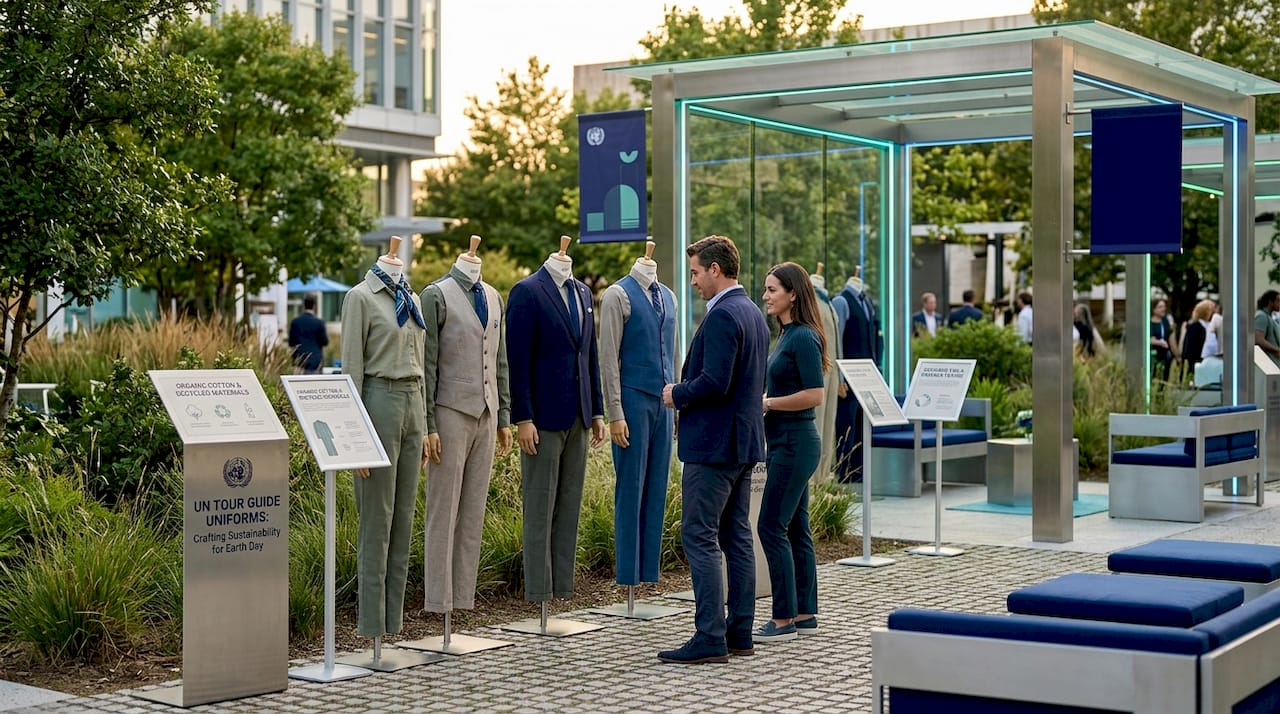
A compelling real-world example of these principles in action: the United Nations launched Tour Guide uniforms on Earth Day 2025 that incorporated circular design principles and deadstock materials, with the next collection slated for New York Fashion Week in September 2026. The UN used its own staff uniforms as conversation starters about sustainability. That is the kind of systemic thinking the movement calls for.
Pro Tip: When evaluating a brand’s sustainability claims, start with the materials. Organic cotton, recycled polyester certified by the Global Recycled Standard, and TENCEL lyocell are verifiable starting points. Vague language like “eco-conscious” with no certification is a red flag.
How does sustainable fashion differ from ethical and circular fashion?
These terms get used interchangeably, but they describe distinct priorities. Knowing the difference helps you ask better questions and avoid being misled by marketing.
| Concept | Primary focus | What it addresses |
|---|---|---|
| Sustainable fashion | Environmental and social impact | Emissions, waste, labor, animal welfare |
| Ethical fashion | Human rights and labor conditions | Fair wages, safe factories, no child labor |
| Circular fashion | Material lifecycle | Design for repair, reuse, and recyclability |
| Regenerative fashion | Net-positive ecological outcomes | Soil health, biodiversity, social equity |
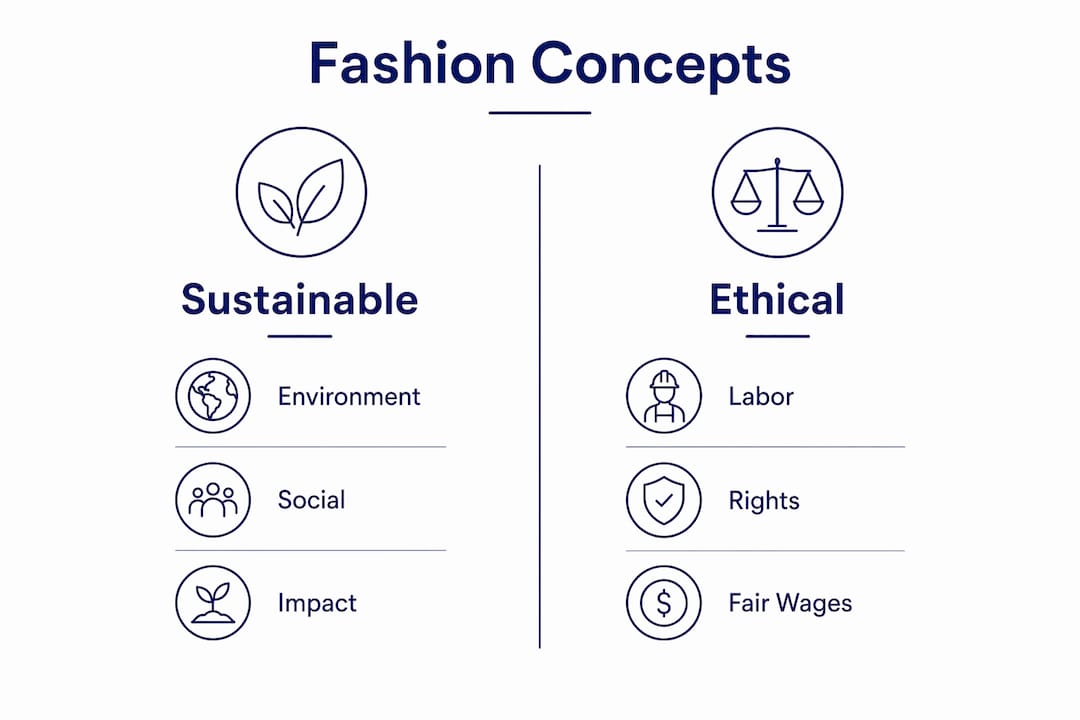
Ethical fashion zeroes in on the people making your clothes. It asks whether factory workers in Bangladesh or Vietnam are paid fairly and whether their workplaces are safe. Sustainable fashion asks all of those questions and adds environmental ones: What is the carbon footprint of this supply chain? What happens to this garment after you stop wearing it?
Circular fashion takes a materials-science approach. True circularity requires products designed for repair, reuse, sorting, and recyclability. Recycled content alone does not make a garment circular. The EU now ties circularity claims to verifiable data and documented end-of-life pathways, which is a meaningful policy shift.
Regenerative fashion is the newest and most ambitious concept. It extends circularity by aiming for net-positive ecological outcomes, including soil health restoration and biodiversity enhancement through regenerative agriculture and biomimicry. Think of it as the difference between doing less harm and actively healing the systems fashion has damaged.
Pro Tip: For a practical breakdown of how circular shopping habits apply to everyday purchases, the distinction between recycled content and true circularity is the most important concept to internalize before you buy.
What are the biggest challenges and controversies in sustainable fashion?
The word “sustainability” has been stretched so thin that it risks meaning nothing. That is not an exaggeration. The term is often abused with vague definitions, causing consumer cynicism and diluted impact claims. Brands can technically measure sustainability only against their own past performance rather than actual planetary thresholds, which means a brand can call itself “more sustainable” while still operating well outside ecological limits.
The Everlane story is instructive. Everlane built its brand on radical price transparency and sustainability messaging, then was acquired by Shein, one of the fastest and most polluting fashion operations on the planet. The acquisition didn’t just damage Everlane’s credibility. It confirmed what skeptics had argued: that sustainability positioning without structural commitment is a marketing strategy, not a business model.
Three specific challenges define the current moment:
- Greenwashing: Brands making broad environmental claims without third-party verification or documented evidence. Certifications like GOTS (Global Organic Textile Standard), Fair Trade, and B Corp status exist precisely to counter this.
- Measurement gaps: Sustainability researchers warn that measuring against internal benchmarks rather than planetary limits produces misleading claims. A brand reducing its water use by 10% is still unsustainable if its absolute consumption remains destructive.
- Infrastructure deficits: End-of-life garment outcomes depend heavily on collection and sorting infrastructure. Without system-level investment in textile recycling, even well-designed garments end up downcycled or landfilled.
“Consumers should view sustainability labels as hypotheses, not conclusions. Ask about material makeup, durability, and documented recyclability before trusting a brand’s claims.” — GQ, citing sustainability researchers
The practical implication: your skepticism is a feature, not a flaw. Demanding evidence is exactly what the industry needs from consumers right now.
How to practice sustainable fashion in your everyday life
The fashion system is shaped by what people wear, how they consume, and how they engage with sustainability values. Individual choices accumulate into market signals. Here is how to make yours count.
-
Buy less, choose better. The most sustainable garment is the one you already own. Before purchasing, ask whether you will wear it at least 30 times. If the answer is uncertain, wait.
-
Prioritize quality and longevity. A well-constructed organic cotton T-shirt from a brand with documented supply chain transparency will outlast three cheap alternatives. The cost-per-wear math almost always favors quality.
-
Read labels critically. Treat sustainability labels as hypotheses and ask about material composition, durability, and documented recyclability. Look for GOTS, Fair Trade, or B Corp certification rather than self-declared claims.
-
Shop secondhand and vintage. Platforms like ThredUp, Depop, and local consignment stores extend garment lifecycles without requiring new production. This is circular fashion in its simplest form.
-
Repair before replacing. Learning basic mending skills, or finding a local tailor, keeps garments out of landfill and reduces your consumption footprint significantly.
-
Support brands with verified commitments. Look for brands that publish their supply chain transparency data, name their manufacturers, and hold third-party certifications. Transparency is the baseline, not a bonus.
-
Engage with take-back programs. Some brands offer garment return programs that feed into verified recycling pathways. These are worth using, but check whether the brand has documented what actually happens to returned items.
Pro Tip: For conscious shopping guidance that covers both ethical and environmental dimensions, cross-referencing a brand’s labor practices with its environmental claims gives you a fuller picture than either metric alone.
Key takeaways
Sustainable fashion requires environmental responsibility, fair labor, and circular design working together. No single certification or material choice is sufficient on its own.
| Point | Details |
|---|---|
| Definition is broad by design | Sustainable fashion covers emissions, labor, animal welfare, and material lifecycles simultaneously. |
| Ethical and circular are subsets | Ethical fashion focuses on labor; circular fashion focuses on materials. Sustainable fashion encompasses both. |
| Greenwashing is measurable | Ask for certifications like GOTS or B Corp, not self-declared claims, to verify brand commitments. |
| Infrastructure matters | True textile recycling depends on collection and sorting systems, not just product design. |
| Consumer choices signal demand | Buying less, repairing more, and shopping secondhand sends market signals that shift industry behavior. |
Why sustainable fashion still has a long way to go
Here is what I’ve found after years of watching this industry: the brands doing the most genuine work are rarely the loudest about it. The ones with the most polished sustainability pages are often the ones with the most to hide. That asymmetry should make you curious, not cynical.
The progress is real. Regenerative agriculture is moving from concept to supply chain practice. France is advancing textile circularity at a policy level that other markets will eventually follow. The UN using its own staff uniforms to model circular design is not a small thing. It signals that sustainability is becoming a governance issue, not just a consumer trend.
What concerns me is the gap between brand targets and planetary thresholds. A company reducing its emissions by 20% while the industry as a whole grows 40% is not winning. We need absolute reductions, not relative improvements. That requires policy pressure, infrastructure investment, and consumers who understand the difference.
The most powerful thing you can do is stay informed and stay specific. Ask brands hard questions. Reward transparency with your spending. And recognize that your wardrobe is not just a personal style statement. It is a set of choices that connect you to workers, ecosystems, and supply chains around the world. That connection is worth taking seriously.
— Solos
Build your wardrobe with Soloslife
At Soloslife, sustainable fashion is not a marketing angle. It is the foundation of every product we make. Our premium men’s cotton T-shirts and polos are crafted from organic cotton using non-toxic dyes, with full supply chain accountability built in from the start. We prioritize responsible sourcing, fair labor practices, and materials that are built to last rather than designed for disposal. If you are ready to invest in pieces that hold up wash after wash and align with your values, explore our sustainable essentials collection and see what clothing made with genuine care actually feels like. You can also review our sustainability commitments in detail, including how we source, manufacture, and think about end of life.
FAQ
What is the simple definition of sustainable fashion?
Sustainable fashion is clothing that is designed, produced, and consumed in ways that minimize environmental harm and protect workers’ rights across the entire supply chain. It covers emissions, waste, labor conditions, and material choices simultaneously.
What is the difference between ethical and sustainable fashion?
Ethical fashion focuses specifically on human rights and fair labor practices in garment production. Sustainable fashion is broader, addressing both social equity and environmental impact, including carbon emissions, water use, and material recyclability.
How do I know if a brand is genuinely sustainable?
Look for third-party certifications like GOTS, Fair Trade, or B Corp status rather than self-declared claims. Ask about material composition, named manufacturers, and documented recyclability pathways. Vague language without evidence is a sign of greenwashing.
What is circular fashion and how does it differ from sustainable fashion?
Circular fashion focuses specifically on designing garments for repair, reuse, and recyclability at end of life. Sustainable fashion is the broader category that includes circular principles alongside labor standards, emissions reduction, and animal welfare.
Is secondhand shopping considered sustainable fashion?
Yes. Buying secondhand extends a garment’s lifecycle without requiring new production, which reduces demand for raw materials and manufacturing emissions. It is one of the most direct ways to practice sustainable fashion as a consumer.


