

TL;DR:
- Responsible manufacturing in apparel involves an end-to-end framework prioritizing ecological integrity, ethical labor, and supply chain transparency. It is verified by certifications like GOTS and OEKO-TEX, ensuring environmental and social standards are met throughout production. Brands embracing these practices promote sustainable fibers, reduce resource use, and maintain accountable supply chains.
Responsible manufacturing in apparel is defined as an end-to-end framework that prioritises ecological integrity, ethical labour, and full supply chain transparency from fibre cultivation to finished garment. The industry term most commonly used is sustainable apparel production, though “responsible manufacturing” captures the broader accountability dimension that pure sustainability language sometimes misses. Standards like the Global Organic Textile Standard (GOTS) and OEKO-TEX Standard 100 set the benchmark for what responsible manufacturing actually looks like in practice. Soloslife builds its entire collection around these principles, using non-toxic dyes and traceable organic cotton to back up every claim it makes. Understanding what responsible manufacturing entails gives you the tools to shop with confidence and avoid the greenwashing that floods the market.
What is responsible manufacturing in apparel?
Responsible manufacturing in apparel is a holistic, lifecycle approach that covers every stage of production, from how raw fibres are grown to how finished garments are assembled, packaged, and eventually disposed of. It is not a single action or a marketing label. It is a framework that holds brands accountable across environmental, social, and governance dimensions simultaneously.
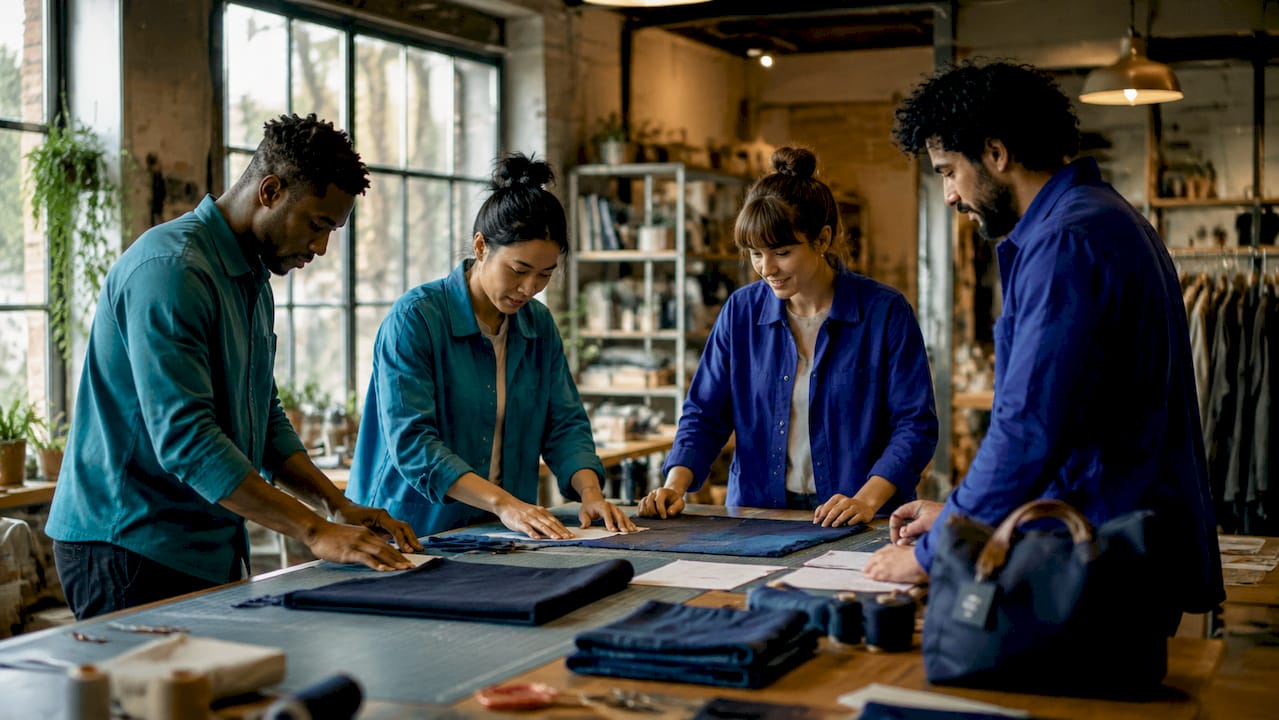
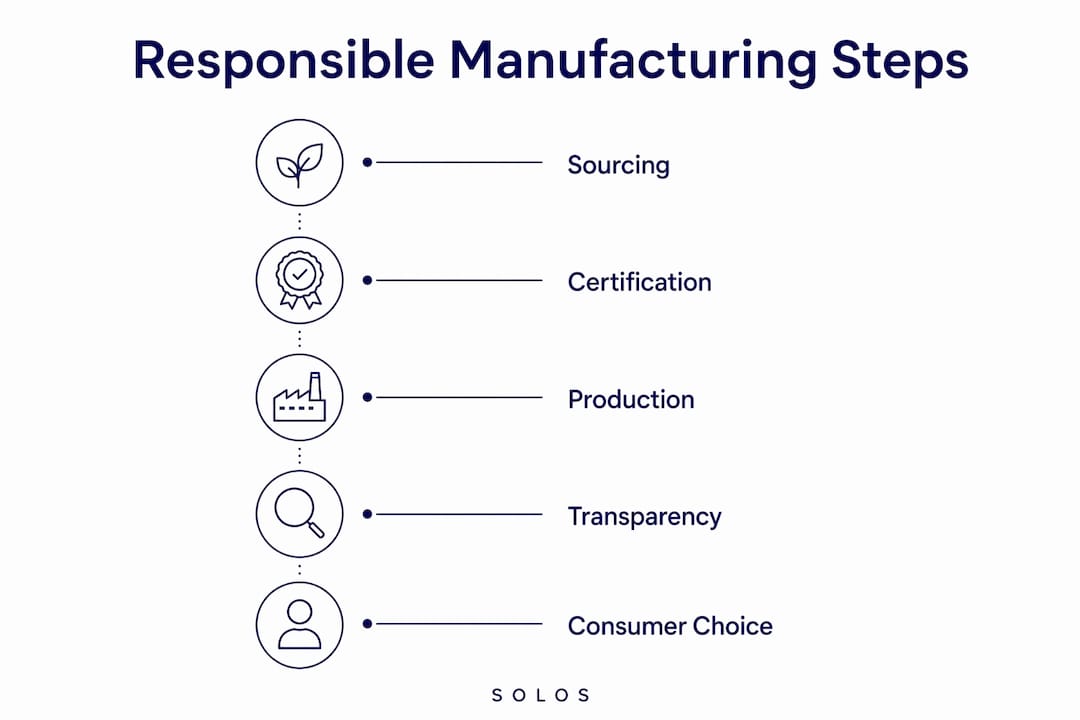
The three pillars are ecological integrity, social equity, and transparency. Ecological integrity means reducing harm to land, water, and air at every production stage. Social equity means fair wages, safe workplaces, and respect for workers at every tier of the supply chain. Transparency means making that evidence available to anyone who asks, backed by independent audits rather than brand promises.
What separates responsible manufacturing from conventional production is the priority order. Conventional production optimises for cost and speed. Responsible manufacturing optimises for long-term environmental and social impact, accepting that this sometimes costs more upfront. That trade-off is exactly what you are paying for when you choose a certified, ethically produced garment.
Which global standards verify responsible manufacturing claims?
Certifications are the most reliable way to verify a responsible manufacturing claim. Without third-party verification, any brand can call itself sustainable. The standards below are the ones that carry genuine weight in 2026.
- Global Organic Textile Standard (GOTS): GOTS verifies organic status from the farm through to the finished garment. It audits the entire supply chain, not just the fabric source, making it one of the most rigorous certifications available.
- OEKO-TEX Standard 100: This certification ensures no harmful substances are present in the finished textile. It uses positive chemical lists to exclude carcinogenic, mutagenic, and toxic substances from fabrics and processing auxiliaries.
- Global Recycled Standard (GRS): GRS verifies the recycled content in a product and tracks it through the supply chain with chain-of-custody documentation.
- Textile Exchange Materials Matter Standard: Introduced in late 2025, the Materials Matter Standard unifies earlier frameworks into a single system covering land use, water, energy, emissions, and social conditions in primary production. It is the most comprehensive raw materials standard currently operating.
- Ethical Clothing Australia: This certification audits Australian garment factories for fair wages, paid overtime, and union rights, going well beyond contract promises to verify actual working conditions on the factory floor.
Third-party audits and chain-of-custody documentation are what make these certifications meaningful. A certificate without an audit trail is just a logo. When you are assessing a brand, ask whether their certification includes batch-level tracking through every supply tier, not just the final factory.
Pro Tip: Check the certification body’s public database directly. GOTS, OEKO-TEX, and Ethical Clothing Australia all maintain searchable registries where you can confirm a brand’s current certification status before you buy.
For a deeper look at how these labels compare, the eco-friendly textile certifications guide from Soloslife breaks down each standard clearly.
What sustainable practices define responsible apparel manufacturing?
Responsible manufacturers do not just choose better fibres. They redesign the entire production process to reduce harm at every stage. The following practices define what genuine eco-friendly garment manufacturing looks like in 2026.
-
Use organic and regenerative fibres. Organic cotton, hemp, linen, and emerging materials like algae-based fibres replace conventional crops that rely on synthetic pesticides and fertilisers. Regenerative materials go further by actively contributing to ecosystem renewal rather than simply reducing harm.
-
Minimise water, chemical, and energy use. Responsible manufacturers reduce water and chemical consumption in wet processing and adopt energy-efficient technologies throughout production. Wet processing, which includes dyeing and finishing, is one of the most resource-intensive stages in garment manufacturing.
-
Implement closed-loop systems. Closed-loop production recovers water and heat during manufacturing and recirculates them rather than releasing them as waste. This approach cuts both resource consumption and pollution output in a single step.
-
Design for end of life. Responsible textile production means designing garments to be durable, repairable, recyclable, or biodegradable from the outset. A garment that lasts ten years has a fraction of the environmental footprint of one replaced every season.
-
Manage chemicals with positive lists. Rather than banning only known harmful substances, responsible manufacturers manage chemicals proactively using positive chemical lists that permit only approved inputs. This prevents new hazardous substances from entering the supply chain before they are identified as harmful.
One counterintuitive fact worth knowing: some natural dyes are less sustainable than modern synthetic closed-loop dyeing systems because of the land and water they consume. Responsible chemical management considers the full lifecycle impact of every input, not just whether it sounds natural.
Pro Tip: When reading a brand’s sustainability page, look for specific process claims like “closed-loop water recovery” or “GOTS-certified dye house” rather than vague language like “eco-friendly production.” Specific claims are auditable. Vague ones are not.
How do ethical labour practices fit into responsible apparel manufacturing?
Ethical clothing production and environmental sustainability are inseparable. A garment made from organic cotton in a factory with unsafe conditions is not responsibly manufactured. Social equity is a core pillar, not an optional add-on.
The key labour standards in responsible manufacturing include:
- Fair wages: Workers at every supply tier receive wages that meet or exceed living wage benchmarks for their region, not just the legal minimum.
- Safe working conditions: Factory floors meet occupational health and safety standards, with proper ventilation, fire exits, and limits on working hours.
- Supply chain accountability beyond tier one: Monitoring only first-tier factories is not enough. Responsible brands audit sub-suppliers, fabric mills, and raw material processors as well.
- Sub-contracting transparency: Sub-contracting is a known loophole where primary factories outsource work to unregulated facilities. Chain-of-custody documentation that tracks materials batch-by-batch through every supply tier is the primary defence against this risk.
- Certifications with teeth: Ethical Clothing Australia audits verify paid overtime and union rights, not just written contracts. That distinction matters because a contract promise and a verified practice are very different things.
Social enterprise models add another dimension. Some responsible brands direct a portion of revenue into community development programmes in their sourcing regions, creating a direct link between your purchase and improved conditions for the people who made your clothes.
How can consumers identify truly responsible apparel brands?
The most reliable signal of responsible manufacturing is third-party certification verified by independent auditors. Self-declared sustainability claims without audit backing carry no meaningful assurance. The table below outlines what to look for and what to treat as a red flag.
| What to look for | Red flag equivalent |
|---|---|
| GOTS, OEKO-TEX, or GRS certification with current registry listing | “Eco-friendly” or “sustainable” with no certification named |
| Chain-of-custody documentation covering all supply tiers | Transparency limited to the final factory only |
| Published audit reports from independent third parties | Internal sustainability reports with no external verification |
| Circular business models: repair, resale, or rental programmes | No end-of-life plan for products sold |
| Extended Producer Responsibility participation | No mention of what happens to garments after purchase |
Extended Producer Responsibility (EPR) policies in 2026 make manufacturers legally accountable for end-of-life garment management. Brands participating in EPR programmes are committing to circular business models that decouple profit from new production volume. That is a structural commitment, not a marketing claim.
Supply chain visibility is the other key test. A brand that can tell you which farm grew its cotton, which mill spun the yarn, and which factory assembled the garment is operating at a different level of accountability than one that cannot name its suppliers. Soloslife publishes its sourcing commitments and uses certified organic cotton, giving you a clear line of sight from field to finished product.
Pro Tip: Use the how to identify sustainable brands guide from Soloslife to cross-check any brand’s claims against a practical verification checklist before you commit to a purchase.
Key takeaways
Responsible manufacturing in apparel requires verified certifications, transparent supply chains, and ethical labour practices at every tier, not just the final factory.
| Point | Details |
|---|---|
| Definition matters | Responsible manufacturing covers the full lifecycle from fibre to finished garment, not just fabric choice. |
| Certifications are non-negotiable | GOTS, OEKO-TEX, GRS, and Ethical Clothing Australia provide independent verification that brand claims are real. |
| Labour and environment are linked | Ethical clothing production requires fair wages and safe conditions across all supply tiers, not just tier one. |
| Sub-contracting is a real risk | Chain-of-custody documentation is the only reliable way to prevent unregulated outsourcing from undermining standards. |
| EPR signals genuine commitment | Brands participating in Extended Producer Responsibility programmes are structurally committed to circular production, not just marketing it. |
Why responsible manufacturing is no longer optional
The fashion industry’s shift from extractive to restorative production is not a trend. It is a response to a genuine crisis in resource consumption, labour exploitation, and waste generation. Brands that treat responsible manufacturing as a marketing exercise are already losing credibility with informed consumers, and that gap will only widen.
What I find most telling is how many brands still treat supply chain transparency as a risk rather than an asset. The brands leading this space have discovered the opposite. Publishing audit results, naming suppliers, and participating in EPR programmes builds the kind of trust that no advertising budget can replicate.
The common consumer misunderstanding I see most often is equating “natural” with “responsible.” Natural fibres grown with heavy pesticide use, or dyed with resource-intensive natural dyes, can have a larger environmental footprint than well-managed synthetic alternatives. Responsible manufacturing is about verified, audited systems, not just material categories.
The brands that will define this industry in the next decade are those balancing genuine accountability with commercial viability. That means investing in certifications, publishing supply chain data, and designing products that last. Consumers who understand this distinction are the ones driving that change. You have more influence than you think.
— Solos
Responsibly made cotton essentials from Soloslife
Soloslife was built on the principle that premium quality and responsible production are not competing priorities. Every piece in the collection uses certified organic cotton, non-toxic dyes, and traceable sourcing, so you know exactly what you are wearing and where it came from.

The men’s cotton T-shirts and polos at Soloslife are designed for all-day comfort without the environmental cost of conventional garment manufacturing. Each purchase supports fair labour practices and responsible resource management, backed by transparent sourcing commitments rather than vague claims. If you are ready to build a wardrobe that reflects your values without sacrificing style, the Soloslife collection is the place to start.
FAQ
What is responsible manufacturing in apparel?
Responsible manufacturing in apparel is an end-to-end production framework that prioritises ecological integrity, ethical labour, and supply chain transparency from raw fibre to finished garment. It is verified through independent certifications like GOTS, OEKO-TEX, and Ethical Clothing Australia.
How do I know if a clothing brand is truly responsible?
Look for current third-party certifications listed in public registries, chain-of-custody documentation covering all supply tiers, and published audit reports from independent bodies. Vague claims without named certifications are a reliable red flag.
What does GOTS certification mean for consumers?
GOTS (Global Organic Textile Standard) certifies that a garment’s organic fibre status is verified at every stage of the supply chain, from the farm through to the finished product. It is one of the most rigorous certifications available for organic apparel in 2026.
What is Extended Producer Responsibility in fashion?
Extended Producer Responsibility (EPR) is a policy framework that makes manufacturers legally accountable for managing their garments at end of life. Brands operating under EPR support repair, resale, and recycling programmes rather than simply selling and walking away.
Why does sub-contracting matter in ethical clothing production?
Sub-contracting allows primary factories to outsource work to unregulated facilities, bypassing labour and environmental standards. Chain-of-custody documentation that tracks materials through every supply tier is the most effective safeguard against this risk.


