

TL;DR:
- Sustainable cotton includes organic, recycled, and regenerative varieties, each with distinct environmental and social benefits. Organic cotton is verified by GOTS, focusing on input restrictions, while regenerative cotton emphasizes active ecological improvements with measurable outcomes. Certifications are helpful but require careful verification of scope and specific product coverage to ensure genuine sustainability.
Sustainable cotton fabric is defined as cotton grown and processed with measurable reductions in environmental harm and improved social outcomes, covering organic, recycled, regenerative, and certified-blend varieties. If you are trying to make smarter choices in sustainable fashion, understanding the differences between these types of sustainable cotton fabric is the single most useful thing you can do. The four main categories each carry distinct certifications, environmental trade-offs, and quality characteristics. Knowing which is which puts you in control of every purchase.
1. What is organic cotton and why does it matter?
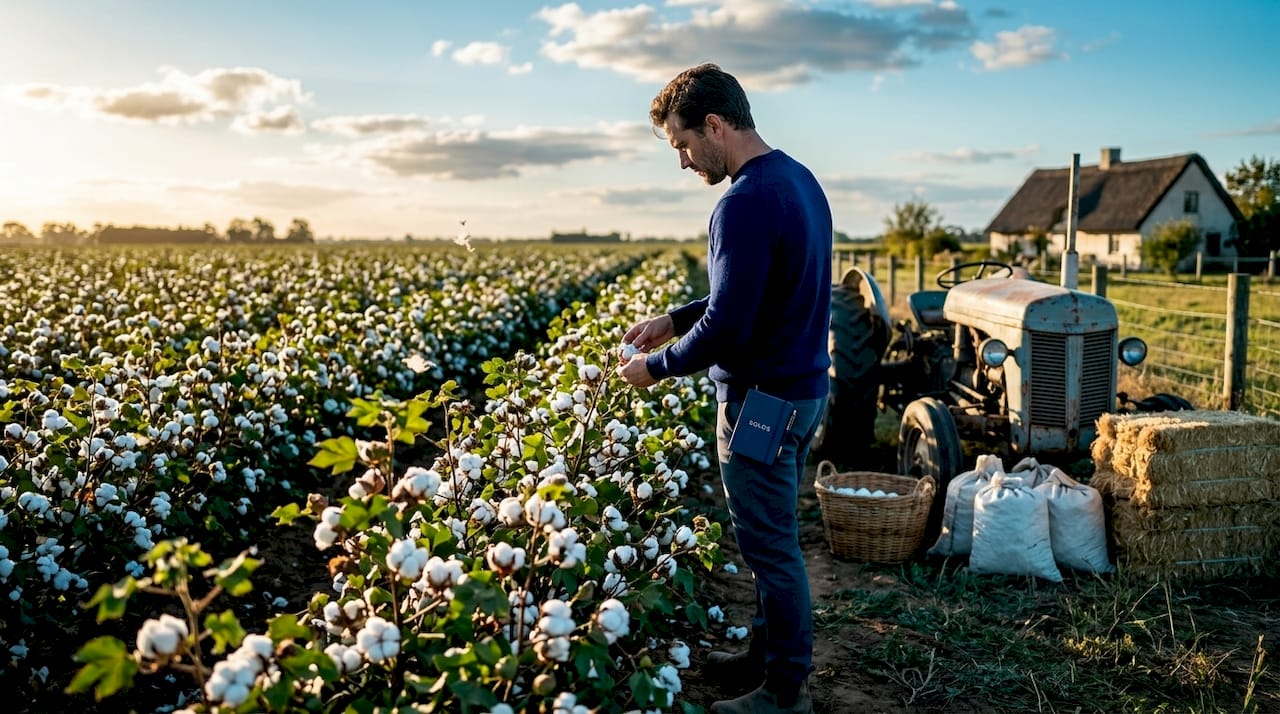
Organic cotton is cotton grown without synthetic pesticides, herbicides, or genetically modified seeds, under agricultural practices verified by a third-party certifier. The most recognised certification is the Global Organic Textile Standard, known as GOTS. GOTS certification covers both the organic fibre content and every processing stage, including environmental and social criteria such as wastewater treatment and fair labour conditions.
The fibre content thresholds under GOTS are worth understanding precisely. A garment labelled “organic” under GOTS requires at least 95% certified organic fibre. A lower threshold of 70% allows a “made with organic” claim instead. This distinction affects labelling and shapes how much certified organic content you are actually buying. Most reputable brands aim for the 95% threshold to carry the full “organic” label.
The environmental benefits of organic cotton are real and documented. Organic farming eliminates synthetic chemical inputs, which protects soil microbiomes, reduces water contamination, and lowers the toxic load on farm workers. The social criteria embedded in GOTS also mean the supply chain has been audited for fair wages and safe working conditions, not just clean fields.
One important limitation: organic certification is input-focused rather than outcome-based. It confirms what was not used during farming, but it does not directly measure whether soil health improved or biodiversity increased. That gap is exactly what regenerative cotton addresses, as covered below.
- Look for the GOTS logo on the care label or hang tag, not just a brand’s marketing copy.
- Check that the GOTS scope certificate applies to the specific product, not just the company, since a brand’s certificate may not cover every item it sells.
- Confirm the label reads “organic” rather than “made with organic” if maximising certified content is your priority.
Pro Tip: Ask brands directly which GOTS scope their certificate covers. A company-level certificate does not automatically mean every garment in their range meets the 95% threshold.
2. How recycled cotton fabric contributes to sustainability
Recycled cotton is produced from post-industrial or post-consumer cotton waste, including factory offcuts, unsold stock, and worn garments that are mechanically broken down into fibre. Recycled cotton reduces water and pesticide use compared to conventional cotton production and diverts textile waste from landfill. This makes it one of the most resource-efficient eco-friendly cotton types available today.
The environmental case for recycled cotton is strongest when compared to virgin conventional cotton. No new land is cleared, no new water is drawn for irrigation, and no new pesticides are applied. For brands and shoppers focused on reducing overall resource consumption, recycled cotton is a compelling choice, particularly for accessories, workwear, and casual basics.
There is a genuine trade-off to understand, though. Recycled cotton fibres are typically shorter and weaker than virgin cotton fibres, which can reduce durability and affect fabric hand-feel. Blending recycled cotton with other fibres, including organic cotton or recycled polyester, is common practice to restore strength and softness without sacrificing the sustainability credentials.
- Recycled cotton products may carry the Global Recycled Standard (GRS) certification, which verifies recycled content and chain of custody.
- Post-industrial recycled cotton (from factory waste) tends to produce more consistent colour and quality than post-consumer recycled cotton (from used garments).
- Blended recycled cotton fabrics are widely used in t-shirts, caps, and tote bags where a softer hand-feel is expected.
Learning more about cotton versus synthetics helps put recycled cotton’s advantages into sharper context when you are weighing up fabric options.
3. Why regenerative cotton is becoming the new standard
Regenerative cotton is defined by its focus on measurable ecological outcomes rather than simply restricting prohibited inputs. Regenerative cotton farming uses outcome-based measurement rather than just compliance with a list of banned substances. The goal is active improvement of soil health, biodiversity, water retention, and climate resilience, not just the absence of harm.
This is the critical difference between organic and regenerative cotton. Organic certification asks: “Did you avoid these inputs?” Regenerative certification asks: “Did the ecosystem actually improve?” Brands are increasingly seeking regenerative cotton because it aligns with upcoming stricter EU sustainability claims standards, which require measurable ecological benefits rather than process compliance alone.
Traceability is another area where regenerative cotton leads. Regenerative cotton supply chains often apply physical separation and batch-level identification, enabling farm-to-product tracking. This level of transparency gives both brands and consumers genuine confidence that the cotton in a garment came from a specific verified farm, not a blended commodity pool.
| Feature | Organic cotton | Regenerative cotton |
|---|---|---|
| Certification focus | Input restrictions (no synthetics) | Measurable ecological outcomes |
| Soil health measurement | Not directly measured | Actively monitored and improved |
| Biodiversity outcomes | Implied, not verified | Verified through farm assessments |
| Traceability | Batch-level under GOTS | Farm-level, batch-separated |
| EU sustainability alignment | Partial | Strong alignment with new standards |
Pro Tip: When a brand claims “regenerative cotton,” ask which certification body verified the outcomes. The Regenerative Cotton Standard and similar frameworks require farm-level audits, not just a brand’s self-declaration.
4. Understanding OEKO-TEX and safety-focused certifications
OEKO-TEX Standard 100 is a product safety certification, not a sustainability or organic certification. OEKO-TEX Standard 100 tests fabric, lining, zippers, threads, prints, and finishes to reduce exposure risk from harmful chemicals. It confirms the finished product does not contain harmful substances above defined thresholds. That is genuinely useful, but it is a different question from where the cotton was grown or how workers were treated.
The confusion between OEKO-TEX and sustainability certifications is widespread. A fabric can carry OEKO-TEX certification while being made from conventional cotton, provided it passes chemical limits. This means an OEKO-TEX label on a garment tells you it is safe to wear against your skin, but says nothing about pesticide use on the farm, water consumption, or labour conditions. Many shoppers mistake OEKO-TEX as a full sustainability label, when it primarily certifies chemical safety.
OEKO-TEX does offer a broader certification called STeP (Sustainable Textile and Leather Production), which evaluates environmental and social aspects of manufacturing facilities rather than just finished products. A garment from a STeP-certified factory combined with GOTS-certified organic cotton gives you a much more complete sustainability picture than either certification alone.
When reading cotton fabric eco-labels, use this as your guide:
- OEKO-TEX Standard 100: Chemical safety of the finished product. Useful, but not a sustainability certification.
- GOTS: Organic fibre content plus processing standards. The gold standard for organic cotton garments.
- GRS (Global Recycled Standard): Verified recycled content and chain of custody.
- Regenerative Cotton Standard: Farm-level ecological outcomes with strict traceability.
5. How to choose the right sustainable cotton fabric for your needs
Choosing between organic, recycled, and regenerative cotton comes down to your specific priorities. If chemical safety and certified organic content are your primary concerns, GOTS-certified organic cotton is the clearest choice. If reducing resource consumption and diverting waste from landfill matter most, recycled cotton with GRS certification delivers on those goals. If you want to support farming that actively restores ecosystems, regenerative cotton is the direction the industry is heading.
| Cotton type | Best for | Key certification | Main limitation |
|---|---|---|---|
| Organic cotton | Certified clean inputs, skin sensitivity | GOTS | Input-focused, not outcome-based |
| Recycled cotton | Waste reduction, resource efficiency | GRS | Shorter fibres, may need blending |
| Regenerative cotton | Ecosystem restoration, EU compliance | Regenerative Cotton Standard | Less widely available |
| Certified blends | Balance of performance and sustainability | GOTS + GRS or OEKO-TEX STeP | Requires reading multiple labels |
Budget is also a practical factor. Regenerative cotton commands a premium because of the farm-level auditing involved. Recycled cotton blends are often the most accessible price point. Organic cotton sits in the middle, with GOTS-certified garments widely available across a range of price brackets.
- Prioritise GOTS-certified organic cotton for everyday basics like t-shirts and underwear where skin contact is constant.
- Choose recycled cotton blends for accessories, outerwear, and casual pieces where durability from blending is an advantage.
- Seek out regenerative cotton when you want your purchase to actively support soil restoration and are willing to pay a modest premium.
Pro Tip: Caring for your cotton garments sustainably extends their lifespan and reduces their overall environmental footprint. An eco-friendly laundry routine makes a measurable difference over the life of a garment.
Sourcing sustainable cotton pieces is also relevant beyond basics. If you are exploring eco-friendly streetwear sourcing, the same certification principles apply across categories.
Key takeaways
Choosing the right sustainable cotton fabric requires matching your environmental priorities to the correct certification, since organic, recycled, and regenerative cotton each address different parts of the sustainability equation.
| Point | Details |
|---|---|
| Organic cotton and GOTS | Look for 95% certified organic fibre content to carry the full “organic” label under GOTS. |
| Recycled cotton trade-offs | Recycled cotton reduces resource use but may need blending with other fibres to maintain durability. |
| Regenerative cotton leads on outcomes | Regenerative certification measures actual ecological improvement, not just input restrictions. |
| OEKO-TEX is not a sustainability label | OEKO-TEX Standard 100 certifies chemical safety only. Combine it with GOTS or GRS for a complete picture. |
| Match fabric type to your priorities | Organic suits skin sensitivity, recycled suits waste reduction, regenerative suits ecosystem restoration. |
Why certifications alone won’t make you a smarter cotton shopper
Here is something we have learned from working closely with sustainable cotton sourcing: most shoppers focus on a single certification and assume the job is done. They see “GOTS certified” on a hang tag and stop asking questions. The reality is more layered than that.
A GOTS certificate at the company level does not automatically apply to every product that company sells. We have seen brands display GOTS credentials prominently while only a fraction of their range actually meets the 95% organic fibre threshold. The 70% “made with organic” tier is legitimate, but it is a meaningfully different product. Reading the scope of a certificate matters as much as knowing the certification exists.
The shift toward regenerative cotton is the most significant development in sustainable fabric materials right now. It moves the conversation from “what did you avoid?” to “what did you improve?” That is a harder question to answer, and it requires more rigorous supply chain transparency. But it is the right question, and the brands investing in regenerative sourcing are building something more durable than a marketing claim.
My honest advice: treat certifications as a starting point, not a finish line. Ask brands which specific products are covered, what fibre content threshold applies, and whether their traceability goes to farm level. The brands that can answer those questions clearly are the ones worth your loyalty.
— Solos
Discover sustainable cotton essentials at Soloslife
At Soloslife, every garment starts with the fabric. Our sustainable cotton essentials are sourced with the same rigour this article describes, prioritising certified organic cotton and non-toxic dyes across our full range. From crew neck slim fit t-shirts to polo slim fit shirts and cotton canvas caps, each piece is designed to wear well and last. We back our sourcing commitments with transparency. You can read the full detail of our approach on our sustainability page. When you choose Soloslife, you are choosing cotton that has been held to a standard, not just a story.

FAQ
What are the main types of sustainable cotton fabric?
The four main types are organic cotton, recycled cotton, regenerative cotton, and certified blends. Each addresses a different aspect of sustainability, from chemical-free farming to waste reduction and ecosystem restoration.
Is OEKO-TEX the same as organic cotton certification?
No. OEKO-TEX Standard 100 certifies that a finished fabric is free from harmful chemicals above set thresholds, but it does not verify organic farming practices or recycled content. A fabric can be OEKO-TEX certified while being made from conventional cotton.
What does GOTS certification actually guarantee?
GOTS certification guarantees that at least 95% of the fibre is certified organic and that processing meets strict environmental and social criteria, including restrictions on harmful chemicals and requirements for fair labour conditions throughout the supply chain.
How is regenerative cotton different from organic cotton?
Organic cotton certification is input-focused, confirming prohibited substances were not used. Regenerative cotton certification is outcome-based, measuring whether soil health, biodiversity, and water retention actually improved as a result of farming practices.
Can recycled cotton be as high quality as virgin cotton?
Recycled cotton fibres are typically shorter and weaker than virgin fibres, which can affect durability and softness. Blending recycled cotton with other fibres is the standard solution to restore performance without sacrificing the environmental benefits of using reclaimed material.


