

TL;DR:
- Wearing a garment twice as long reduces its environmental impact by 50 percent, making durability vital for sustainability. High-quality fabrics like hemp, Sorona, and long-staple organic cotton combine environmental benefits with long lifespan, while construction quality further extends a garment’s usefulness. Emotional attachment encourages longer use, and assessing physical quality helps consumers choose garments that are both durable and sustainable.
Garment durability is the single most effective driver of sustainability in fashion. Wearing a garment twice as long reduces its carbon, water, and waste footprint by 50%. That one fact reframes the entire conversation. Sustainability is not just about what a garment is made from. It is about how long it lasts, how well it is built, and how much you value it. Understanding how sustainability connects garment durability gives you a practical lens for every purchase you make, and it is a lens the industry is only beginning to use properly.
How sustainability connects garment durability through material choice
The fabric you choose sets the ceiling for how long a garment can last. Some materials are built for longevity. Others degrade quickly regardless of how carefully you care for them.
Bio-based fibres represent one of the clearest wins in sustainable garment materials. Sorona fibre requires 30% less energy and produces 63% fewer greenhouse gas emissions than traditional nylon, while also delivering strong durability. That combination of lower production impact and longer useful life is exactly what the sustainability and durability relationship looks like in practice.
Organic cotton is widely praised, but its sustainability credentials depend heavily on how it is made. Organic cotton uses 91% less water than conventional cotton, which is a genuine environmental gain. The catch is that durability varies with staple fibre length and garment construction. A short-staple organic cotton tee that pills after a dozen washes is not a sustainable choice, regardless of its certification. The label alone does not guarantee longevity.
Plant-based fibres like hemp, linen, and TENCEL™ demonstrate sustainability through both resource efficiency and durability over time. Hemp, in particular, strengthens with repeated washing rather than weakening. Linen becomes softer and more supple with wear. These fibres reward long-term ownership in a way that fast fashion synthetics simply cannot.
The table below shows how key sustainable garment materials compare across durability and environmental impact:
| Fibre | Durability profile | Key environmental advantage |
|---|---|---|
| Organic cotton | Moderate to high (depends on construction) | 91% less water than conventional cotton |
| Sorona (bio-based) | High | 63% fewer GHG emissions than nylon |
| Hemp | Very high | Low water, no pesticides, strengthens with wear |
| Linen | High | Minimal water and chemical inputs |
| TENCEL™ | Moderate to high | Closed-loop production, biodegradable |
Key considerations when evaluating sustainable garment materials:
- Staple length matters in cotton. Longer staple fibres produce stronger, smoother yarn that resists pilling.
- Weave density affects wear resistance. A tighter weave holds its shape longer under repeated use.
- Certifications like GOTS and OEKO-TEX Standard 100 verify both environmental and quality standards, giving you a baseline for durability expectations.
- Blended fabrics can extend life when the blend is well-considered. A cotton and TENCEL™ blend, for example, can improve drape and durability together.
Pro Tip: Check the fabric weight listed on the garment label. A heavier weight generally signals a denser weave and longer wear life, particularly in cotton basics like tees and polos.
Does garment construction quality affect sustainability?
Material choice starts the process, but construction quality determines whether a garment actually reaches its potential lifespan. Construction quality, repair ecosystem access, and ease of maintenance are fundamental to a garment’s useful life beyond the fabric itself. A beautifully sourced organic cotton shirt sewn with weak stitching will fail long before its fibre quality would suggest.
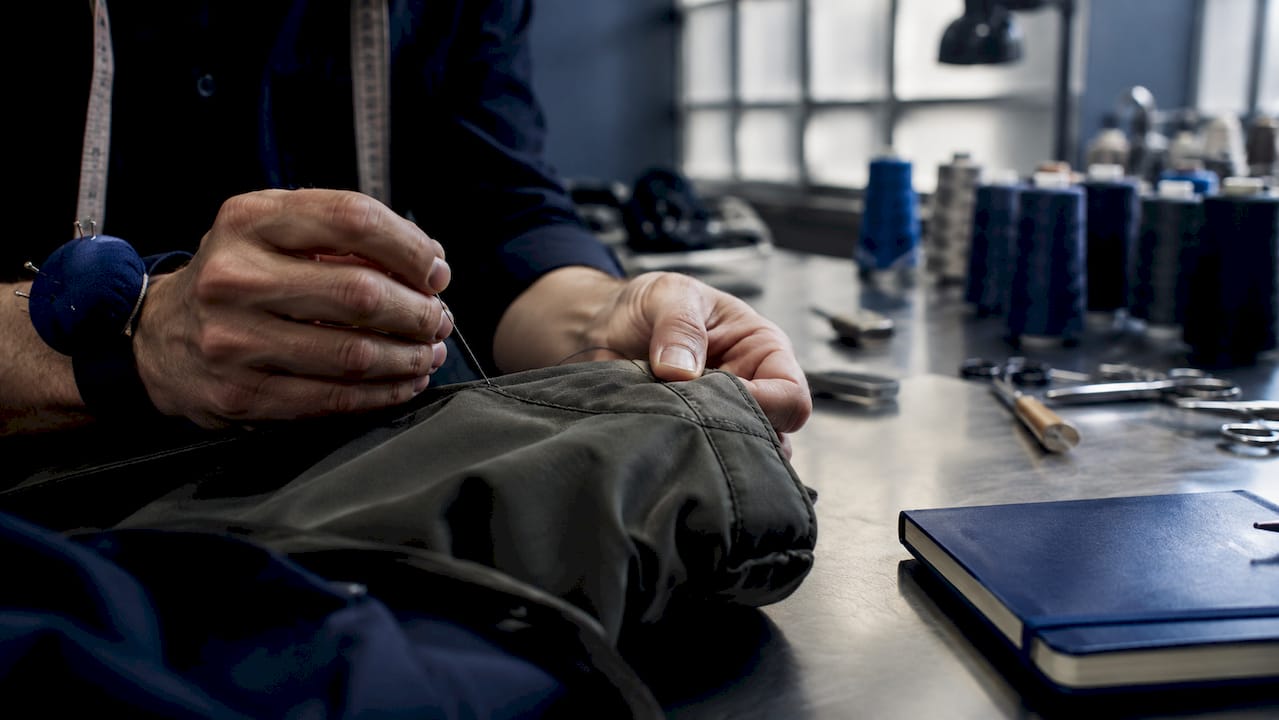
Slow fashion principles place construction at the centre of durability in fashion. Reinforced seams, bar-tacked stress points, and consistent stitch density are not just quality signals. They are sustainability signals. A garment built to be repaired rather than discarded keeps itself out of landfill for years longer than one that cannot be easily mended.
Design for repair is a growing concept in sustainable production methods. Brands that use standard thread colours, accessible seam allowances, and replaceable components make it practical for you to extend a garment’s life at home or through a tailor. When repair is difficult or impossible, premature disposal becomes the default outcome.
The following construction features indicate a garment built for longevity:
- Double-stitched seams at high-stress points like underarms and side seams resist tearing under regular wear.
- Reinforced buttonholes prevent fraying, which is one of the most common reasons shirts are discarded.
- Flat-felled seams lie flat against the body and are far more durable than overlocked edges alone.
- Consistent stitch density of 8–12 stitches per centimetre signals careful construction rather than speed-sewn production.
- Pre-shrunk or sanforised fabric prevents distortion after washing, preserving fit and extending wearable life.
ISO test methods, including ISO 13934 for tensile strength and ISO 12945 for pilling resistance, give the industry a framework for measuring physical durability. Brands that reference these standards in their quality processes are signalling that durability is a designed-in outcome, not an afterthought. You can look for references to these standards in a brand’s transparency documentation.
Pro Tip: Turn a garment inside out before buying it. Check the seam allowances and stitch consistency. Narrow, uneven seams are a reliable sign of cost-cutting that will show up as wear damage within months.
What is emotional durability and why does it matter?
Emotional durability is defined as the degree to which a person values, cares for, and maintains a connection with a garment over time. It is distinct from physical durability. A structurally sound garment that you no longer feel attached to will be discarded just as quickly as one that falls apart. Emotional connection directly influences garment retention and care, making it a genuine sustainability variable.
The industry is increasingly recognising that behaviour is as important as materials in determining a garment’s lifecycle. A piece you love wearing gets washed carefully, repaired when needed, and kept for years. A piece you feel indifferent toward gets worn a handful of times and donated or binned. The physical garment may be identical in both cases.
Building emotional durability into your wardrobe is a practical skill. Here are four ways to do it:
- Buy with intention. Choose pieces that fit your actual lifestyle, not an aspirational version of it. A garment worn regularly develops meaning through use.
- Understand the story behind the piece. Knowing where a fabric was grown or how a garment was made creates a connection that makes you more likely to care for it.
- Repair rather than replace. The act of mending a garment reinforces your relationship with it. A repaired piece often becomes more valued, not less.
- Curate, do not accumulate. A smaller wardrobe of pieces you genuinely love generates more wear per item than a large wardrobe of things you feel lukewarm about.
Pro Tip: When you are considering a new purchase, ask yourself whether you can picture wearing it 30 times. If the answer is no, the garment is unlikely to deliver on either its cost or its sustainability promise.
How can you assess garment durability when buying sustainable fashion?
Cost per wear is the most practical mental model for assessing eco-friendly clothing longevity at the point of purchase. Divide the price of a garment by the number of times you expect to wear it. A $120 shirt worn 80 times costs $1.50 per wear. A $30 shirt worn 10 times costs $3.00 per wear. The cheaper garment is both more expensive in practice and more damaging to the environment.
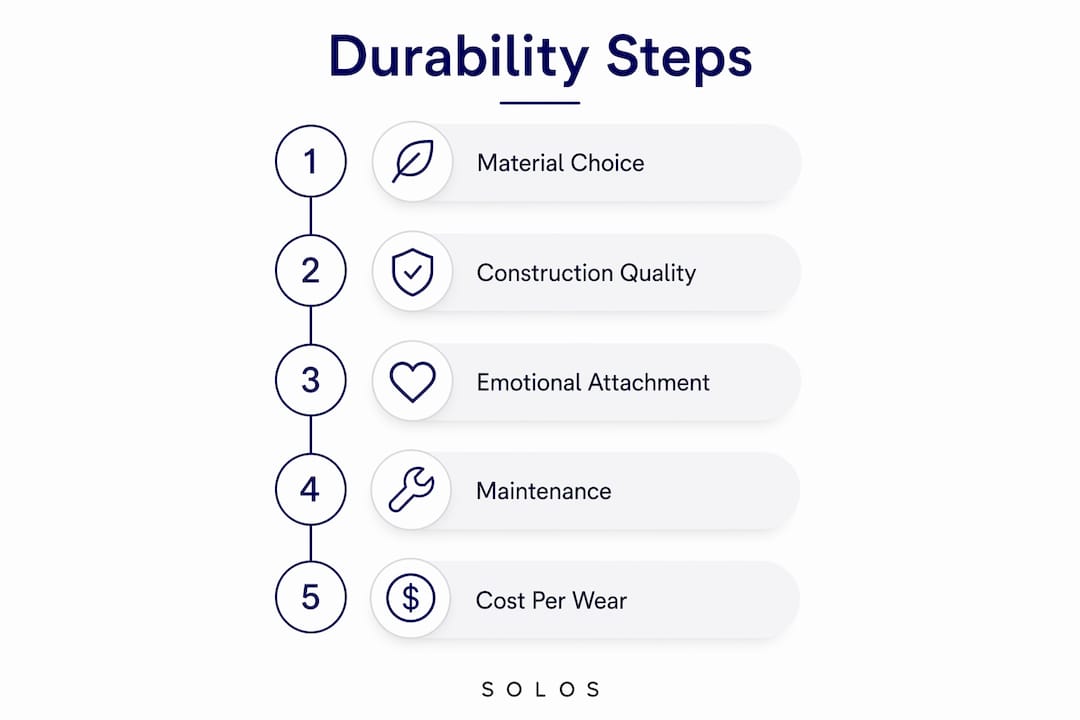
Third-party verified cost per wear information shifts consumer choices towards higher-quality, greener options. Shoppers trust independent verification far more than brand marketing. That trust gap is why certifications matter so much when you are trying to identify genuinely durable, sustainable clothing.
When assessing a garment before purchase, look for these physical signs of quality construction:
- Fabric density. Hold the fabric up to light. A tightly woven fabric lets through very little light and resists wear better than a loose weave.
- Seam finish. Check that seams are finished consistently and lie flat without puckering.
- Stitching regularity. Uneven or skipped stitches indicate machine issues or rushed production.
- Label information. A brand that lists fibre content, country of manufacture, and care instructions in detail is more likely to stand behind its product.
- Certifications. Look for sustainable apparel certifications like GOTS, OEKO-TEX Standard 100, or WRAP, which include quality and safety benchmarks alongside environmental criteria.
Maintenance also plays a decisive role in how durability affects sustainability. Washing garments in cold water, avoiding the tumble dryer, and storing them properly can double their useful life. An eco-friendly laundry routine is not just good for the environment. It is the single most accessible way to extend the life of what you already own.
Durability and sustainability require looking beyond certifications to actual garment performance after multiple washes and uses. A garment made of organic cotton that loses its shape after 10 washes is less sustainable than a conventional fibre garment that holds up for 50 or more. Physical integrity across repeated use is the real test of a sustainable garment, and it is one that the industry is only beginning to measure rigorously.
Key takeawaysGarment durability is the most direct path to sustainability in fashion because longer-lasting clothing reduces resource consumption, waste, and emissions across its entire lifecycle.
| Point | Details |
|---|---|
| Doubling wear halves footprint | Wearing a garment twice as long cuts its carbon, water, and waste impact by 50%. |
| Material choice sets the ceiling | Fibres like hemp, Sorona, and long-staple organic cotton offer both environmental savings and genuine longevity. |
| Construction quality is non-negotiable | Double-stitched seams, reinforced stress points, and repairability determine real-world lifespan. |
| Emotional durability drives behaviour | Garments you value get worn more, cared for better, and kept longer, multiplying their sustainability benefit. |
| Cost per wear is your best buying tool | Dividing price by expected wears reveals the true value and environmental cost of any garment. |
Why durability is the sustainability conversation we keep avoiding
Most people shopping for sustainable fashion focus on certifications and fibre origins. That is a reasonable starting point, but it misses the bigger picture. The most sustainable garment you own is the one you are still wearing five years from now, regardless of what it is made from.
I have seen this pattern repeatedly. A shopper buys an organic cotton tee, washes it carelessly, and replaces it within a season. Meanwhile, someone else is still wearing a well-constructed cotton polo they bought years ago because they chose quality and looked after it. The second person has a far smaller fashion footprint, even if they never thought of themselves as a sustainable shopper.
The uncomfortable truth is that durability forces us to confront our consumption habits directly. Buying less and buying better is a harder message to act on than simply switching to a greener fibre. Emotional durability adds another layer. We need to buy things we actually love, not things we think we should love. A wardrobe built on genuine connection rather than impulse is a wardrobe that stays out of landfill.
At Soloslife, we think about this every time we select a fabric or specify a construction method. Premium cotton essentials built to last are not just a product decision. They are a position on what sustainable fashion actually means in practice.
— Solos
Soloslife’s approach to lasting, sustainable essentials
Soloslife builds its cotton basics around the principle that quality and sustainability are the same thing. Every tee and polo in the Soloslife collection is made from premium sustainable cotton, cut and constructed to hold its shape, colour, and structure across years of regular wear. Non-toxic dyes, responsible sourcing, and fair labour practices are built into every step of production.
If you are ready to invest in pieces that genuinely last, the Soloslife sustainability page outlines exactly how each garment is made and why those choices matter. For a wardrobe built on durability and integrity, that is the right place to start.
FAQ
What is the link between garment durability and sustainability?
Durability directly reduces a garment’s environmental footprint by extending its useful life. Wearing a garment twice as long cuts its carbon, water, and waste impact by 50%.
Which fabrics are the most durable and sustainable?
Hemp, long-staple organic cotton, Sorona, and TENCEL™ offer strong combinations of durability and low environmental impact. Hemp is particularly notable because it strengthens with repeated washing.
How does cost per wear help me choose sustainable clothing?
Cost per wear divides a garment’s price by the number of times you expect to wear it. Higher-quality pieces consistently deliver a lower cost per wear than cheap, short-lived alternatives.
What construction features indicate a long-lasting garment?
Double-stitched seams, reinforced buttonholes, flat-felled seams, and consistent stitch density of 8–12 stitches per centimetre are reliable signs of durable construction.
Does emotional attachment to clothing affect sustainability?
Yes. Garments you value emotionally get worn more often, cared for more carefully, and kept for longer, which directly extends their lifecycle and reduces their environmental impact.


