

TL;DR:
- Ethical sourcing apparel involves respecting workers’ rights and the environment across all supply chain levels.
- Certifications like Fair Trade, GOTS, and SA8000 help verify credible social and environmental standards.
Ethical sourcing apparel is the practice of obtaining clothing materials and production services in ways that respect both people and the planet. The industry term is responsible sourcing, and it covers fair labour conditions, safe workplaces, and low environmental harm across every tier of a supply chain. The apparel industry contributes up to 10% of global greenhouse gas emissions, which makes how and where clothes are made one of the most consequential purchasing decisions you can make. Certifications like Fair Trade Certified™, GOTS, and SA8000 exist precisely to give that decision a credible foundation.
What core practices define ethical sourcing in apparel?
Responsible sourcing apparel starts with knowing exactly who makes your clothes and under what conditions. Supply chains often span four or more tiers, from the farm growing raw cotton through to the finishing factory sewing on buttons. Most brands only have direct relationships with their Tier 1 manufacturers. Genuine ethical sourcing requires mapping every tier, including raw material extraction.
The practices that separate credible ethical sourcing from marketing copy fall into four clear areas:
- Supply chain mapping. Brands must document every supplier tier, not just the final factory. Without this visibility, claims of ethical sourcing are unverifiable.
- Certified supplier partnerships. Working with suppliers who hold certifications such as Fair Trade Certified™, GOTS (Global Organic Textile Standard), or SA8000 provides an independent baseline for labour and environmental standards.
- Independent auditing and ongoing monitoring. A single audit visit is not enough. Continuous supplier monitoring maintains ethical standards between formal reviews and catches problems before they become systemic.
- Low-impact materials and production methods. Prioritising organic fibres, non-toxic dyes, and water-efficient processes reduces environmental harm at the source.
The challenges are real. Independent audits are expensive, and complex multi-country supply chains make full transparency difficult even for well-resourced brands. 19% of fashion executives express significant concern about upstream ethical sourcing. That figure shows the gap between intention and execution remains wide across the industry.
Pro Tip: When researching a brand, look for a published supplier list or a transparency report. A brand willing to name its factories publicly is far more credible than one that only mentions certifications in general terms.

How do material choices affect sustainability and ethics?
No single fibre is the perfect sustainable choice. Every material involves trade-offs across water use, chemical inputs, greenhouse gas emissions, and labour conditions. Evaluating fabric requires looking at all four factors together, not just one.
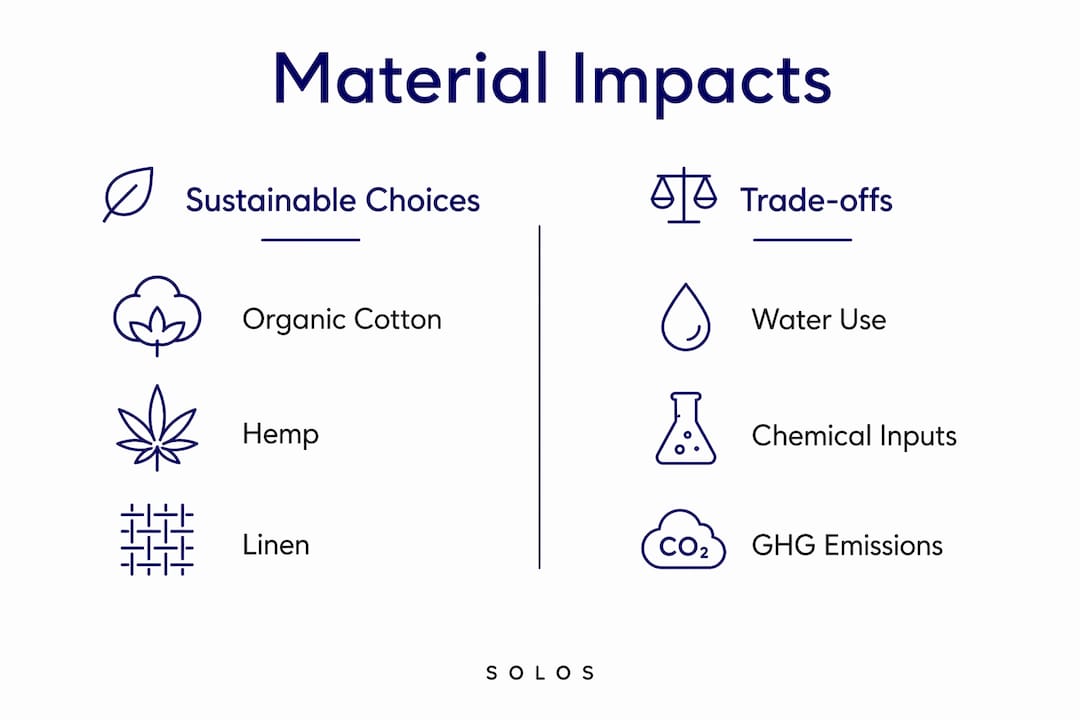
Here is how common materials compare across key sustainability criteria:
| Material | Water use | Chemical inputs | GHG emissions | Labour considerations |
|---|---|---|---|---|
| Conventional cotton | Very high | High (pesticides) | Moderate | Variable; often low-wage regions |
| Organic cotton | High | Low | Moderate | Better with GOTS certification |
| TENCEL™ (lyocell) | Low | Closed-loop process | Low | Generally well-regulated |
| Hemp | Low | Very low | Low | Minimal processing needed |
| Linen | Low | Low | Low | Traditional, low-intensity farming |
| Recycled polyester | Low | Moderate | Lower than virgin | Dependent on collection systems |
| Virgin polyester | Low | High | High | Petrochemical supply chains |
Organic cotton, hemp, linen, and TENCEL™ consistently appear as preferred choices among sustainability researchers. Each still requires scrutiny. Organic cotton uses significantly less chemical input than conventional cotton, but it still demands considerable water. TENCEL™ uses a closed-loop solvent process that recovers and reuses chemicals, making it one of the cleaner options for finishing.
The word “natural” on a label does not guarantee ethical sourcing. Conventional wool, for example, can involve land degradation and poor animal welfare. Bamboo is often marketed as eco-friendly but is typically processed using harsh chemicals that undermine its green credentials. Eco-friendly fabric finishing practices matter as much as the raw fibre itself.
Certifications help close this gap. GOTS covers both organic fibre standards and social criteria. OEKO-TEX® Standard 100 tests finished garments for harmful substances. Neither certification alone covers everything, which is why the most credible brands layer multiple standards rather than relying on one.
Pro Tip: Check whether a brand uses certified organic cotton rather than simply “cotton.” The GOTS label on a finished garment means the fibre, processing, and manufacturing all meet defined standards, not just the raw material.
What role do certifications play in ethical apparel sourcing?
Certifications are the most reliable shortcut consumers have for verifying ethical sourcing claims. They replace brand self-reporting with independent, third-party verification. Understanding what each one actually covers helps you read labels with confidence.
The major certifications and what they verify:
- Fair Trade Certified™. Covers fair wages, safe working conditions, and community development funds for workers. Applies primarily to labour standards at farm and factory level.
- GOTS (Global Organic Textile Standard). Covers the entire textile supply chain from organic fibre through to finished product, including social criteria and restrictions on harmful chemicals.
- SA8000. An auditable social certification standard based on international human rights norms. Covers child labour, forced labour, health and safety, working hours, and the right to organise.
- OEKO-TEX® Standard 100. Tests every component of a finished garment for harmful substances. Does not cover labour conditions but provides strong chemical safety assurance.
- Bluesign®. Focuses on chemical management, resource efficiency, and worker safety in textile manufacturing. Common in performance and outdoor apparel.
Third-party certifications provide credible verification but are not sufficient on their own. A factory can hold SA8000 certification and still use non-organic, high-pesticide cotton. A garment can be GOTS-certified at fibre level but finished using a non-certified dye house. Sustainable apparel certifications work best when brands stack them to cover labour, environmental, and chemical dimensions together.
Traceability is the other piece certifications cannot fully solve. A brand may certify its Tier 1 factory while remaining blind to conditions at Tier 3 or Tier 4. Genuine ethical sourcing requires transparency all the way back to raw material extraction, which is why supply chain mapping and certification must work together.
How can you make responsible ethical clothing choices?
The most sustainable garment is one you already own and wear frequently. Durability and longevity can outweigh material choices alone when it comes to reducing your clothing footprint. Buying less and wearing more is the single most effective shift you can make.
Practical steps for making responsible choices:
- Apply the wear count principle. Research suggests wearing a T-shirt at least 45 times, a jumper or hoodie 85 times, and a jacket or coat 100 times to offset its carbon footprint. These targets reframe how you think about cost per wear rather than purchase price.
- Shop your own wardrobe first. Before buying anything new, check what you already own. Restyling existing pieces reduces new consumption and extends garment life without any additional environmental cost.
- Prioritise secondhand and vintage. Buying pre-loved clothing extends a garment’s life and avoids the environmental cost of new production entirely. The secondhand market has grown significantly as consumers recognise this impact.
- Check labels for certifications and materials. Look for GOTS, Fair Trade Certified™, or OEKO-TEX® labels. Check fibre content and favour organic cotton, linen, hemp, or TENCEL™ over conventional synthetics.
- Avoid fast fashion pricing signals. A T-shirt priced at a few dollars cannot have been made under fair labour conditions. The true cost of cheap clothing is paid by workers and the environment, not the retailer.
- Support brands with published transparency. Brands that name their factories, publish audit results, or maintain a public sustainability report are making verifiable commitments. Vague claims about being “eco-conscious” without evidence are a warning sign.
Pro Tip: Use resources like identifying sustainable brands to cross-check a brand’s claims before purchasing. Transparency is the one thing a genuinely ethical brand will never hide.
Key takeaways
Ethical sourcing apparel requires supply chain transparency, credible certifications, low-impact materials, and consumer choices that prioritise durability over disposability.
| Point | Details |
|---|---|
| Transparency is foundational | Brands must map all supply chain tiers, not just Tier 1 factories, to make credible ethical claims. |
| Certifications work best in combination | Stacking GOTS, Fair Trade Certified™, and OEKO-TEX® covers labour, environment, and chemical safety together. |
| No fabric is perfect | Every material involves trade-offs; organic cotton, TENCEL™, hemp, and linen are preferred starting points. |
| Wear counts reduce footprint | Wearing a T-shirt 45 times and a jacket 100 times offsets their carbon cost more than material choice alone. |
| Consumer behaviour matters | Shopping secondhand, avoiding fast fashion, and buying durable pieces are the highest-impact choices available. |
Transparency is the only metric that doesn’t lie
The part of ethical sourcing that most articles skip is this: certifications are a floor, not a ceiling. I have seen brands display four certification logos on their website while their Tier 3 suppliers remain completely undisclosed. That is not ethical sourcing. That is certification theatre.
What I find genuinely encouraging in 2026 is the shift toward consumer-driven accountability. Regulatory pressure in the European Union and growing Australian consumer awareness are forcing brands to publish more than a logo. The brands responding well are the ones treating transparency as a design principle, not a compliance exercise.
The other thing worth saying plainly: the most ethical garment you can buy is one you will wear for years. A beautifully made organic cotton T-shirt worn twice and discarded is worse for the planet than a conventional one worn 80 times. Durability and care habits are part of the ethical equation, and they are entirely within your control. When you understand how brands prove their ethics, you stop being impressed by logos and start asking better questions.
My honest view is that the industry is moving in the right direction, but slowly. Consumer expectations are the fastest lever available. Every purchase you make is a signal.
— Solos
Soloslife’s approach to responsible apparel
Soloslife builds its range around premium sustainable cotton essentials that are made to be worn, not discarded. Every piece uses non-toxic dyes and eco-friendly production methods, with transparency built into the brand’s sourcing from the start.
If you are looking for wardrobe staples that hold up to the wear count standard, Soloslife’s premium cotton T-shirts and polos are designed for exactly that. The brand’s sustainability commitments cover material sourcing, manufacturing practices, and fair labour standards, giving you the proof points to shop with confidence. Quality made to last is the most straightforward ethical choice available.
FAQ
What is ethical sourcing in the apparel industry?
Ethical sourcing in apparel is the practice of procuring materials and manufacturing services in ways that protect workers’ rights, maintain safe conditions, and minimise environmental harm across all supply chain tiers.
How do I know if a clothing brand is ethically sourced?
Look for third-party certifications such as Fair Trade Certified™, GOTS, or SA8000, and check whether the brand publishes a supplier list or transparency report. Vague sustainability claims without verifiable evidence are a warning sign.
Is organic cotton always the most ethical fabric choice?
Organic cotton is a strong choice because it avoids synthetic pesticides and supports better labour standards when GOTS-certified, but it still uses significant water. No single fibre is perfect; the best approach combines preferred materials with strong labour and environmental standards.
How many times should I wear a garment to make it sustainable?
Research suggests wearing a T-shirt at least 45 times, a jumper or hoodie 85 times, and a jacket or coat 100 times to offset its carbon footprint. Frequency of wear is one of the most effective sustainability levers available to consumers.
What is the difference between fair trade clothing and ethical sourcing?
Fair Trade Certified™ clothing meets specific standards for fair wages and safe working conditions verified by an independent body. Ethical sourcing is a broader concept that also includes environmental standards, supply chain transparency, and material choices beyond labour conditions alone.


