

TL;DR:
- Clothing brands that embed social responsibility into their core operations create lasting and measurable community impact. Transparency, real investments, and integrated production models are key indicators of genuine commitment, while systemic barriers still limit true economic uplift for artisans. Consumers can support meaningful change by choosing brands with named programs, published impact reports, and responsible sourcing practices.
Clothing brands support communities through direct financial investment, ethical sourcing, and social empowerment programmes built into their core operations. This is not peripheral philanthropy. The most impactful brands treat community development as a structural business commitment, not a marketing footnote. Brands like Miik, HoMie, and PAKA demonstrate that the impact of fashion on communities is measurable, replicable, and deeply tied to how a brand sources, produces, and distributes its products. When you buy from a brand that genuinely embeds social responsibility into its model, you are participating in a supply chain that creates real change.
How do clothing brands support communities through direct investment?
The most direct method is financial commitment tied to measurable outcomes. Miik pledged $75,000 over three years to empower 100,000 women and girls globally through education, skill development, and entrepreneurship support. That figure matters because it sets a benchmark. It shows that even mid-sized clothing brands can make structured, accountable financial commitments rather than vague promises.
Employment programmes are equally powerful. HoMie, an Australian streetwear label, donates 100% of profits to support young people affected by homelessness, having assisted over 3,900 individuals since 2015. HoMie also runs its Retail Ready initiative, a vocational training programme that prepares young people experiencing disadvantage for real employment in retail. The brand does not just donate money. It creates pathways.
Other brands focus on reintegration. Dharana, for example, employs women post-incarceration, giving them stable work and dignity through fashion production. This model treats employment itself as the social intervention. It recognises that a job with fair pay and training is more transformative than a one-off donation.
- Financial pledges with accountability: Brands like Miik tie donations to specific outcomes, such as education and entrepreneurship for women.
- Employment as intervention: Brands like HoMie and Dharana use the act of hiring as a direct form of community support.
- Vocational training programmes: Retail Ready and similar initiatives build long-term employability, not just short-term income.
- Profit-sharing models: Donating 100% of profits, as HoMie does, creates a direct link between consumer spending and social impact.
Pro Tip: When evaluating a brand’s community claims, look for named programmes with reported outcomes rather than broad statements about “giving back.” Specificity is the mark of genuine commitment.
How does ethical sourcing empower artisan communities?
Ethical sourcing is the mechanism through which clothing brands community support reaches the people who actually make the clothes. Transparent supply chains are the foundation. Without them, claims of community benefit are unverifiable.
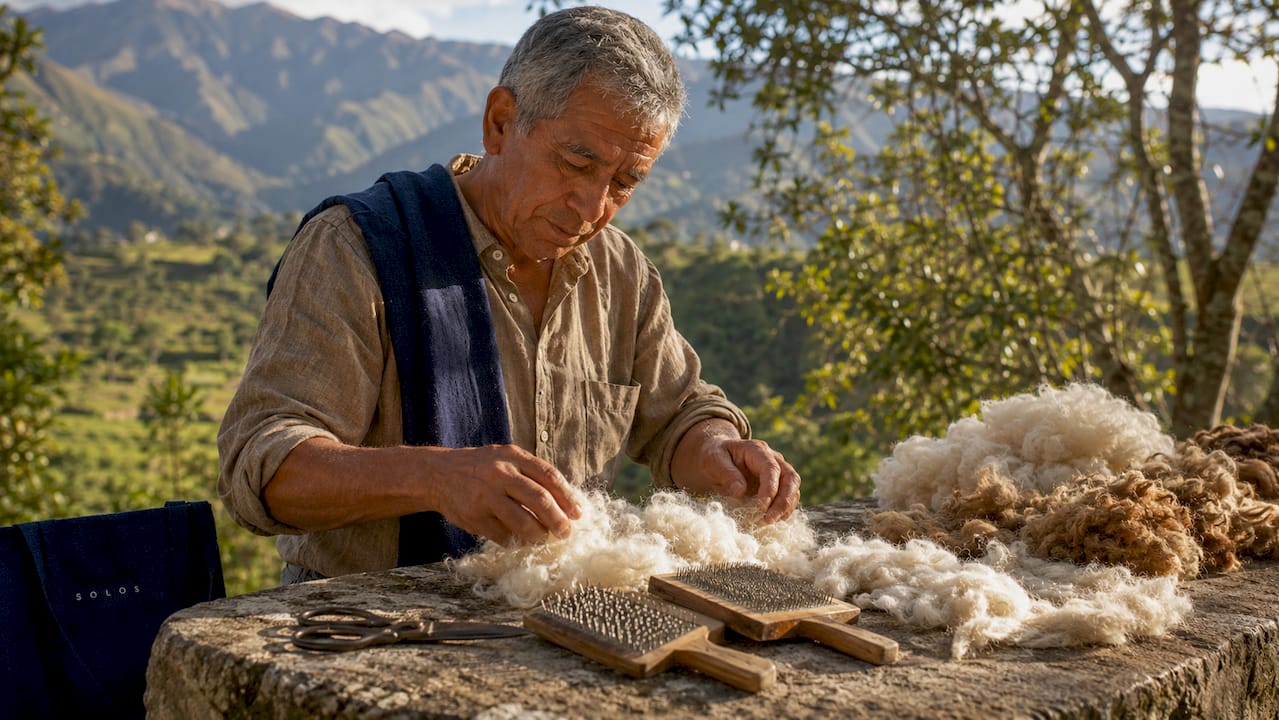
PAKA, a US-based alpaca fibre brand, offers one of the most documented examples. In 2025, PAKA supported more than 7,300 alpaca-farming families and treated 60,000 alpacas to improve animal and farmer livelihoods. Their products are traceable to over 300 named Quechua weavers. That level of traceability is rare. It means a consumer can connect a specific garment to a specific community.
Preserving indigenous textile craftsmanship is another dimension of ethical sourcing. Many weaving traditions in South Asia, West Africa, and South America are centuries old. When brands source directly from these communities at fair prices, they fund the continuation of those traditions. When they do not, those traditions erode under pressure from cheaper machine-made alternatives.
The risk is real. Without protections like Geographical Indication status, artisan communities can be priced out by mass-produced imitations that use the same cultural names and motifs. Geographical Indication is a legal designation, similar to how Champagne can only come from a specific French region, that protects the authenticity and economic value of a craft tied to a place and people.
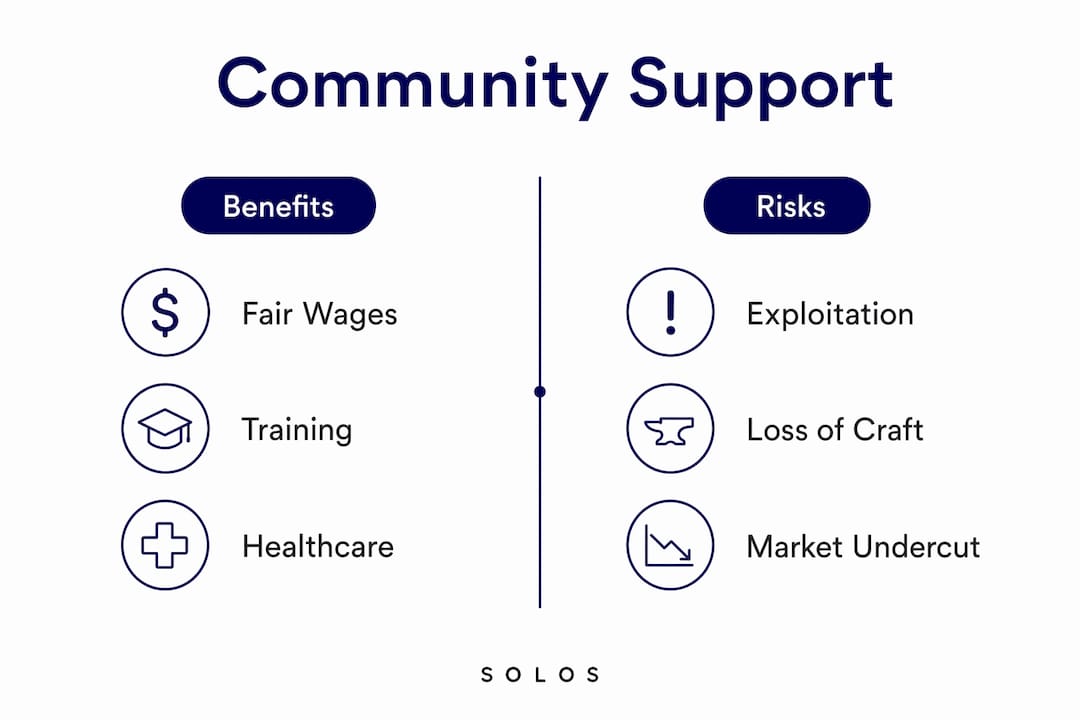
| Sourcing practice | Community benefit | Risk if absent |
|---|---|---|
| Direct trade with named artisans | Fair income, cultural preservation | Exploitation by middlemen |
| Traceable supply chains | Consumer trust, accountability | Greenwashing claims go unchallenged |
| Geographical Indication protection | Legal defence against imitation | Artisans priced out by cheap copies |
| Fair trade certification | Minimum price guarantees | Income volatility for producers |
Pro Tip: Check whether a brand publishes its supplier list or impact reports. PAKA’s annual impact report is a strong model. If a brand cannot name its producers, its community claims deserve scepticism.
What is the impact of social enterprise production models?
The most durable community support comes from brands that integrate social programmes directly into production rather than treating them as afterthoughts. This distinction matters enormously. A brand that donates 1% of revenue to charity is doing something different from a brand whose entire production model is built around employing and supporting marginalised workers.
Made For A Woman is the clearest example of this integrated approach. The brand employs over 1,000 artisans in Madagascar, impacting more than 4,000 individuals annually through holistic support that includes healthcare access, childcare, and skills training alongside employment. Madagascar is one of the world’s poorest countries. The brand’s model does not extract value from that context. It invests in it.
The Recovery Collection offers a different but equally instructive model. This brand uses clothing itself as a communication channel, embedding information about health and social services directly into garments. The product becomes a vehicle for reaching people who might not otherwise access support. It is a genuinely creative use of fashion’s reach.
| Model type | Example brand | Core mechanism | Annual reach |
|---|---|---|---|
| Integrated production | Made For A Woman | Employment + holistic support | 4,000+ individuals |
| Profit donation | HoMie | 100% profits to social programmes | 3,900+ since 2015 |
| Traceable sourcing | PAKA | Direct trade with named producers | 7,300+ families |
| Communication channel | The Recovery Collection | Garments as social service access points | Varies by programme |
Scaling social impact in fashion requires moving beyond environmental metrics. Fair wages and training must be built into the business model itself, not bolted on as secondary philanthropy. The brands that achieve lasting community change are the ones where social accountability is inseparable from how they operate.
What are the real limitations of community-focused fashion?
The honest answer is that community-focused clothing lines face serious structural limits. The sustainability paradox in the creative economy means artisans often gain symbolic visibility through brand marketing without gaining economic stability. A weaver whose work appears in a brand’s campaign may still earn below a living wage. Visibility is not the same as dignity.
Systemic barriers compound this problem. Caste and gender dynamics substantially limit marginalised artisans from accessing credit, networks, and markets, regardless of a brand’s intentions. A brand can pay fair prices at the point of purchase and still leave the underlying inequity untouched. This does not mean ethical sourcing is worthless. It means it is insufficient on its own.
Circular economy policies introduce a newer risk. Transitioning to formal textile recycling can unintentionally displace informal workers who currently collect and sort textile waste. These workers are often among the most economically vulnerable. If they are excluded from the design of new recycling systems, a policy intended to help the environment can harm the communities it overlooks.
“The true test of sustainability in creative industries is ensuring artisans can live with dignity, not just promoting symbolic appreciation.”
The key limitations to hold in mind are:
- Symbolic vs. economic support: Marketing visibility for artisans does not guarantee a living income.
- Systemic inequity: Caste, gender, and access to capital limit real gains even when brands act in good faith.
- Circular economy blind spots: Formalising textile recycling can harm informal workers if those communities are not included in policy design.
- Greenwashing risk: Without transparent reporting, community claims are difficult to verify and easy to fabricate.
Key takeaways
Clothing brands that embed social responsibility into their core operations, rather than treating it as a side initiative, create the most durable and measurable community impact.
| Point | Details |
|---|---|
| Direct investment works | Brands like Miik and HoMie show that named financial commitments with reported outcomes create real change. |
| Traceability is non-negotiable | Transparent supply chains, like PAKA’s, allow consumers to verify community claims rather than accept them on faith. |
| Integration beats philanthropy | Brands like Made For A Woman prove that embedding social support into production creates deeper impact than donation models. |
| Systemic barriers remain | Fair trade and ethical sourcing are necessary but not sufficient. Caste, gender, and access to capital still limit artisan gains. |
| Circular policies carry risk | Textile recycling programmes can harm informal workers if those communities are excluded from the design process. |
Why I think the industry is finally asking the right questions
For a long time, the conversation around ethical fashion was dominated by environmental metrics. Carbon footprints, organic certifications, recycled fibres. Those things matter. But they can obscure the human side of the equation entirely.
What I find genuinely encouraging now is that brands like Made For A Woman and PAKA are publishing detailed impact reports that name specific communities, report specific numbers, and acknowledge specific gaps. That level of transparency was almost unheard of five years ago. It signals a shift from performative sustainability to accountable practice.
The uncomfortable truth is that most consumers, myself included, have bought from brands that used community language without community substance. The difference between a brand that names 300 Quechua weavers in its supply chain and one that says “we support artisan communities” is the difference between accountability and marketing. You can tell them apart if you know what to look for.
What gives me genuine optimism is that the integrated models are replicable. Made For A Woman’s approach in Madagascar is not unique to Madagascar. The logic of building healthcare, training, and fair wages into production rather than around it can work anywhere. When one brand proves the model, others have a template to follow. That is how industry-wide shifts actually happen.
— Solos
Make your wardrobe work harder for the world
Choosing where you spend your clothing budget is one of the most direct ways to support community-focused fashion. Brands that publish impact reports, name their producers, and build social programmes into their operations deserve your attention and your dollars. Soloslife is built on exactly that kind of commitment. Every piece in the Soloslife collection is made from sustainable cotton using non-toxic dyes and ethical production practices, with full transparency about how and where garments are made. If you want clothing that reflects your values without compromising on quality or style, explore Soloslife’s sustainability commitments and see what responsible production actually looks like in practice.
FAQ
How do clothing brands give back to communities?
Clothing brands give back through financial pledges, employment programmes for marginalised groups, and ethical sourcing that pays fair wages to artisan producers. Brands like HoMie donate 100% of profits to social causes, while PAKA supports over 7,300 farming families through traceable supply chains.
What makes a fashion brand genuinely community-focused?
A genuinely community-focused brand integrates social support into its production model rather than treating it as a separate donation. Named producers, published impact reports, and measurable outcomes are the clearest indicators of authentic commitment.
Can sustainable fashion actually support local economies?
Yes. Brands that source directly from artisan communities, pay above-market prices, and provide training and healthcare access create tangible economic benefits at the local level. Made For A Woman’s model in Madagascar, which impacts over 4,000 individuals annually, is a documented example.
What are the risks of greenwashing in community-focused fashion?
The main risk is that brands use community language in marketing without transparent reporting to back it up. The sustainability paradox shows that symbolic visibility for artisans does not guarantee economic dignity. Always look for named programmes and published data.
How can consumers support ethical fashion initiatives?
Consumers can support ethical fashion by choosing brands that publish supplier information, report community outcomes, and build social accountability into their pricing. Reading impact reports and asking brands direct questions about their supply chains are the most effective starting points.


