

TL;DR:
- Verified certifications like GOTS, OEKO-TEX, and Bluesign ensure garments meet strict environmental and safety standards. Consumers should verify license numbers in public databases to distinguish genuine labels from greenwashing. Combining certifications provides the strongest assurance of a garment’s sustainability and safety.
Certifications to look for in sustainable apparel are independent, third-party verified standards that confirm a garment meets strict environmental, social, and chemical safety criteria. Labels like GOTS (Global Organic Textile Standard), OEKO-TEX Standard 100, and Bluesign are not marketing badges. They are audited credentials backed by public databases and licence numbers. With unregulated terms like ‘eco-friendly’ flooding the market, knowing which labels carry genuine weight is the single most useful skill you can develop as a conscious shopper.
What are the key certifications to look for in sustainable apparel?
The sustainable fashion certifications that matter most each cover a distinct part of the supply chain. No single label covers everything, which is why understanding each one’s scope is the starting point for any informed purchase.
-
GOTS (Global Organic Textile Standard): GOTS is the gold standard for organic textiles. It requires a minimum of 70% certified organic fibres and applies social and environmental criteria across the entire production chain, from farm to finished garment. GOTS-certified facilities grew 15% globally, with over 17,800 facilities now providing third-party validation. That scale reflects genuine industry adoption, not a niche trend.
-
OEKO-TEX Standard 100: This certification focuses on product safety rather than fibre origin. It tests for over 100 harmful substances, including pesticides, heavy metals, and formaldehyde, to confirm the finished garment is safe against skin. Every component of the garment must pass, including buttons, zips, and thread.
-
Bluesign: Bluesign targets chemical and resource management inside textile mills. It certifies that factories use chemicals responsibly, reduce water and energy consumption, and maintain safe working conditions. Bluesign approval appears on fabrics rather than finished garments, so you will often see it listed on a brand’s materials page rather than on a hang tag.
-
Fairtrade: Fairtrade certification addresses labour conditions and fair wages at the farming and production level. It guarantees that workers receive fair pay and operate in safe conditions. For consumers who prioritise social impact alongside environmental impact, Fairtrade is a non-negotiable addition to the checklist.
-
Cradle to Cradle (C2C): C2C assesses a product across five categories: material health, material reutilisation, renewable energy, water stewardship, and social fairness. It is the most comprehensive circularity-focused certification available and signals that a brand is thinking beyond the garment’s first use.
The most important nuance here is that GOTS and OEKO-TEX are complementary. GOTS audits the organic process from fibre to production. OEKO-TEX confirms the finished product is free of harmful substances. Together, they offer the highest combined assurance for both environmental integrity and personal safety.
Pro Tip: Check the certification scope on the brand’s product page. A garment labelled “made with GOTS-certified cotton” is not the same as a fully GOTS-certified garment. The full certification covers every stage of production.

How do you verify a sustainable apparel certification is genuine?
Greenwashing is the practice of making unsubstantiated environmental claims to attract conscious consumers. Spotting it requires one straightforward habit: look for a verifiable credential, not just a logo.
-
Find the licence or certificate number. Reputable certifications always provide a publicly searchable certificate number. If a label carries no number, it is likely a marketing claim rather than an audited standard.
-
Search the public database. Certificates are verified through public databases by entering the licence or certificate number directly. GOTS has its own searchable database at global-standard.org. OEKO-TEX provides a similar tool at oeko-tex.com. If the number does not return a result, the claim is unverified.
-
Check the certification scope. Many certifications apply only to fibre or material inputs, not the entire garment. A fabric may be Bluesign-approved while the rest of the production process carries no certification at all. Always confirm what the certification actually covers.
-
Watch for vague language. Terms like “eco-conscious,” “green,” and “planet-friendly” are often unregulated and lack third-party audit. They carry no enforceable standard and no verification mechanism.
Regulation is tightening. The EU Green Claims Directive, expected to take effect in 2027, will require brands to substantiate environmental claims with independent verification. Certifications with public databases and audit trails will become the baseline expectation, not a differentiator.
Understanding common misconceptions about sustainable clothing can also sharpen your ability to spot a genuine label from a greenwashed one. The myths around sustainable fashion are more widespread than most shoppers realise.
What do certifications actually cost, and why does it matter?
Certification costs shape which brands can afford to certify and, ultimately, which garments carry verified labels. Understanding the economics helps you interpret pricing and availability with more confidence.
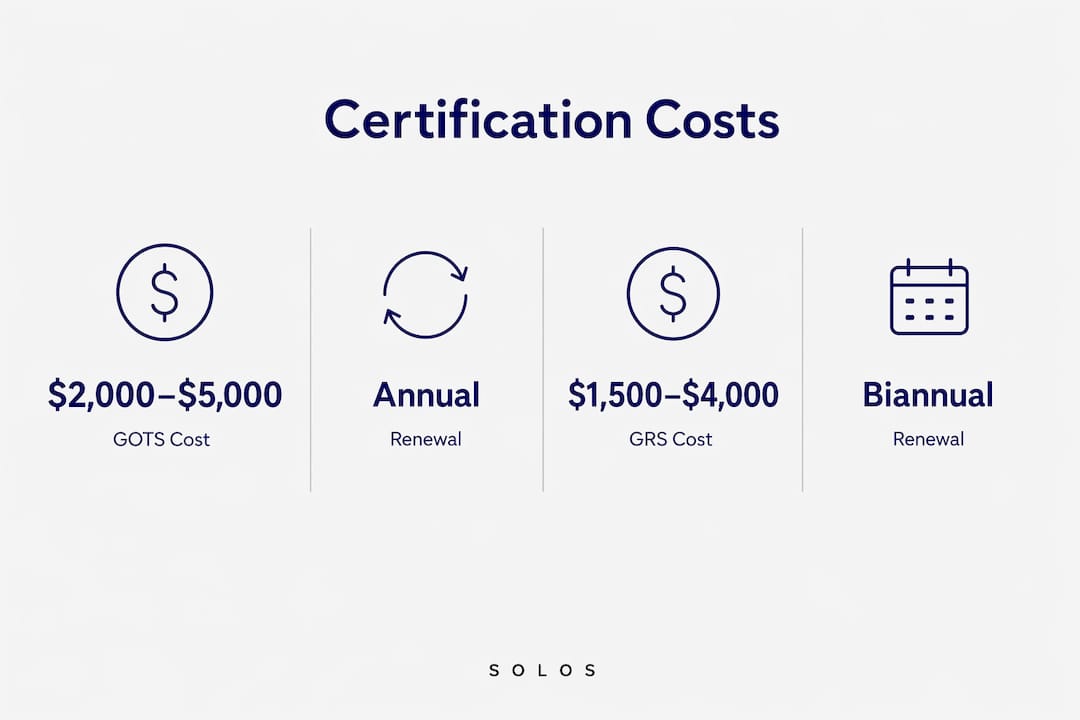
| Certification | Estimated Initial Cost | Renewal Frequency |
|---|---|---|
| GOTS | $2,000–$5,000 | Annual |
| GRS (Global Recycled Standard) | $2,000–$5,000 | Annual |
| Bluesign | Varies by mill size | Annual |
| Cradle to Cradle | Can exceed $50,000 | Every two years |
Certification costs and audit complexities reflect the depth of coverage. Broader certifications that cover entire supply chains or multiple criteria are more costly but deliver stronger consumer assurances. That is why Cradle to Cradle certification is rare. Its comprehensive scope demands significant investment from brands.
For GOTS and GRS, the initial cost of $2,000–$5,000 with annual renewals is manageable for mid-sized brands but prohibitive for very small producers. This is worth keeping in mind when you shop from small independent labels. Absence of certification does not always mean absence of ethical practice. It may simply reflect limited resources.
These costs flow through to retail pricing. A GOTS-certified cotton T-shirt will typically cost more than a conventional equivalent. That price difference reflects real investment in auditing, organic farming, and fair labour practices.
Pro Tip: If a garment carries multiple certifications and is priced comparably to conventional alternatives, investigate further. Legitimate multi-certified production has real costs. Unusually low prices on “certified” garments can signal incomplete or misrepresented credentials.
How to use certifications when shopping for sustainable apparel
A practical sustainable fashion certifications checklist starts with your own priorities. Different certifications address different concerns, so knowing what matters most to you makes the process far more direct.
-
If organic fibre content is your priority: Look for GOTS certification. It is the most rigorous standard for confirming that the cotton, wool, or linen in your garment was grown without synthetic pesticides or fertilisers.
-
If chemical safety is your concern: OEKO-TEX Standard 100 is the clearest signal. It confirms the finished product has been tested and is free of harmful substances, regardless of how the fibre was grown.
-
If fair labour conditions matter most: Fairtrade certification is the most recognised standard for confirming ethical wages and safe working conditions at the production level.
-
If circularity and end-of-life impact are important: Cradle to Cradle is the most thorough option, though it appears on fewer garments due to its cost and complexity.
The strongest assurance comes from garments carrying more than one certification. Combining certifications like GOTS and OEKO-TEX offers the highest combined ethical and safety assurance for consumers. A garment that is both GOTS-certified and OEKO-TEX Standard 100 tested covers organic fibre sourcing, responsible production, and finished product safety in a single purchase.
When researching brands, go beyond the hang tag. Most credible brands publish a sustainability page or transparency report that lists their certifications with corresponding licence numbers. If that information is absent or vague, treat it as a signal to dig deeper. A broader overview of eco-friendly textile certifications can help you build a more complete picture of what each label means in practice.
Certifications should be tools for verification, not absolute guarantees. Understanding each label’s scope is what separates an informed buyer from one who simply trusts a logo.
Key takeaways
The most reliable way to shop sustainably is to verify certifications through public databases rather than trusting logos or marketing language alone.
| Point | Details |
|---|---|
| GOTS covers the full chain | GOTS requires 70% organic fibres and audits every stage from farm to finished garment. |
| OEKO-TEX confirms product safety | OEKO-TEX Standard 100 tests the finished garment for over 100 harmful substances. |
| Verify with a licence number | Every legitimate certification has a publicly searchable number. No number means no verified claim. |
| Combine certifications for full coverage | GOTS and OEKO-TEX together cover both organic production and finished product safety. |
| Cost reflects certification depth | Broader certifications like Cradle to Cradle cost more and appear on fewer garments for good reason. |
What i’ve learned from years of reading clothing labels
Certifications changed the way I shop, but not immediately. For a long time, I trusted logos at face value. A leaf icon or the word “organic” felt like enough. It was not until I started searching licence numbers in public databases that I realised how many of those logos were decorative rather than verified.
The most useful shift I made was treating certifications as a starting point rather than a final answer. GOTS tells me the fibre was grown responsibly and the production chain was audited. OEKO-TEX tells me the finished garment is safe to wear. Neither tells me everything. Together, they tell me enough to feel confident.
What I would tell any conscious shopper is this: do not let the complexity of certifications put you off. You do not need to memorise every standard. You need two habits. First, look for a licence number. Second, check the scope. Those two steps will filter out the vast majority of greenwashed claims before you spend a cent.
Regulations are catching up, and the 2027 EU Green Claims Directive will raise the bar for the whole industry. Until then, the responsibility sits with us as consumers to ask the right questions. The labels are there. The databases are public. The information is available. Use it.
— Solos
Certified style worth wearing: explore Soloslife
At Soloslife, sustainability is not a label we apply after the fact. It is built into how we source, manufacture, and finish every piece. Our premium men’s cotton essentials are made with eco-friendly practices and non-toxic dyes, designed to meet the expectations of shoppers who know what genuine responsibility looks like.

If you want to understand exactly how we approach sustainability, from fibre sourcing to finished garment, our sustainability commitments page lays it out clearly, with no vague language and no unverifiable claims. Every piece in our collection is built for people who want timeless style and the confidence that comes from knowing their wardrobe choices reflect their values.
FAQ
What is GOTS certification in sustainable fashion?
GOTS (Global Organic Textile Standard) is the leading certification for organic textiles, requiring a minimum of 70% certified organic fibres and covering environmental and social criteria across the entire supply chain. Over 17,800 facilities worldwide hold GOTS certification.
How do i spot a fake eco-friendly clothing label?
Look for a publicly verifiable licence or certificate number on the brand’s website or product page, then confirm it in the certification body’s online database. A logo without a traceable number is a marketing claim, not a verified standard.
Is oeko-tex the same as GOTS?
No. GOTS certifies organic fibre content and production processes, while OEKO-TEX Standard 100 tests the finished garment for harmful substances. They cover different parts of the supply chain and work best when used together.
Does a certification cover the whole garment?
Not always. Many certifications apply only to specific fibre inputs or fabric components rather than the entire finished garment. Always check the certification scope on the brand’s product or sustainability page before assuming full coverage.
Why are some certified garments more expensive?
Certification costs for standards like GOTS and GRS range from $2,000 to $5,000 initially, with annual renewals. Those costs reflect real investment in auditing, organic sourcing, and fair labour practices, and they flow through to the retail price.


