

TL;DR:
- Many myths about sustainable clothing, like cost and natural fibres, are misleading and based on misconceptions.
- Regulatory changes, such as the EU’s Green Claims Ban, now demand evidence-backed claims, empowering consumers to make informed choices.
Sustainable clothing is defined as apparel produced through practices that minimise environmental harm, protect worker welfare, and use materials with verified ecological credentials. Yet common myths about sustainable clothing continue to mislead even the most well-intentioned shoppers. From the belief that eco-friendly always means expensive, to the assumption that secondhand is automatically virtuous, these sustainable fashion misconceptions shape buying decisions in ways that rarely serve the planet. The EU’s Green Claims Ban taking effect from 27 September 2026 makes this clarity more urgent than ever, stripping vague labels like “eco-friendly” and “sustainable” of legal standing unless backed by certified evidence.
1. Common myths about sustainable clothing: the full picture
Before examining individual myths, it helps to understand why they persist. Brands have long used aspirational language without accountability, and consumers have had little regulatory protection. The EU Directive (EU) 2024/825 changes that by banning unsubstantiated eco claims, with no exemptions for small businesses. This is the clearest signal yet that facts vs myths in sustainable fashion now carry legal weight, not just ethical weight. Knowing which claims hold up under scrutiny gives you real power at the point of purchase.
2. Myth: sustainable clothing is always expensive
The price myth is the most persistent barrier to entry for eco-conscious shoppers. The reality is that durable garment construction reduces cost per wear significantly over a garment’s lifespan, making quality sustainable pieces genuinely competitive with fast fashion when you calculate total spend.
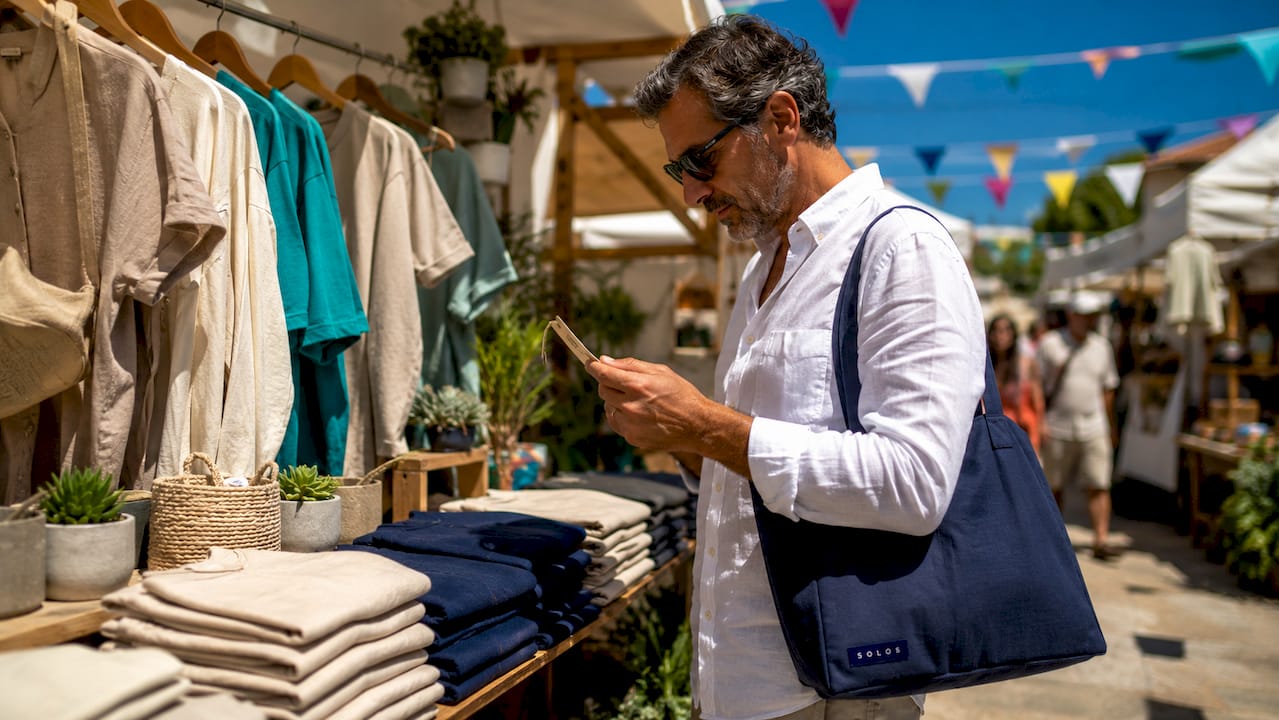
Consider the maths. A fast fashion t-shirt priced at $15 that lasts eight washes costs far more per wear than a $60 organic cotton tee worn weekly for three years. Sustainability Directory and apparel experts consistently point to lifecycle value as the true measure of affordability in ethical apparel.
Affordable entry points exist across the market:
- Certified organic cotton basics from brands like Soloslife offer everyday staples at accessible price points without compromising on fibre standards.
- Secondhand platforms such as Depop and ThredUp provide certified sustainable garments at reduced prices.
- Capsule wardrobe thinking reduces total spend by prioritising fewer, better pieces over seasonal volume.
Pro Tip: When comparing prices, divide the cost by the number of times you expect to wear the item in a year. A $90 polo worn 80 times costs $1.13 per wear. A $25 fast fashion equivalent worn 12 times costs $2.08 per wear.
3. Myth: natural fibres are always better for the environment
Natural fibres are not automatically eco-friendly, and the biodegradability assumption is the clearest example of this. A 2026 sediment study conducted at Rudyard Lake in the UK by researchers from Keele and Loughborough universities found that cotton and wool persist in aquatic sediments for over 150 years. That finding overturns one of the most widely repeated claims in sustainable fashion.
The reason fibres persist so long comes down to dye treatments, fabric finishes, and the anaerobic conditions of lake sediments, which slow decomposition dramatically. A cotton shirt treated with synthetic dyes and chemical finishes behaves very differently in the environment than untreated raw cotton. Fibre origin is only one variable in a much larger equation.
| Fibre type | Biodegradability assumption | Evidence-based reality |
|---|---|---|
| Cotton | Breaks down quickly | Persists 150+ years in treated sediments |
| Wool | Naturally compostable | Accumulates in aquatic environments under certain conditions |
| Polyester | Permanent pollutant | Sheds microplastics but degrades in UV over decades |
| Recycled cotton | Eco-neutral | Impact depends on dye and finish chemistry |
Pro Tip: When shopping for sustainable cotton fabrics, look for GOTS (Global Organic Textile Standard) or OEKO-TEX certification. These standards restrict harmful chemical finishes that contribute to fibre persistence and pollution.
4. Myth: secondhand and recycled clothing is always sustainable
Secondhand clothing carries a powerful sustainability narrative, but the logistics behind it tell a more complicated story. Chile imports 123,000 tonnes of secondhand clothing annually, and approximately 39,000 tonnes of that ends up illegally dumped in the Atacama Desert. The BBC investigation into this trade exposed a hard truth: when secondhand supply outpaces local demand and sorting infrastructure, the environmental cost can exceed that of new production.
The circular economy ideal requires more than a change of ownership. Genuine circularity depends on:
- Durability. Garments must withstand multiple ownership cycles without degrading. Low-quality fast fashion items rarely survive resale in wearable condition.
- Repairability. Clothes designed with accessible seams, replaceable components, and natural fibres are far easier to maintain across multiple owners.
- Effective sorting infrastructure. Without grading systems that separate wearable from non-wearable stock, surplus flows to landfill or illegal dumping sites.
- Take-back programmes. Brands that accept returned garments for fibre conversion, as one Chilean company is developing, close the loop in ways that resale alone cannot.
Buying secondhand is still a sound choice, but it works best when paired with garments built to last and systems designed to handle end-of-life responsibly.
5. Myth: a transparent brand is a sustainable brand
Transparency is a starting point, not a destination. The Fashion Transparency Index scores brands on how openly they disclose information about their supply chains, policies, and practices. It does not score them on whether those practices are actually good. A brand can publish detailed reports about its carbon footprint while still producing garments in facilities with poor labour conditions.
This distinction matters enormously when debunking eco-friendly clothing myths. High disclosure scores reward openness, including openness about failures. A brand that publishes its water usage data, even if that data is poor, scores higher than a brand that simply does not report. That scoring logic is useful for researchers but misleading for shoppers.
What to look for instead:
- Third-party certifications with audit trails, such as Fair Trade, GOTS, or B Corp status.
- Measurable targets with public progress updates, not aspirational language without timelines.
- Supplier lists that include factory names and locations, not just tier-one suppliers.
Pro Tip: Ask brands directly: “What percentage of your garments are certified to a named standard?” A brand genuinely committed to sustainability will answer with specifics. Vague responses like “we’re on a journey” are a signal to look elsewhere.
6. Myth: sustainable fabrics don’t contribute to microfibre pollution
Every fabric sheds fibres during laundering, including organic cotton, wool, and linen. A 2026 peer-reviewed review published in Aquatic Ecology identified laundering and textile manufacturing as the primary sources of microfibre pollution in aquatic environments, affecting both synthetic and natural fibre types. The review identified three mitigation pillars: design-out (engineering fabrics to shed less), filtration (using washing machine filters), and governance (regulatory standards for fibre release).
The practical implication for shoppers is that fabric choice alone does not determine your laundry footprint. How you wash matters as much as what you wear.
| Mitigation strategy | Consumer action | Effectiveness |
|---|---|---|
| Design-out | Choose tightly woven fabrics with low pill tendency | High |
| Filtration | Use a Guppyfriend washing bag or Cora Ball | Moderate to high |
| Cold wash cycles | Wash at 30°C or below | Moderate |
| Reduced wash frequency | Spot clean and air between wears | High |
An eco-friendly laundry routine for cotton garments combines lower temperatures, shorter cycles, and filtration tools to reduce microfibre release without compromising cleanliness. The Guppyfriend bag, developed by the STOP! Micro Waste project, captures fibres before they reach wastewater systems and is one of the most evidence-backed consumer tools available.
7. Myth: “carbon neutral” claims mean a brand has eliminated its emissions
Carbon neutral claims in consumer marketing are now banned under EU Directive (EU) 2024/825 when based on purchased carbon credits rather than verified reductions within the brand’s own value chain. This is one of the most significant regulatory shifts in sustainable fashion history, and it directly addresses one of the most misleading myths about ethical apparel. Buying offsets to claim neutrality is no longer legally acceptable in the EU from September 2026.
For Australian consumers, this regulation sets a useful benchmark even if it does not yet apply locally. A brand claiming carbon neutrality should be able to show you scope 1, 2, and 3 emissions data with reduction trajectories, not just a certificate from a carbon credit registry. The difference between a brand that has reduced emissions and one that has simply purchased offsets is the difference between genuine progress and accounting.
Key takeaways
Debunking eco-friendly clothing myths requires evidence, not assumptions. The most reliable sustainable choices combine certified materials, durable construction, and verified brand claims backed by measurable outcomes.
| Point | Details |
|---|---|
| Price myth | Cost per wear makes quality sustainable garments more affordable than fast fashion over time. |
| Natural fibre myth | Cotton and wool can persist in aquatic sediments for over 150 years depending on treatments and conditions. |
| Secondhand myth | Circular economy benefits depend on durability, sorting infrastructure, and take-back systems, not ownership transfer alone. |
| Transparency myth | High Fashion Transparency Index scores measure disclosure, not actual sustainability performance or outcomes. |
| Microfibre myth | All fabric types shed microfibres during laundering; filtration tools and wash habits reduce impact regardless of fibre source. |
Solos’s take on navigating sustainable fashion today
We have spent years sourcing and wearing sustainable apparel, and the most consistent pattern we have observed is this: the myths that mislead most are the ones that feel the most intuitive. “Natural is better.” “Secondhand is always green.” “Transparent brands are good brands.” Each of these contains a grain of truth wrapped around a much more complicated reality.
What we have found actually works is treating sustainability like any other quality claim. You verify it. You ask for specifics. You look for certifications with audit trails rather than marketing language with good intentions. The 2026 sustainable fashion guide we reference regularly is a useful starting point, but the real skill is learning to read between the lines of a brand’s claims.
The uncomfortable truth is that no garment is perfectly sustainable. Every piece of clothing has an environmental cost. The goal is to reduce that cost through informed choices, not to achieve a purity that does not exist. Buy less, buy better, care for what you own, and hold brands to measurable standards. That approach will serve you better than any single label or certification ever will.
— Solos
Discover sustainable cotton essentials from Soloslife
Soloslife builds its entire range around the principle that sustainability and quality are the same commitment, not competing priorities. Every piece in the collection uses certified cotton construction with non-toxic dyes and transparent sourcing practices that go beyond disclosure to measurable outcomes. If you have been navigating the myths covered in this article and want apparel that holds up to scrutiny, the Soloslife sustainability page details exactly what standards the brand meets and why. For those ready to build a wardrobe on evidence rather than marketing, explore the men’s cotton t-shirts and polos designed for longevity, comfort, and genuine ecological accountability.
FAQ
Is sustainable clothing actually worth the higher price?
Sustainable clothing is worth the investment when you calculate cost per wear rather than upfront price. A durable organic cotton garment worn regularly over several years costs less per wear than cheaper fast fashion alternatives that degrade quickly.
Are natural fibres like cotton and wool biodegradable?
Not reliably. Research from Keele and Loughborough universities found that natural fibres persist in aquatic sediments for over 150 years, particularly when treated with dyes and chemical finishes. Biodegradability depends on conditions and treatments, not fibre origin alone.
Does buying secondhand clothing always reduce environmental impact?
Secondhand buying reduces impact only when garments are durable enough for multiple ownership cycles and supported by effective sorting and take-back systems. Chile’s Atacama Desert dumping case shows that secondhand overflow without infrastructure creates serious environmental harm.
What does a high Fashion Transparency Index score actually mean?
A high score means a brand discloses information openly, not that its practices are ethical or environmentally sound. The Transparency Index measures disclosure, not verified outcomes, so cross-checking with independent certifications remains necessary.
Can I reduce microfibre pollution from my sustainable wardrobe?
Yes. Using a Guppyfriend washing bag, washing at 30°C or below, and reducing wash frequency through spot cleaning and airing are the most effective consumer-level actions, regardless of whether your garments are synthetic or natural fibre.


