

TL;DR:
- Most discarded clothing ends up in landfill or incineration, with less than 1% recycled into new fabric annually. Responsible disposal includes donation, resale, upcycling, composting, and textile recycling, but blended fabrics remain a major obstacle. Future policies like California’s EPR law aim to shift responsibility from consumers to producers for better waste management.
Sustainable clothing disposal at end of life means managing worn or unwanted garments so they avoid landfill and maximise reuse, recycling, or safe decomposition. The scale of the problem is stark: approximately 85% of discarded clothing in the US ends up in landfill or incineration. Australia faces the same structural challenge. Responsible disposal is not just a personal choice. It is the most direct way eco-conscious consumers can reduce the environmental footprint of their wardrobe. This guide covers every practical method available to Australians, explains the real limits of textile recycling, and outlines the legal shifts reshaping who is responsible for fashion waste.
What are the main sustainable clothing disposal methods available to Australians?
The best end-of-life textile solutions extend a garment’s useful life before it ever reaches a bin. Each method has a different environmental value, and knowing the difference helps you choose wisely.
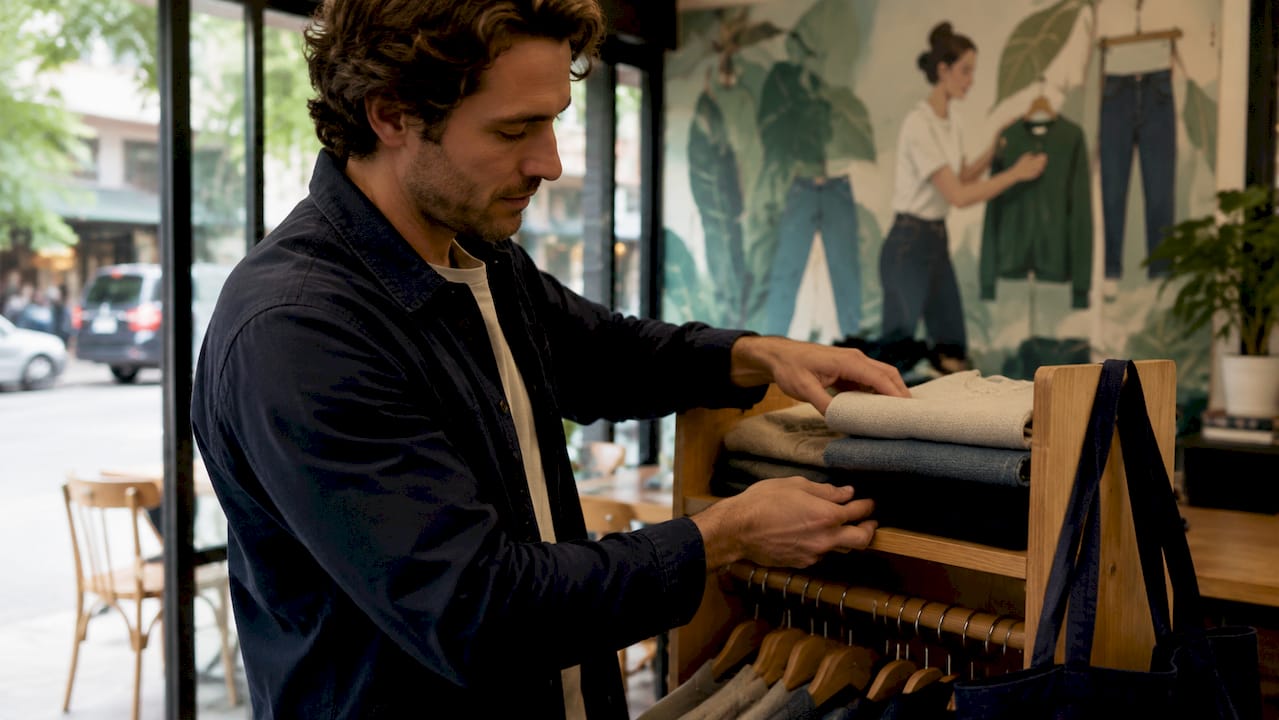
Donation and resale are the most accessible options. Organisations like the Salvos, Vinnies, and Red Cross accept clean, wearable clothing. Online platforms like Depop, Facebook Marketplace, and eBay let you sell directly to a new owner. Delaying disposal through resale or donation is currently the most effective strategy for maximising a garment’s lifecycle. The key word is “wearable.” Donating damaged or heavily soiled items wastes the charity’s resources.
Retailer take-back programmes are growing in Australia. H&M, Patagonia, and Levi’s each run in-store collection schemes. Some programmes send garments to certified recyclers; others fund upcycling projects. Check what a brand actually does with collected items before assuming it equals recycling.
Upcycling and creative reuse suit garments that are too worn to donate but still have usable fabric. Cutting old cotton tees into cleaning cloths, or repurposing denim into bags, keeps material out of landfill without requiring any industrial process.
Composting works for garments made from 100% natural fibres such as organic cotton, linen, or wool. These materials break down safely in a home compost bin. Synthetic blends do not compost and will leave microplastic residue in your soil.
Textile recycling drop-off points exist in most Australian cities through councils and organisations like Upparel and BlockTexx. These are not the same as household recycling bins. Clothing placed in curbside recycling bins jams sorting machines and contaminates other recyclables.
Here is a quick comparison of the main disposal pathways:
| Method | Best for | Environmental value | Availability in Australia |
|---|---|---|---|
| Donation / resale | Wearable garments | High: extends garment life | Widely available |
| Brand take-back | Any condition | Medium: varies by programme | Growing |
| Upcycling | Worn but intact fabric | High: zero processing needed | DIY, always available |
| Composting | 100% natural fibres | High: returns nutrients to soil | Home or community compost |
| Textile recycling drop-off | All fibres | Medium: depends on sortability | Major cities |
| Curbside bin | Nothing | None: causes contamination | Not suitable |
How does textile recycling work and what are its current limitations?
Textile recycling uses two main approaches: mechanical and chemical. Mechanical recycling shreds fabric into fibre, which is then respun into yarn. Chemical recycling dissolves fibres back to their molecular building blocks, allowing higher quality output. Chemical methods are more promising but remain expensive and largely at pilot scale.
The results under current technology are sobering. Less than 1% of clothing discarded globally is recycled into new textile fibre each year. That figure reflects not a lack of effort but a genuine infrastructure gap. Even among textiles that are collected and sorted, only about 7% qualify for fibre-to-fibre recycling. The rest are downcycled into insulation, rags, or industrial filling.
Blended fabrics are the central technical barrier. A cotton-polyester blend cannot be easily separated into its component fibres using current machinery. Recycling technologies struggle with blended fabrics, making most fast fashion garments effectively unrecyclable today. Even pure cotton has limits: mechanical recycling of a cotton T-shirt can recover a maximum of 17% of the original fibre under current technology.
Downcycling is not the same as recycling. When a collected garment becomes insulation padding, it has left the textile loop permanently. True circular recycling means fibre returns to fibre. That loop is currently broken for the vast majority of garments.
Pro Tip: When buying new clothing, check the fabric composition label. Single-fibre garments like 100% organic cotton or 100% wool have a far better chance of being recycled or composted at end of life than blended fabrics.
The Biomimicry Institute highlights designed decomposition as a necessary complement to recycling. Garments engineered to break down safely address the waste stream that recycling cannot yet handle. This is an emerging field, but it signals where responsible garment design is heading.
What legal and industry developments are shaping clothing disposal in 2026?
Policy is beginning to shift the burden of responsible fashion waste from consumers to producers. The most significant recent development is the California Responsible Textile Recovery Act, which takes effect in july 2026. It requires clothing producers to fund and manage post-consumer textile waste collection and processing. This is an extended producer responsibility (EPR) model. EPR legislation reallocates responsibility so that brands, not households, must solve the disposal problem.
Australia does not yet have equivalent national EPR legislation for textiles, but California’s model is widely watched as a template. The Australian Government’s National Waste Policy already encourages product stewardship, and several state governments are monitoring overseas developments closely.
At the industry level, The Fashion Pact’s Circular Fibre Collective is working to scale textile-to-textile recycling by 2030. The initiative addresses a core problem: recycling is stalled by a lack of high-quality post-consumer feedstock and fragmented demand for recycled fibres. Brands commit to buying recycled fibre, which gives recyclers the revenue certainty to invest in infrastructure. Without that demand signal, recyclers cannot justify the capital cost.
As an eco-conscious consumer, here is what to look for in a brand’s disposal credentials:
- A published take-back programme with clear information on where collected garments go
- Partnerships with certified recyclers, not just donation bins
- Transparency about fibre composition to support end-of-life sorting
- Alignment with recognised frameworks like the eco-friendly textile certifications that verify sustainability claims
- Public reporting on the volume of garments collected and recycled
The Business of Fashion notes that Europe’s textile recycling sector is recovering, but sustained brand demand is critical for long-term success. The same principle applies globally. Consumer pressure on brands to commit to recycled fibre purchasing is one of the most direct levers available.
How can you implement sustainable clothing disposal practices step by step?
Practical disposal starts before you even open a wardrobe. A clear process prevents good intentions from ending in a landfill bag.
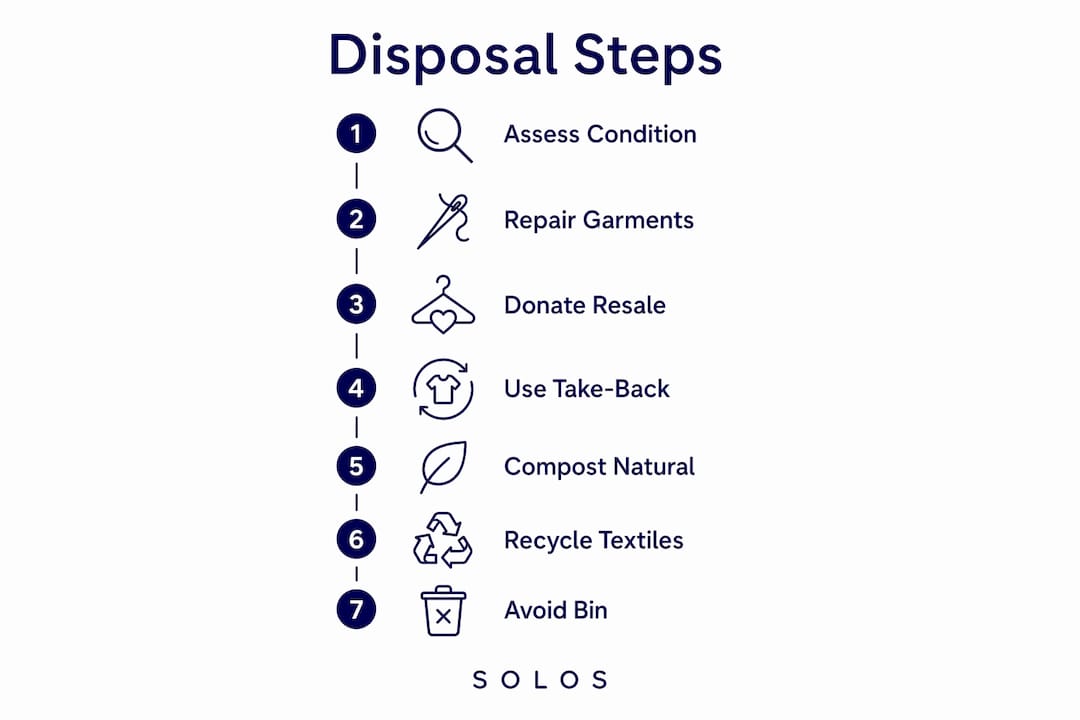
1. Assess the garment’s condition and composition Check the care label for fibre content. A 100% cotton or 100% linen garment has more end-of-life options than a polyester blend. Assess whether the item is wearable, repairable, or beyond use. Quality clothing that lasts longer delays this decision significantly, which is the most effective disposal strategy of all.
2. Repair before you replace A loose button, a small tear, or a faded colour can often be fixed. Repair extends garment life and reduces the frequency of disposal decisions. Local tailors, community repair cafés, and online tutorials make basic repairs accessible to most people.
3. Resell or donate wearable items If the garment is clean and wearable, list it on Depop, eBay, or Facebook Marketplace first. If it does not sell, donate it to the Salvos, Vinnies, or a local clothing exchange. Only donate items you would give to a friend. Damaged donations create costs for charities.
4. Use brand or retailer take-back schemes for worn items For garments too worn to donate, check whether the original brand runs a take-back programme. Patagonia’s Worn Wear, H&M’s garment collection, and Levi’s SecondHand are active examples. Drop the item at an in-store collection point.
5. Compost 100% natural fibre garments Cut the garment into small pieces to speed breakdown. Remove any synthetic trims, zippers, or buttons first. Add to a home compost bin or a community composting facility. Biodegradable clothing made from organic cotton or linen is well suited to this pathway.
6. Drop blended or synthetic garments at a textile recycling point Organisations like Upparel and BlockTexx accept mixed fibre garments at drop-off points across Australia. These are not curbside bins. Search each organisation’s website for your nearest location.
Pro Tip: Keep a small “disposal bag” in your wardrobe. When a garment reaches end of life, place it directly in the bag rather than back on the shelf. When the bag is full, work through the steps above. This removes the friction that leads to landfill by default.
7. Avoid the most common disposal mistake Never put clothing in your household recycling bin. Textiles jam sorting machines and contaminate paper and plastic streams. The garment will be sent to landfill anyway, and it will damage the recycling process for everything else in the bin.
Key takeaways
Sustainable clothing disposal at end of life requires choosing the right pathway for each garment’s condition and fibre type, because less than 1% of discarded clothing globally is currently recycled into new textile fibre.
| Point | Details |
|---|---|
| Donation and resale come first | Wearable garments should go to resale platforms or charities before any other disposal option. |
| Composting suits natural fibres only | Only 100% cotton, linen, or wool garments break down safely; synthetic blends leave microplastics. |
| Curbside bins are never suitable | Clothing in household recycling bins jams sorting machines and ends up in landfill regardless. |
| Blended fabrics limit recycling | Most garments cannot be fibre-recycled today due to blended fabric composition. |
| EPR legislation is shifting responsibility | Laws like California’s 2026 act are moving disposal accountability from consumers to producers. |
The uncomfortable truth about fashion’s end-of-life problem
The recycling narrative in fashion has been oversold. Consumers have been told that dropping a bag of old clothes at a collection bin is a meaningful act. The data tells a different story. When most donated clothes that are not resold end up downcycled into low-value products rather than new fibre, the circular economy claim falls apart.
What actually works right now is delay. Every year a garment stays in active use is a year it does not need to be disposed of at all. That means buying better quality, caring for what you own, and repairing rather than replacing. At Soloslife, we build garments from premium sustainable cotton precisely because a well-made piece lasts long enough to make the disposal question less urgent.
The technology will improve. Chemical recycling, designed decomposition, and EPR-funded infrastructure are all moving in the right direction. But consumers should not wait for a perfect system before acting. The practical steps in this article are available today, and each one reduces the chance that your clothing ends up in landfill.
The most powerful thing you can do is choose garments with a clear end-of-life pathway from the moment you buy them. Single-fibre, natural fabrics. Brands that publish their recycling partnerships. Pieces built to last rather than built to be replaced. That is where real circularity begins.
— Solos
Soloslife’s approach to sustainable wardrobes
At Soloslife, sustainability does not stop at the point of sale. Every garment in our range is made from premium sustainable cotton, chosen specifically because natural single-fibre fabrics have the broadest end-of-life options available today, from composting to fibre recycling.

Our men’s cotton T-shirts and polos are made to last, which means fewer disposal decisions over time. We use non-toxic dyes and eco-friendly production practices, and we publish our sustainability commitments openly on our sustainability page. If you are building a wardrobe with a lower environmental footprint, starting with garments that are designed for longevity and responsible end-of-life management is the most practical first step you can take.
FAQ
What is sustainable clothing disposal at end of life?
Sustainable clothing disposal at end of life means managing worn or unwanted garments through reuse, donation, recycling, or composting rather than sending them to landfill or incineration.
Can I put old clothes in my household recycling bin?
No. Clothing placed in curbside recycling bins jams sorting machines and contaminates other recyclables, meaning the garment ends up in landfill regardless.
What percentage of clothing is actually recycled into new fabric?
Less than 1% of clothing discarded globally is recycled into new textile fibre each year, due to blended fabric barriers and limited recycling infrastructure.
Which fabrics can be composted at home?
Garments made from 100% natural fibres such as organic cotton, linen, or wool can be composted at home. Synthetic blends and fabric trims must be removed first.
How does EPR legislation affect clothing disposal in Australia?
Australia does not yet have national EPR legislation for textiles, but California’s Responsible Textile Recovery Act, effective july 2026, is a widely watched model that shifts disposal responsibility from consumers to clothing producers.


