

TL;DR:
- Layering cotton essentials relies on GSM, fit hierarchy, and texture contrast to create versatile, stylish outfits. Properly balancing fabric weights from lightweight to heavyweight ensures drape and proportion, preventing shapeless stacks. Combining fitted base layers with relaxed outer layers and varied textures elevates casual cotton outfits across seasons.
Layering cotton essentials is defined as the practice of combining cotton garments of varying weights, fits, and textures to build outfits that are both comfortable and visually considered. The technique hinges on three variables: fabric weight measured in GSM (grams per square metre), fit hierarchy from slim to relaxed, and the interplay of texture and colour across layers. Get these right and cotton becomes one of the most versatile fabrics in your wardrobe. Get them wrong and you end up with a shapeless stack of shirts. This guide covers the full picture, from cotton fabric weights to advanced styling moves.
How to layer cotton essentials by fabric weight
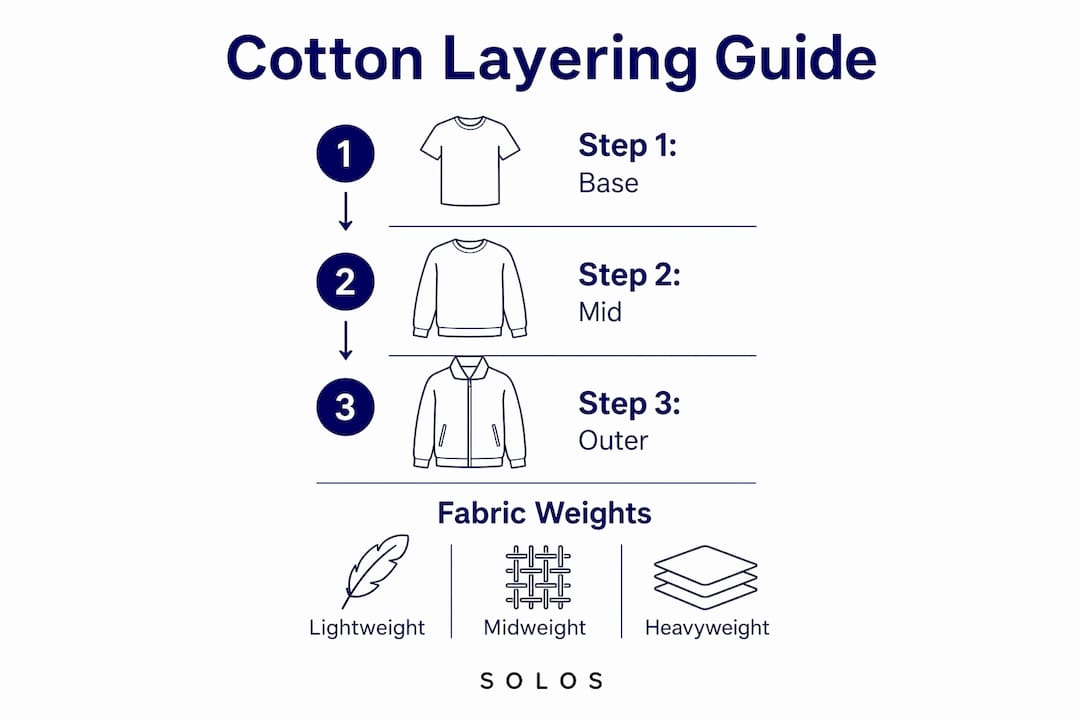
Cotton fabric weight, measured in GSM, determines whether a piece belongs at the base, middle, or outer position in your layered outfit. This single measurement is the most underused tool in everyday dressing, yet it explains why some combinations feel polished and others feel clunky.
The three weight categories break down as follows:
- Lightweight cotton (under 170 GSM): Poplin shirts, fine jersey tees, and voile fabrics sit here. These are breathable, close-fitting, and ideal as base layers. A 110 GSM poplin shirt worn directly against the skin keeps you cool while providing a clean foundation for everything above it.
- Midweight cotton (170 to 340 GSM): French terry sweatshirts, pique polos, and standard denim fall in this range. These pieces are the workhorses of cotton layering. They add warmth and visual weight without restricting movement, making them perfect as core mid-layers.
- Heavyweight cotton (above 340 GSM): Duck canvas jackets, thick corduroy, and waxed cotton coats belong here. These fabrics provide structure, wind resistance, and a defined silhouette as outer layers.
A practical winter combination that illustrates this perfectly: a 110 GSM poplin shirt under a 300 GSM French terry sweatshirt, topped with a 400 GSM duck canvas jacket. Each layer has a clear role. The system works because weight increases as you move outward, which is exactly how drape and proportion should function.
Pro Tip: Check the care label weight if it is listed, or feel the fabric between your fingers. A fabric that holds its shape when held up is midweight or heavier. One that falls freely is lightweight and belongs closest to your skin.
What layering techniques optimise style and silhouette?
Proportion control is the secret that fashion editors use to make layered cotton essentials look refined rather than accidental. The principle is straightforward: start with your most fitted piece at the base, then add progressively more relaxed fits as you build outward.
Here is what this looks like in practice:
- Fit hierarchy: A slim-fit cotton tee under a regular-fit Oxford shirt, worn open, under a slightly oversized French terry hoodie. Each layer is one step looser than the one beneath it. The result reads as intentional rather than thrown together.
- Volume contrast: Pairing a fitted base with a voluminous mid-layer creates dimension. A tucked slim polo under a boxy cotton knit, for example, gives the outfit a clear shape without bulk at the shoulders.
- Colour shading: Keep your base layer in a similar or slightly darker shade to your mid-layer, then introduce contrast at the outer layer. Navy tee, mid-blue shirt, off-white canvas jacket reads as cohesive. The layering depth comes from shade variation, not clashing colours.
- Texture mixing: Smooth poplin against a brushed French terry creates tactile contrast that makes the outfit more interesting. Avoid stacking two smooth fabrics of the same weight as the layers will merge visually.
- Avoiding the common mistake: Starting with a thick cotton base layer disrupts drape for every garment above it. A heavy base creates a boxy silhouette that no amount of outer-layer styling can fix.
Pro Tip: If your layers feel stiff or bunched at the collar, the base layer is too heavy. Swap it for a lightweight poplin or fine jersey and the upper layers will sit cleanly.
How does cotton compare with other fabrics for layering?
Cotton’s strengths in layering are breathability, comfort against skin, and styling versatility. Its limitation is moisture management. Cotton traps moisture and chills the skin in cold or wet conditions, which is why outdoor enthusiasts use the phrase “cotton kills” when advising against cotton base layers in winter.
The comparison below clarifies where each fabric performs best:
| Fabric | Best layer position | Strength | Limitation |
|---|---|---|---|
| Cotton (lightweight) | Base or mid | Breathable, comfortable, stylish | Poor moisture wicking in cold/wet |
| Cotton (heavyweight) | Mid or outer | Structure, insulation, wind resistance | Heavy when wet |
| Merino wool | Base | Moisture wicking, warm, odour resistant | Cost, care requirements |
| Synthetic (polyester) | Base or mid | Moisture wicking, lightweight, durable | Less breathable, less stylish |
| Cotton/synthetic blend | Mid | Balanced performance and comfort | Varies by blend ratio |
For everyday urban wear, cotton works well as both mid and outer layers because moisture management is rarely critical in a city context. Where you are active outdoors in cold weather, place a merino or synthetic base beneath your cotton mid and outer layers. This hybrid approach gives you the performance of technical fabrics where it matters and the style of cotton where it shows.
Cotton layering outfit ideas for every season
Knowing the theory is one thing. Seeing it applied across seasons makes it practical. The following combinations use fabric weight, fit hierarchy, and texture contrast as the organising principles.
Summer
- A 130 GSM white cotton tee as the base, worn under a lightweight linen-cotton blend shirt left open. The open shirt adds a layer of visual interest without adding warmth.
- A fine-gauge cotton polo in a neutral tone, tucked into cotton chinos. Add a cotton canvas cap from Soloslife’s accessories range to complete the look without adding bulk.
Autumn and spring
- A poplin shirt under a 280 GSM French terry hoodie or a Galley French terry zip-up jacket. The shirt collar visible above the hoodie neckline adds a layered detail that reads as considered rather than casual.
- A slim-fit cotton tee under a midweight cotton overshirt in a contrasting colour. Roll the sleeves of the overshirt to reveal the tee beneath, creating depth at the cuff.
Winter
- A merino base layer under a 300 GSM French terry sweatshirt, topped with a 400 GSM duck canvas jacket. The cotton outer layer provides structure and wind resistance while the merino handles moisture.
- A cotton turtleneck under a structured cotton blazer, worn with cotton-twill trousers. This combination works for smart-casual occasions and demonstrates that cotton layering is not limited to casual dressing.
Accessories as finishing layers
A cotton canvas cap or a cotton scarf functions as a final layer that ties the palette together. Choose accessories in a weight and texture that echo one of the mid-layers for cohesion. A brushed cotton beanie over a French terry hoodie, for instance, repeats the texture and reads as intentional.
How to master advanced cotton layering for a fashion-forward look
Modern layering makes each piece work harder stylistically. The goal is not to pile on garments for warmth but to use layers as a deliberate styling tool that creates shape, depth, and personality.
- Cropped over longer: Layer a cropped cotton sweater over a longer cotton tee or shirt. The hem of the tee visible below the sweater creates a deliberate length contrast that adds dimension without bulk.
- The half-tuck: Tuck a fine-gauge cotton knit into the front of trousers or a skirt, leaving the back untucked. This small move adds polish and breaks the monotony of a straight silhouette.
- Fine gauge meets heavyweight: Pair a fine-gauge cotton knit with a structured heavyweight duck canvas or waxed cotton outer layer. The contrast between delicate and robust textures is what makes the combination interesting.
- Colourblocking within cotton: Use the same fabric family across layers but in contrasting colours. A white cotton tee, a terracotta cotton overshirt, and an olive cotton jacket create a colourblocked look that feels current without relying on prints.
- Avoid symmetrical bulk: If your outer layer is wide at the shoulder, keep the mid-layer fitted. If your trousers are relaxed, keep the upper layers slim. Balance is the rule.
Pro Tip: Black on black on black works in cotton if the textures vary. A smooth jersey tee under a brushed French terry sweatshirt under a waxed cotton jacket reads as a considered tonal outfit, not a uniform.
The fit hierarchy principle applies here too. A base layer polo or dress shirt, a sweater or vest as the mid-layer, and a blazer or jacket as the outer layer with a slightly looser fit at each stage. This structure keeps the silhouette clean regardless of how many pieces you are wearing.
Key takeaways
Layering cotton essentials works best when you assign each garment a role based on its GSM weight, then build outward from fitted to relaxed with deliberate texture and colour contrast.
| Point | Details |
|---|---|
| GSM determines layer position | Lightweight under 170 GSM for base, midweight 170 to 340 GSM for mid, heavyweight above 340 GSM for outer. |
| Fit hierarchy prevents bulk | Start with your most fitted piece and add progressively relaxed fits moving outward. |
| Cotton has moisture limits | Use merino or synthetic base layers in cold or wet conditions; keep cotton in mid and outer positions. |
| Texture contrast adds depth | Mixing smooth poplin with brushed French terry or duck canvas creates visual and tactile interest. |
| Accessories complete the system | Cotton caps, scarves, and other accessories function as a final layer that ties the palette together. |
Why fabric weight changed how I think about cotton layering
For a long time, I treated cotton layering as a matter of throwing on a shirt and a jacket and calling it done. The outfits were fine, but they never felt considered. The shift came when I started thinking about GSM as a layering map rather than just a fabric specification.
Once I understood that a 110 GSM poplin shirt and a 400 GSM duck canvas jacket occupy completely different positions in a layered outfit, the combinations became obvious. The poplin goes on first. The canvas goes on last. Everything in between is chosen to bridge those two weights in a way that makes sense for the occasion.
Proportion control was the second revelation. I used to layer a heavyweight cotton sweatshirt directly over a midweight tee and wonder why the outfit looked shapeless. The answer was that I had started too heavy at the base. Swapping the base for a lightweight jersey tee immediately improved the drape of everything above it.
My favourite everyday combination at the moment is a slim-fit pique polo from Soloslife under a cotton overshirt in a complementary tone, with a canvas jacket for cooler mornings. It works for a coffee run and a client meeting without any changes. That kind of versatility is what cotton layering, done properly, actually delivers.
The honest advice I would give anyone starting out: resist the urge to buy more pieces and instead learn the weights of what you already own. Categorise them by GSM, then experiment with the hierarchy. The results will surprise you.
— Solos
Build your layered cotton wardrobe with Soloslife
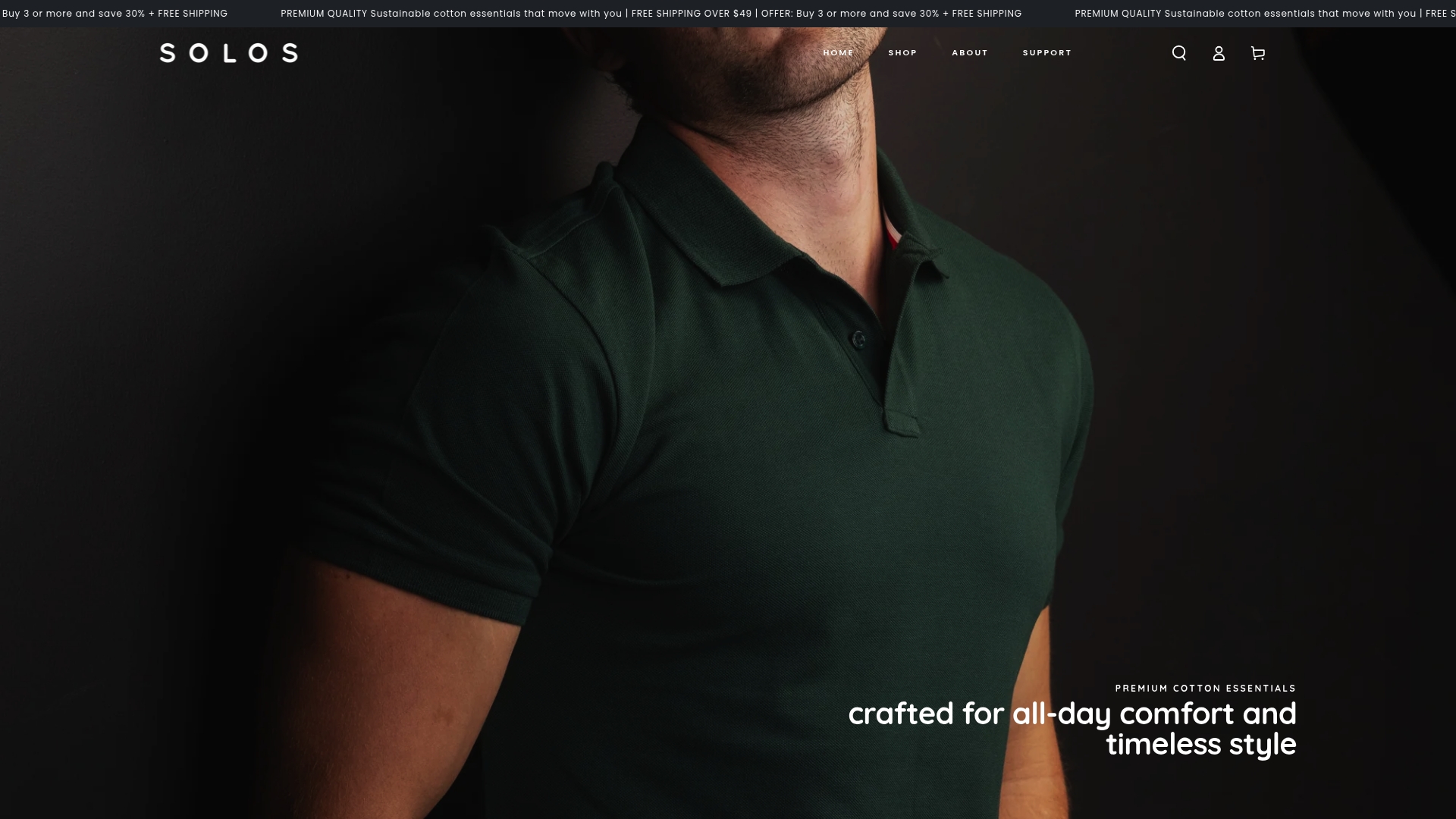
Soloslife designs premium cotton tees and polos built specifically for the kind of layering this guide describes. The slim-fit polos sit cleanly as base and mid-layers without bunching under heavier cotton pieces. The tees are cut in lightweight jersey that drapes correctly when worn beneath a French terry sweatshirt or a canvas jacket. Every piece is made with non-toxic dyes and sustainably sourced cotton, so the quality holds across seasons and repeated wear. Pair any base layer with a Skeeter cotton jersey cardigan for a relaxed mid-layer that moves with you. Finish the look with a cotton canvas cap or a piece from the accessories range to complete the layered outfit from top to bottom.
FAQ
What does GSM mean for cotton layering?
GSM stands for grams per square metre and measures fabric weight. In cotton layering, it determines whether a piece belongs as a base layer (under 170 GSM), a mid-layer (170 to 340 GSM), or an outer layer (above 340 GSM).
Can you wear cotton as a base layer in winter?
Cotton is not recommended as a base layer in cold or wet conditions because it absorbs moisture and chills the skin. Use merino wool or a synthetic fabric at the base and reserve cotton for mid and outer layers.
How do you avoid bulk when layering cotton clothes?
Start with the thinnest fabric closest to your skin and add heavier layers outward. A thick cotton base disrupts the drape of every layer above it and creates a boxy silhouette.
What are the best cotton fabrics for layering?
Poplin works best as a lightweight base, French terry as a midweight core layer, and duck canvas as a structured outer layer. Each weave has a distinct GSM range and texture that serves a specific position in the layering system.
How do you mix textures when layering cotton essentials?
Pair smooth fabrics like poplin or fine jersey with textured fabrics like brushed French terry or waxed cotton. Stacking two smooth fabrics of similar weight causes the layers to merge visually, which removes the depth that makes layered outfits interesting.


