

TL;DR:
- Sustainable dyeing minimizes water, chemical discharge, and energy use in textile colouring, addressing environmental pollution. Closed-loop water systems and waterless CO2 dyeing are key innovations, with natural dyes requiring safe mordants for true eco-friendliness. Industry shift depends on input controls, high fixation rates, and transparency, not just advanced technology.
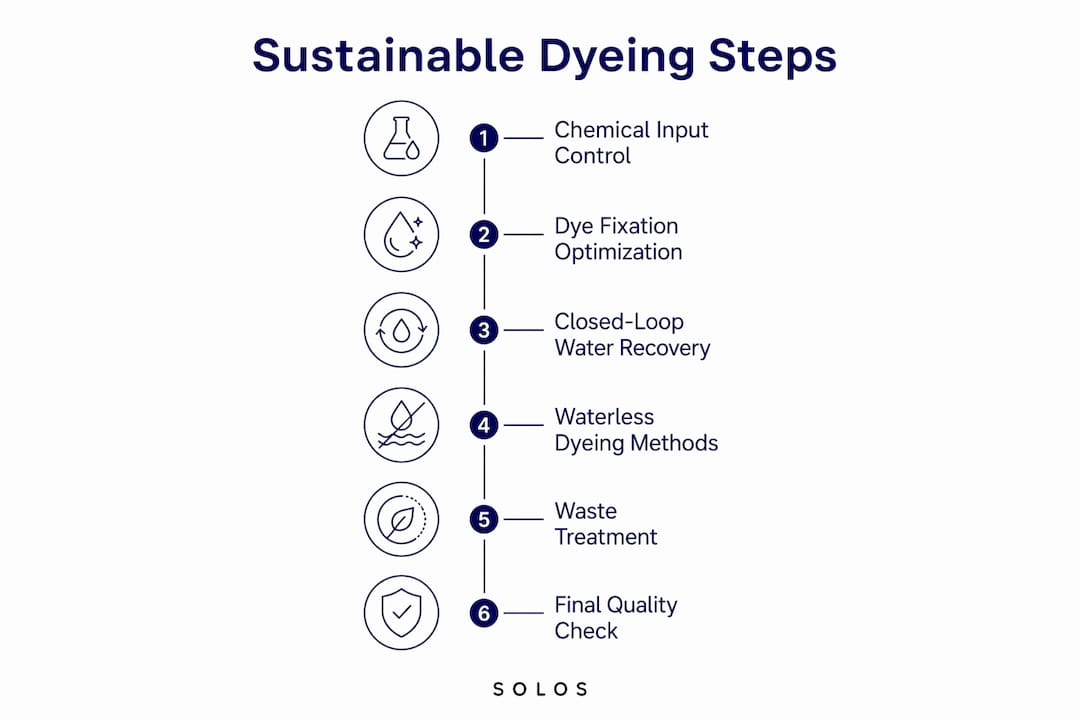
Sustainable dyeing is defined as any textile colouring method that minimises water consumption, toxic chemical discharge, and energy use throughout the colouring process. Understanding how the sustainable dyeing process works matters because conventional wet dyeing is one of the most polluting stages in textile manufacturing, with 10–30% of dyes in standard baths failing to fix onto fibres and washing directly into waterways. Technologies like AirDye, supercritical CO2 systems, and the ZDHC chemical detox framework represent the leading edge of this shift. Together, they form a new standard for what responsible textile colouring looks like in practice.
How closed-loop water systems work in sustainable dyeing

Closed-loop water systems are the most widely adopted green dyeing practice in commercial dye houses today. They work by capturing, treating, and recirculating process water rather than discharging it as effluent. Closed-loop systems recycle nearly 100% of process water through filtration, reverse osmosis, and evaporation, removing dyes, chemicals, and salts before reuse. That near-total recovery rate makes them one of the most impactful steps in sustainable textile dyeing.
The operational cycle follows a clear sequence:
- Capture. Used dyebath water is collected immediately after each dyeing cycle rather than sent to drain.
- Pre-filtration. Coarse particles and fibre fragments are removed through mechanical screening.
- Ultrafiltration. Fine dye molecules and suspended solids are separated from the water stream.
- Reverse osmosis. Dissolved salts, residual dye, and chemical auxiliaries are stripped out, producing clean permeate water ready for reuse.
- Evaporation or crystallisation. Concentrated brine and dye residues are reduced to solid waste, which is managed separately.
- Recirculation. Treated water re-enters the dyeing process, closing the loop.
Membrane trains combining ultrafiltration and reverse osmosis can reduce textile dye wastewater volume by 90–99%, recovering dye pigments and producing reusable water. This level of recovery supports near zero liquid discharge (ZLD) operations, which is the gold standard for dye houses aiming to eliminate effluent entirely.
One factor that is often overlooked is dye fixation. Meaningful closed-loop systems require both efficient dye fixation and careful liquor management to lower contaminant loads so that filtration and water reclamation are economically viable. In plain terms, if a large proportion of dye fails to bond with the fibre, the filtration system carries a heavier burden and costs rise sharply.
Pro Tip: When evaluating a dye house’s sustainability credentials, ask specifically about their liquor ratio and fixation rates, not just whether they have a closed-loop system installed. A well-managed low-liquor process with high fixation is far more effective than a poorly optimised system with advanced membranes.
What is waterless dyeing and how does it work?
Waterless dyeing is a category of eco-friendly dyeing techniques that replaces the aqueous dyebath entirely, eliminating wastewater at the source rather than treating it afterwards. The most technically advanced method is supercritical CO2 dyeing.
Supercritical CO2 dyeing uses CO2 heated to approximately 31.1°C and pressurised to around 73.8 bar, at which point it enters a supercritical state. In this state, CO2 behaves simultaneously like a liquid and a gas, dissolving disperse dyes and carrying them deep into polyester fibres. Once dyeing is complete, pressure is released, the CO2 reverts to gas, and the dye is fixed within the fibre. The CO2 is then recaptured and recycled in a closed loop, producing zero aqueous wastewater.
The practical advantages extend beyond pollution reduction:
- No drying stage required. Because no water is used, the energy-intensive drying and finishing steps that follow conventional wet dyeing are eliminated entirely.
- Faster cycle times. CO2 penetrates fibres more rapidly than water-based baths, reducing total process time.
- Higher colour consistency. The controlled supercritical environment produces more uniform dye distribution across fabric batches.
- Zero effluent discharge. The recyclable CO2 solvent makes the process genuinely zero wastewater in normal operation.
Beyond supercritical CO2, two other dry or low-water methods are gaining traction. Plasma treatment modifies the surface chemistry of fibres, increasing their hydrophilicity and dye uptake so that less dye and water is needed to achieve full colour saturation. Ozone treatment offers a chemical-free alternative to conventional bleaching, breaking down colour compounds through oxidation without chlorine-based agents.
The honest limitation of waterless dyeing is infrastructure. Supercritical CO2 systems require high-pressure vessels and significant capital investment, which places them out of reach for smaller manufacturers. The technology also works most effectively on synthetic fibres like polyester, making it less applicable to natural fibres such as cotton without further development.
Natural dyes and mordants in sustainable textile colouring
Natural dyeing is the oldest form of sustainable textile colouring, and it is experiencing a genuine revival in the dyeing process for sustainable fashion. Plant pigments from sources like indigo, madder, weld, and woad, as well as pigments derived from microorganisms and fungi, offer biodegradable alternatives to synthetic azo dyes. The appeal is real, but the environmental picture is more nuanced than it first appears.
The chemistry of natural dyeing depends heavily on mordants, which are mineral salts that bond the dye molecule to the fibre. Without a mordant, most natural dyes wash out quickly. Common mordants and their characteristics include:
- Alum (potassium aluminium sulfate). The most widely used mordant in sustainable practice. Low toxicity, produces bright, clear colours, and is considered safe for wastewater discharge at typical concentrations.
- Ferrous sulfate (iron mordant). Shifts colours toward greens and greys, and is generally considered low-risk when used in controlled quantities.
- Tannins. Plant-based mordant alternatives derived from oak galls, sumac, or pomegranate rind. Fully biodegradable and increasingly preferred in artisan and small-batch dyeing.
- Chromium and tin mordants. These produce vivid, lightfast colours but pose significant pollution risks and must be avoided in any genuinely sustainable process.
The critical insight here is that natural dyeing sustainability varies significantly based on mordant chemistry and wastewater management. Heavy-metal mordants can negate the eco benefits of natural pigments entirely, which means the label “natural dye” is not automatically a sustainability guarantee.
Brands like Patagonia and smaller artisan labels have adopted alum-mordanted natural dyes for select product lines, pairing them with careful wastewater handling to manage residual mineral content. For cotton specifically, you can explore sustainable cotton fabric types to understand how fibre choice interacts with dye uptake and environmental outcomes.
Pro Tip: If you are assessing a brand’s natural dyeing claims, look for disclosure of both the dye source and the mordant used. A brand that names only the dye source without addressing mordant chemistry is giving you an incomplete picture.
What is ZDHC and how does it control hazardous chemicals?
The Zero Discharge of Hazardous Chemicals (ZDHC) initiative is the most widely adopted chemical detox framework in the global textile industry. It addresses a fundamental problem: treating wastewater at the end of a process is far less effective than preventing hazardous chemicals from entering production in the first place.
ZDHC operates through two distinct control mechanisms. The Manufacturing Restricted Substances List (MRSL) governs chemical inputs, specifying which substances cannot be used in manufacturing. The Restricted Substances List (RSL) governs the finished product, specifying what residues cannot remain in garments reaching consumers. The MRSL is the more powerful tool for environmental protection because it stops hazardous substances before they enter the dyebath.
| Control type | What it governs | Environmental role |
|---|---|---|
| MRSL (input control) | Chemicals used in manufacturing | Prevents hazardous substances entering production |
| RSL (product control) | Residues in finished garments | Protects consumer health |
| Effluent testing | Treated wastewater discharge | Verifies safe output to waterways |
| Sludge testing | Solid waste from treatment | Confirms safe disposal of concentrated residues |
The “Dirty Eleven” hazardous chemical classes targeted by ZDHC include alkylphenol ethoxylates (APEOs), phthalates, azo dyes that release carcinogenic amines, perfluorinated compounds (PFCs), and chlorinated solvents, among others. These substances are persistent in aquatic environments and accumulate in food chains.
ZDHC-aligned chemical detox treats manufacturing chemical inputs as a multi-stream verification problem, testing raw influent, treated effluent, and sewage sludge to confirm comprehensive environmental safety. This three-stream approach is what separates genuine compliance from superficial claims. Controlling hazardous substances at factory input rather than relying solely on wastewater treatment is the more effective and economical strategy, because end-of-pipe treatment cannot reliably remove all persistent organic pollutants once they are in solution.
Comparing sustainable dyeing methods: which approach fits which fabric?
No single sustainable dyeing method works for every fabric type or production scale. The right choice depends on fibre composition, batch size, available infrastructure, and the specific environmental priority being addressed.
Low-impact dyeing improves dye fixation by optimising dye and fibre chemistry, reducing liquor ratios, and recycling rinse water, which lowers both water consumption and wastewater contaminants. This approach is the most accessible for existing dye houses because it requires process optimisation rather than capital-intensive new equipment.
| Method | Best for | Water use | Pollution potential | Infrastructure cost |
|---|---|---|---|---|
| Closed-loop water systems | Cotton, wool, blends | Very low (recycled) | Minimal with ZLD | High (membranes, RO) |
| Supercritical CO2 | Polyester, synthetics | Zero | Zero effluent | Very high |
| Natural dyeing with safe mordants | Cotton, wool, silk | Moderate | Low with alum/tannin | Low to moderate |
| ZDHC-compliant synthetic dyeing | All fibre types | Moderate | Low with input control | Moderate |
| Low-impact process optimisation | All fibre types | Low | Low | Low |
The most promising direction in 2026 is hybrid approaches: combining ZDHC input controls with closed-loop water recovery and high-fixation dye chemistry. This layered strategy addresses pollution at three points simultaneously, which is where the industry’s most forward-thinking manufacturers are heading. Understanding what sustainable fashion means at a systemic level helps contextualise why these technical choices matter beyond the dye house.
Key takeaways
Sustainable dyeing works best when hazardous chemical inputs are controlled upstream, dye-fibre fixation is maximised, and water is reclaimed through closed-loop or waterless systems rather than discharged.
| Point | Details |
|---|---|
| Closed-loop water recovery | Filtration and reverse osmosis recycle up to 99% of process water, enabling near zero liquid discharge. |
| Waterless CO2 dyeing | Supercritical CO2 eliminates aqueous wastewater entirely and removes the energy-intensive drying stage. |
| Mordant choice matters | Natural dyes are only genuinely sustainable when paired with safe mordants like alum, not heavy metals like chromium. |
| ZDHC input control | Preventing hazardous chemicals from entering production is more effective than treating contaminated effluent afterwards. |
| Fixation efficiency | High dye-fibre fixation reduces dye loss, lowers rinse water contamination, and makes water reclamation economically viable. |
The real challenge is not the technology
From where we stand at Soloslife, the most interesting thing about sustainable dyeing is not the technology itself. It is the gap between what is technically possible and what is actually being practised at scale.
Supercritical CO2 systems have existed for decades. Closed-loop membrane systems are commercially proven. ZDHC frameworks are widely published and freely accessible. Yet the majority of global textile dyeing still relies on open-loop water discharge and poorly controlled chemical inputs. The barrier is rarely knowledge. It is the economics of transition and the absence of consumer pressure on the brands that commission dyeing.
What we have found is that the most impactful lever available to conscious consumers is not choosing “natural dye” as a proxy for sustainability. It is asking harder questions: What is the mordant? What is the fixation rate? Is the dye house ZDHC-compliant? Does the brand disclose its chemical management approach? These questions shift purchasing decisions from surface-level signals to genuine accountability.
The future of sustainable textile colouring lies in hybrid systems that combine input control, high fixation chemistry, and closed-loop water recovery. That combination is not aspirational. It is already operating in leading dye houses across Portugal, Japan, and Taiwan. The question is whether the broader industry will follow before regulatory pressure forces the issue.
— Solos
Dress better, tread lighter with Soloslife

At Soloslife, every cotton essential in our range is produced with non-toxic dyes and a genuine commitment to responsible manufacturing. We do not use the word “sustainable” lightly. It means choosing dye processes that protect waterways, selecting materials that carry a lower environmental footprint, and working with manufacturers who meet real chemical safety standards. If you want to understand the full picture of how we approach this, our sustainability commitments lay it out plainly. When you are ready to build a wardrobe that reflects those values, explore our premium cotton essentials and see what responsibly made actually looks like in practice.
FAQ
What is sustainable dyeing in simple terms?
Sustainable dyeing is any textile colouring process that reduces water use, eliminates toxic chemical discharge, and lowers energy consumption compared to conventional wet dyeing methods. It includes techniques like closed-loop water recycling, waterless CO2 dyeing, natural dyes with safe mordants, and ZDHC-compliant chemical management.
Why is sustainable dyeing important for the environment?
Conventional dyeing loses 10–30% of dyes directly into wastewater, contributing to significant aquatic pollution. Sustainable dyeing methods address this by improving dye fixation, recycling process water, and preventing hazardous chemicals from entering production in the first place.
Does natural dyeing automatically mean eco-friendly?
Not always. Natural dyes are only genuinely sustainable when paired with safe mordants like alum or tannins. Heavy-metal mordants such as chromium produce toxic wastewater that can negate the environmental benefits of using plant-based pigments entirely.
What fabrics work best with waterless CO2 dyeing?
Supercritical CO2 dyeing works most effectively on polyester and other synthetic fibres because disperse dyes dissolve readily in the CO2 solvent at the required temperature and pressure. Its application to natural fibres like cotton requires further technical development.
How can I tell if a brand uses sustainable dyeing practices?
Look for disclosure of ZDHC compliance, specific dye chemistry (not just “natural” or “eco”), mordant information for natural dyes, and whether the manufacturer operates a closed-loop or zero liquid discharge water system. Brands that share this level of detail are demonstrating genuine accountability rather than surface-level claims. Caring for your garments correctly also extends their life. An eco-friendly laundry routine helps preserve sustainably dyed fabrics and reduces your overall environmental footprint.


