

TL;DR:
- High-quality cotton garments are defined by fiber grade, fabric construction, and third-party certification.
- You can identify premium cotton through staple length, Micronaire ratings, fabric weight, weave type, and certifications like GOTS and OEKO-TEX.
High-quality cotton garments are defined by three measurable factors: fibre grade, fabric construction, and third-party certification. Most shoppers focus on price or brand name, but the real markers of premium cotton sit in the fabric itself. Once you know what to look for, you can identify high quality cotton garments with confidence, whether you are shopping in-store or online. The key metrics are staple length, Micronaire rating, fabric weight (GSM), weave type, and certifications like GOTS and OEKO-TEX.
What fibre quality metrics define premium cotton garments?
The single most reliable way to assess cotton quality is fibre grade. Fibre grade is determined by staple length, Micronaire, and yarn twist, and these metrics predict how a garment will feel and last far better than price alone.
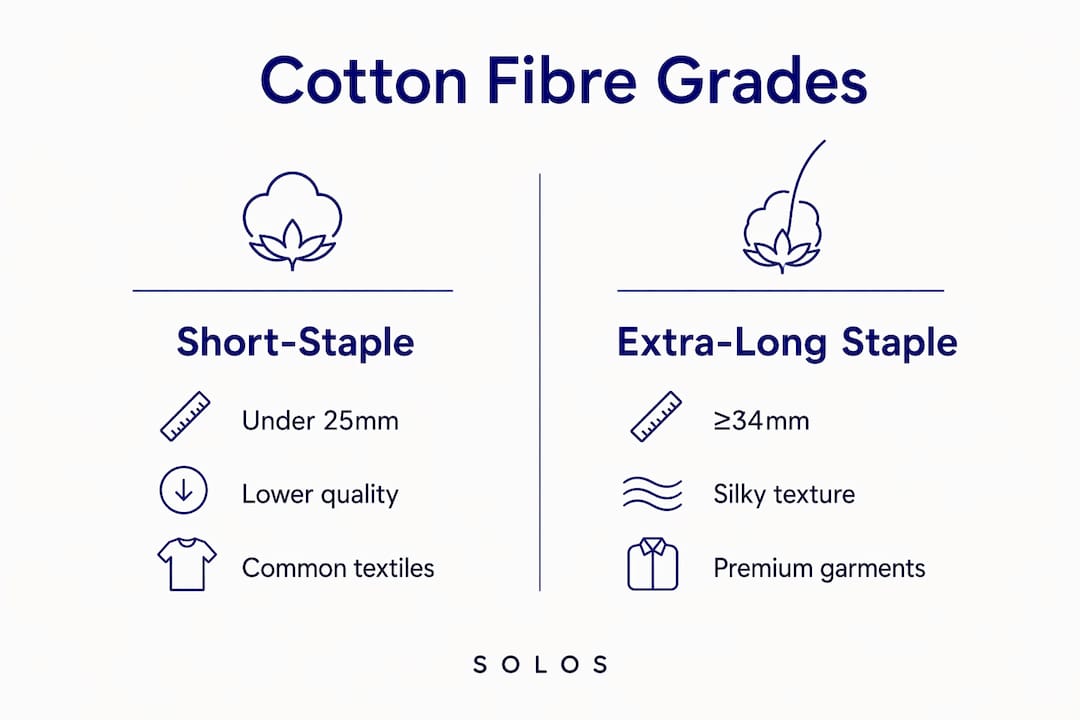
Staple length refers to the average length of individual cotton fibres. ELS cotton fibres ≥34mm deliver the silky texture and durability that define premium shirting. Longer fibres twist into smoother, stronger yarns with less surface fuzz. Varieties like Pima, Supima, and Giza 45 all meet this standard. Short-staple cotton, by contrast, produces coarser fabric that pills faster and loses shape after repeated washing.
Micronaire measures fibre fineness and maturity. The industry standard range is 3.8–4.2, which balances softness with structural integrity. Fibres below 3.8 are too fine and prone to breakage. Fibres above 4.2 are coarser and produce a rougher hand feel.
Yarn twist is the number of twists per inch applied during spinning. A yarn twist of 22–26 TPI produces fabric that holds its shape without feeling stiff. Lower twist produces limp, weak fabric. Higher twist can make the fabric feel wiry.
Here is a quick comparison of cotton fibre grades:
| Fibre type | Staple length | Typical use | Quality indicator |
|---|---|---|---|
| Short-staple | Under 25mm | Budget basics | Prone to pilling and fuzz |
| Long-staple | 28–33mm | Mid-range shirts and tees | Good durability, moderate softness |
| Extra-long staple (ELS) | ≥34mm | Premium shirting, luxury basics | Smooth, durable, low pilling |
Pro Tip: Most retailers will not volunteer Micronaire or staple length data. Ask directly, or look for named ELS varieties like Pima or Supima on the label. If neither appears, treat the fibre grade as unverified.
Understanding cotton construction quality gives you a real advantage when shopping. Fibre grade is the foundation everything else builds on.
How do fabric weight and weave affect garment quality?
Fabric weight and weave type determine how a cotton garment performs in real life. Getting this match right is the difference between a shirt that lasts years and one that bags out after a season.
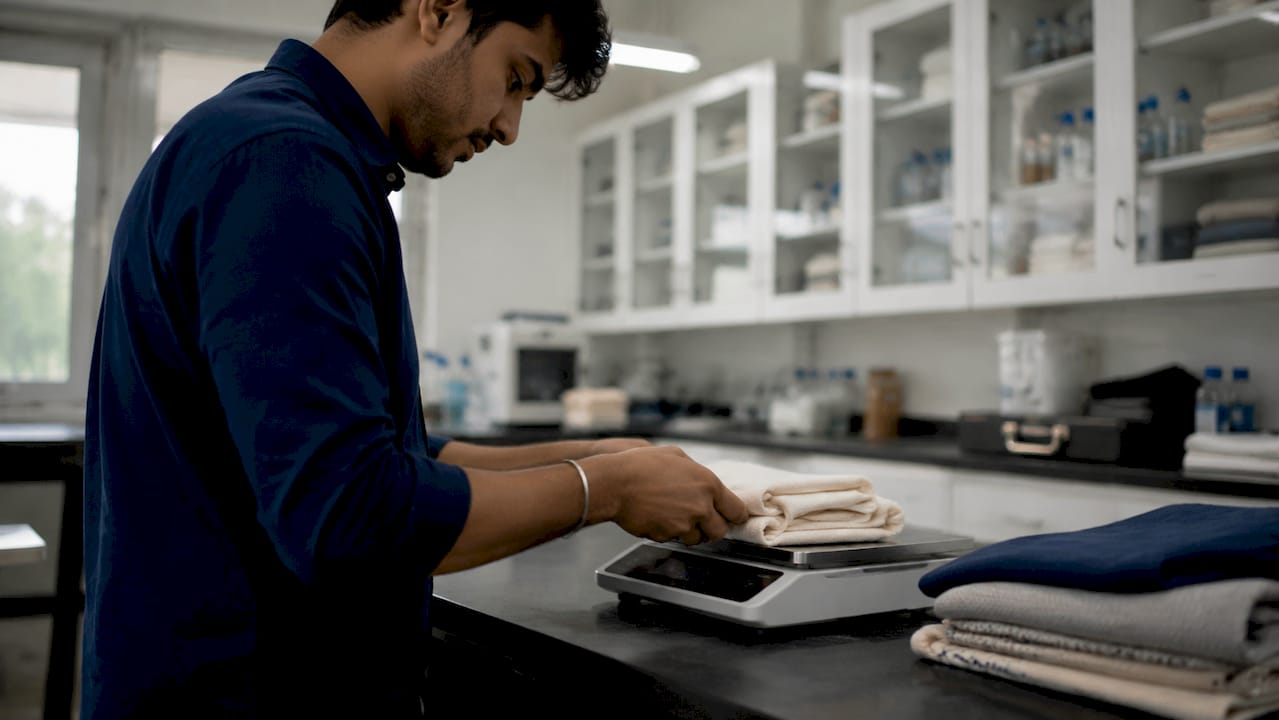
Fabric weight is measured in grams per square metre (GSM). Lightweight fabrics (60–120 GSM) suit summer wear and breathable basics. Midweight fabrics (170–340 GSM) work well for office shirts and everyday tees. Heavyweight fabrics (above 340 GSM) are built for outerwear and structured pieces. Choosing the wrong weight for a garment’s purpose is one of the most common quality mismatches in a wardrobe.
| GSM range | Garment type | Key characteristic |
|---|---|---|
| 60–120 GSM | Summer tees, lightweight shirts | Breathable, light, ideal for warm climates |
| 120–170 GSM | Casual shirts, polos | Versatile, comfortable year-round |
| 170–340 GSM | Office shirts, structured basics | Good drape, durable, holds shape |
| Above 340 GSM | Outerwear, heavy-duty garments | Dense, warm, long-wearing |
Weave type is equally important. Poplin is tightly woven with a smooth, crisp surface, making it the standard for dress shirts. Twill runs at a diagonal and sits in the 200–270 GSM range, offering structure and durability suited to chinos and heavier shirts. Royal Oxford has a subtle basket-weave texture that adds visual depth without sacrificing softness, making it a favourite for smart-casual polos and business shirts.
Weave tightness also affects longevity. A tighter weave resists snagging and holds its structure through more washes. You can assess this by holding the fabric up to light. A premium weave shows a consistent, even grid. A loose or uneven weave signals lower-grade construction.
Pro Tip: When selecting cotton by weight for the Australian climate, a 140–180 GSM poplin or jersey is the sweet spot for year-round comfort. It is light enough for summer but substantial enough to feel polished in cooler months.
What finishing processes and tactile cues signal quality cotton?
Finishing is where good cotton becomes great cotton. The right finishing process transforms a standard fabric into something that feels noticeably different the moment you touch it.
Mercerisation is the most significant finishing technique for premium cotton. Mercerised cotton has been treated with sodium hydroxide under tension, which swells the fibres and increases their lustre, softness, and dye uptake. The result is a fabric with a subtle sheen, richer colour, and improved colourfastness. You can identify mercerised cotton by its smooth, slightly luminous surface and the way it holds colour wash after wash.
Tactile tests give you reliable quality signals without damaging the garment. Run these checks before you buy:
- Wrinkle test: Scrunch a section of fabric in your fist for five seconds, then release. Premium cotton springs back with minimal creasing. Heavy wrinkling signals low-grade fibre or poor finishing.
- Pilling check: Rub the fabric surface gently with your thumb. Short-staple cottons show fuzz and pilling almost immediately. Long-staple and ELS fabrics stay smooth.
- Weave uniformity: Hold the fabric to light and look for an even, consistent weave pattern. Gaps, loose threads, or irregular spacing indicate lower-quality construction.
- Cool-to-touch feel: High-quality finished cotton feels cool against the skin, not warm or plasticky. A warm or slightly sticky feel can indicate synthetic blending or heavy resin coating.
Some garments are treated with resins to reduce wrinkling, but heavy resin coatings reduce breathability and can irritate sensitive skin. If you want to check for over-treatment, pH test strips can detect residual alkalinity from harsh chemical finishes. A neutral pH reading (around 7) indicates a well-rinsed, skin-safe finish.
Pro Tip: When shopping online, look for eco-friendly finishing practices in the brand’s product descriptions. Brands that disclose finishing methods are generally more transparent about overall quality.
How do you verify cotton authenticity and sustainability certifications?
Label reading is a non-negotiable step in any cotton garment quality check. The difference between “100% cotton” and “cotton rich” is significant, and it is not always obvious at first glance.
“Cotton rich” and “cotton feel” labels indicate blends with synthetic fibres. Synthetic blends can contain as little as 60% cotton despite marketing language that implies otherwise. Always locate the fibre composition label, usually sewn into the side seam or back neck, and confirm it reads “100% cotton” before assessing any other quality markers.
Third-party certifications are the most reliable way to verify both quality and ethical production. The three certifications worth knowing are:
- GOTS (Global Organic Textile Standard): Covers the entire supply chain from fibre to finished garment. GOTS certification confirms organic fibre sourcing, non-toxic dyes, and fair labour conditions. It is the gold standard for sustainable cotton garments.
- OEKO-TEX Standard 100: Tests the finished fabric for harmful substances including pesticide residues, heavy metals, and formaldehyde. An OEKO-TEX label means the garment is safe for skin contact, but it does not verify organic farming or labour practices.
- BCI (Better Cotton Initiative): Focuses on improving farming practices for conventional cotton. BCI cotton is not organic, but it represents a step toward reduced water use and chemical inputs.
Prioritising GOTS or OEKO-TEX certified brands gives you confidence that quality and ethics have been independently verified. Supply chain transparency is increasingly expected by consumers in 2026, and brands that publish their certification details are generally more accountable across the board. For a deeper look at what these labels mean, the eco-friendly textile certifications guide from Soloslife breaks down each scheme clearly.
Common mistakes when choosing quality cotton garments
Most cotton buying mistakes come down to trusting the wrong signals. Knowing what not to do is just as useful as knowing what to look for.
- Over-relying on thread count. Thread count alone does not predict quality. A 200-thread-count shirt made from Pima ELS cotton will outlast and outfeel a 400-thread-count shirt made from short-staple fibre. Fibre grade and yarn ply are the metrics that matter.
- Trusting “cotton feel” marketing. “Cotton feel” is not cotton. It describes a synthetic fabric engineered to mimic cotton’s texture. Always read the fibre composition label, not the marketing copy.
- Ignoring GSM for garment purpose. A 90 GSM tee is not a year-round shirt. Buying lightweight fabric for a structured garment, or heavyweight fabric for a summer piece, creates a mismatch that no amount of quality fibre can fix.
- Accepting greenwashing at face value. Words like “eco,” “natural,” and “sustainable” carry no legal definition in Australian fashion retail. Only third-party certifications like GOTS and OEKO-TEX carry verified meaning. If a brand cannot name its certification body, treat the claim as unverified.
- Not asking questions. Most suppliers will not volunteer technical data unless prompted. Ask for staple length, Micronaire values, and certification documentation. A brand confident in its quality will answer without hesitation.
Pro Tip: If a brand cannot tell you the fibre grade or certification status of its cotton, that silence is itself a quality signal. Transparent brands know their supply chain because they have invested in it.
Key takeaways
Identifying premium cotton requires checking fibre grade, fabric weight, finishing quality, and third-party certifications, not just the price tag or brand name.
| Point | Details |
|---|---|
| Fibre grade is the foundation | Look for ELS cotton (≥34mm staple length) in varieties like Pima or Supima for the best softness and durability. |
| GSM guides garment suitability | Match fabric weight to purpose: 60–120 GSM for summer, 170–340 GSM for structured everyday wear. |
| Finishing separates good from great | Mercerised cotton offers better softness, sheen, and colourfastness than unfinished standard cotton. |
| Certifications verify quality and ethics | GOTS and OEKO-TEX are the two certifications worth prioritising for both quality assurance and ethical production. |
| Thread count misleads | Fibre grade and yarn ply predict garment longevity far more reliably than thread count alone. |
What I have learned about buying cotton well
After years of handling cotton garments across different price points, one thing stands out: the best quality cotton rarely announces itself loudly. It does not need to. You feel it the moment you pick it up.
The tactile test is underrated. Most shoppers read labels and move on. But running the wrinkle test or checking for surface fuzz takes ten seconds and tells you more than any marketing claim. A garment that springs back from a scrunch and feels cool and smooth against your palm is almost always built from quality fibre.
Certifications matter, but context matters more. GOTS is the most rigorous standard, but not every excellent cotton brand holds it. What I look for is transparency. A brand that publishes its fibre sourcing, finishing methods, and labour practices is a brand that has nothing to hide. That transparency is itself a quality signal.
Budget is real, and I am not going to pretend ELS cotton is accessible at every price point. But buying one well-made cotton tee that lasts three years beats buying three cheap ones that pill and fade in six months. The maths and the environmental case both point the same way. Mindful purchasing is not about spending more. It is about spending better.
— Solos
Why Soloslife makes the quality check easy
Soloslife builds its premium cotton essentials around the exact quality markers covered in this guide. Every piece in the Australian Essentials collection uses high-quality cotton selected for fibre grade, finished with non-toxic dyes, and produced under ethical labour conditions. Soloslife’s commitment to sustainable practices means you are not just buying a well-made garment. You are buying one you can feel good about wearing. Explore the slim fit polo shirts and crew neck tees to see how premium cotton construction translates into everyday pieces built to last.
FAQ
What is ELS cotton and why does it matter?
Extra-long staple (ELS) cotton has fibres ≥34mm and includes varieties like Pima, Supima, and Giza 45. These longer fibres produce smoother, stronger yarns with significantly less pilling than short-staple cotton.
How do I know if a cotton garment is truly 100% cotton?
Check the fibre composition label sewn into the garment, usually at the side seam or back neck. Labels reading “cotton rich” or “cotton feel” indicate synthetic blending and are not 100% cotton.
What is the difference between GOTS and OEKO-TEX certification?
GOTS covers the full supply chain including farming, processing, and labour conditions. OEKO-TEX Standard 100 tests the finished fabric for harmful substances but does not verify farming or labour practices.
Is a higher thread count always better in cotton?
No. Thread count is a misleading metric when fibre grade is poor. Long-staple cotton at a lower thread count consistently outperforms short-staple cotton at a higher count in both feel and durability.
What is the best GSM for an everyday cotton tee?
A weight of 140–180 GSM strikes the right balance for year-round wear in the Australian climate. It is light enough to breathe in summer and substantial enough to hold its shape through regular washing.


