

TL;DR:
- Biodegradable clothing consists of materials designed to safely break down in specific environmental conditions, returning to the earth without harm. Its effectiveness depends on proper disposal environments, certification verification, and fabric quality to ensure real-world performance. When combined with sustainable practices and appropriate infrastructure, biodegradable textiles reduce microfibre pollution, landfill burden, and environmental toxicity.
Biodegradable clothing is material engineered to break down safely and completely under specific environmental conditions, returning to the earth without leaving toxic residues or persistent waste. Understanding why biodegradable clothing matters goes beyond the label on a hangtag. The fashion industry generates enormous volumes of textile waste, and most of it ends up in landfill or incineration. Brands like Pangaia and certifiers like TÜV Austria are pushing the conversation forward, but the real story is more nuanced than “natural equals biodegradable.” Here is what the science, the certifications, and the circular economy actually tell us.
Why biodegradable clothing matters: the science of breakdown
Biodegradation is not simply what happens when you bury a cotton T-shirt in your backyard. It is a biological process driven by microorganisms, and it requires the right combination of temperature, moisture, oxygen, and microbial activity to work effectively. Without those conditions, even genuinely natural fibres can persist for decades in environments like cold oceans or compacted landfills. That distinction matters enormously when you are evaluating a brand’s sustainability claims.
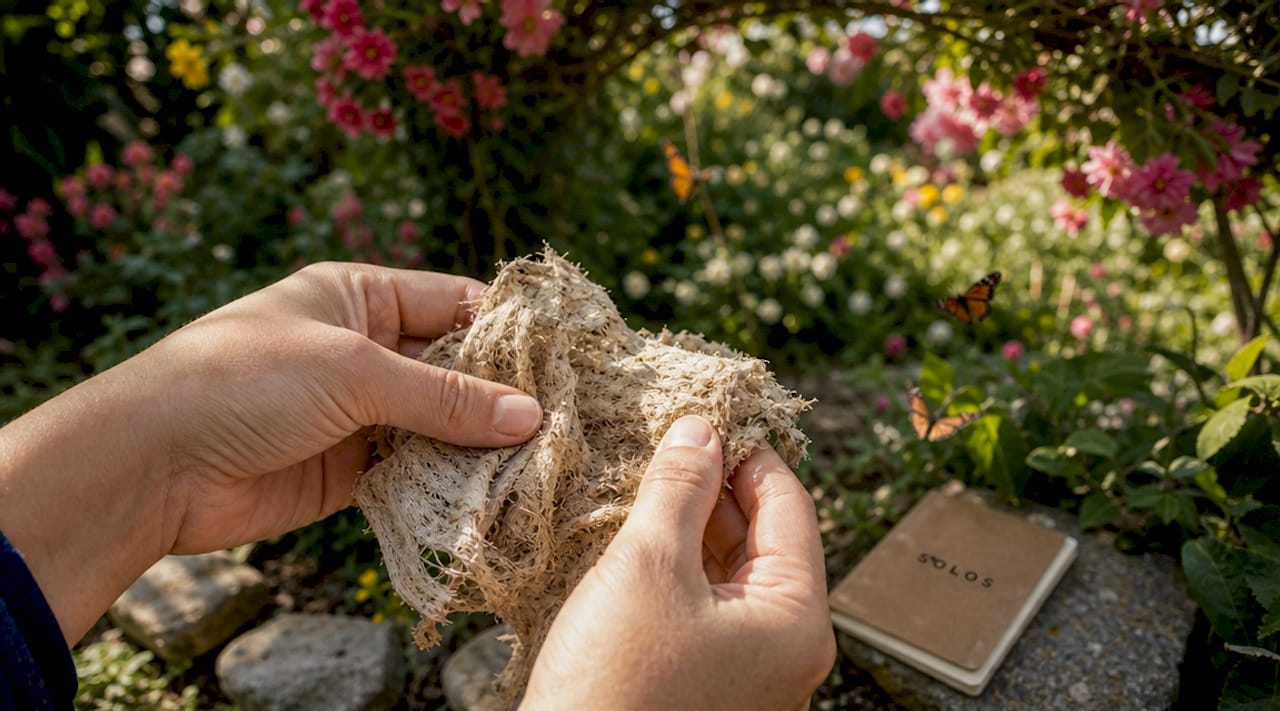
The gap between laboratory results and real-world performance is where most consumer confusion begins. A textile might break down within 90 days in a controlled industrial composting facility, yet the same garment could sit largely intact in a low-oxygen landfill for 20 or more years. Biodegradation depends as much on the disposal ecosystem as on the fibre itself. This is not a reason to dismiss biodegradable textiles. It is a reason to understand them properly.
Several factors control how quickly and completely a textile biodegrades:
- Fibre type: Organic cotton, linen, and wool biodegrade faster than chemically treated or blended fabrics.
- Dyes and finishes: Synthetic dyes, flame retardants, and wrinkle-resistant coatings can inhibit microbial activity and slow or prevent full breakdown.
- Fabric construction: Tightly woven or densely knitted structures reduce surface area available to microbes.
- Disposal environment: Industrial composting, home composting, soil burial, and landfill each produce dramatically different outcomes.
- Temperature and moisture: Warm, moist environments accelerate microbial activity; cold, dry, or anaerobic conditions slow it significantly.
Pro Tip: When a brand claims a garment is biodegradable, ask specifically where it biodegrades. “Biodegradable in industrial compost” and “biodegradable in home compost” are not the same thing, and neither guarantee applies to landfill conditions.
What certifications actually validate biodegradable claims?
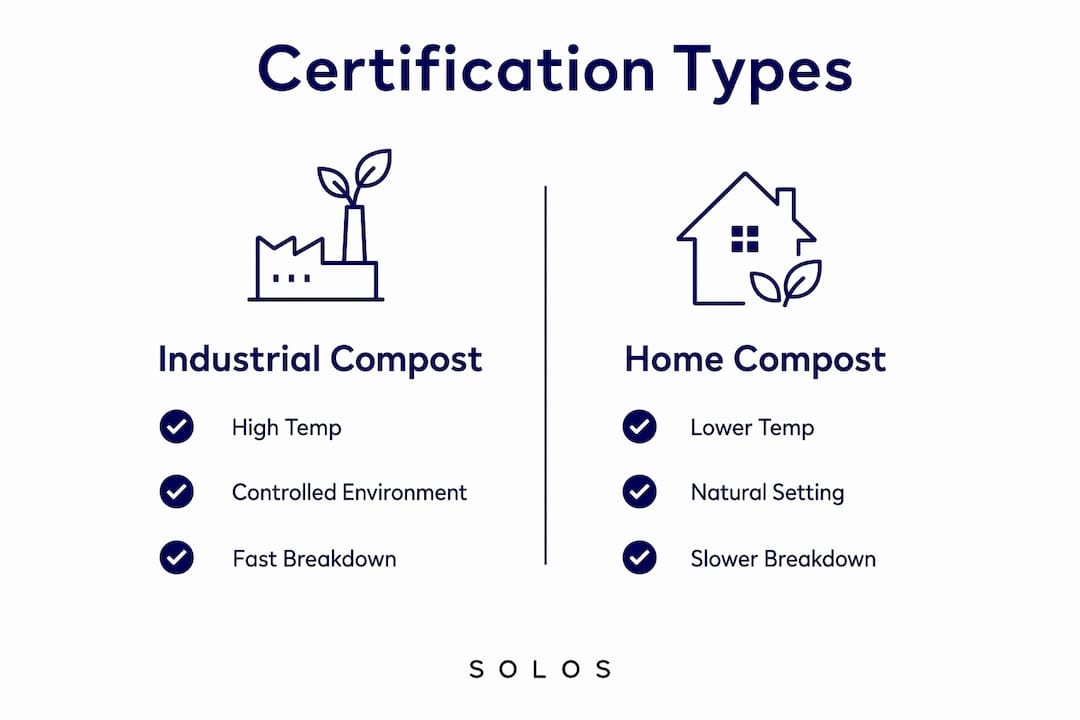
Credible biodegradability claims require third-party verification, and the most recognised framework comes from TÜV Austria’s OK biodegradable programme. The OK compost INDUSTRIAL certification requires textiles to pass rigorous biodegradation and ecotoxicity testing under controlled industrial composting conditions, governed by standards including EN 13432:2000. This means the material must convert substantially to biomass, water, and CO₂ within a defined timeframe, and must not leave harmful residues that damage plant growth or soil health.
There is also an important distinction between biodegradable and compostable. Compostable materials biodegrade within a specific timeframe and leave behind nutrient-rich compost. Biodegradable is a broader term that simply means the material will eventually break down biologically, with no guarantee of timeframe or residue quality. A garment labelled “biodegradable” without further specification is making a claim that is technically true of almost every organic material on earth, including materials that take centuries to decompose.
The four main TÜV Austria OK biodegradable certifications, and what they mean in practice:
- OK compost INDUSTRIAL: Certified to biodegrade in industrial composting facilities at elevated temperatures (around 58°C). Not suitable for home compost.
- OK compost HOME: Certified to biodegrade in home composting conditions at ambient temperatures. A higher bar for natural fibre garments.
- OK biodegradable SOIL: Certified to biodegrade in soil environments, relevant for agricultural or outdoor applications.
- OK biodegradable WATER: Certified to biodegrade in freshwater or marine environments, the most stringent standard.
Lab biodegradation tests can also be misleading if they measure only initial mass loss rather than complete mineralisation. Incomplete biodegradation can leave harmful residues, which is why ecotoxicity testing alongside biodegradation testing is non-negotiable in credible certification programmes.
| Certification | Environment | Temperature | Key requirement |
|---|---|---|---|
| OK compost INDUSTRIAL | Industrial composting | ~58°C | Full biodegradation + ecotoxicity pass |
| OK compost HOME | Home composting | Ambient | Slower breakdown, same residue standard |
| OK biodegradable SOIL | Soil | Variable | Breakdown without soil contamination |
| OK biodegradable WATER | Freshwater/marine | Variable | Most stringent; no aquatic toxicity |
How does biodegradable clothing reduce environmental harm?
The environmental benefits of biodegradable textiles extend well beyond what happens at end of life. One of the most pressing issues in fashion sustainability is microfibre pollution. Microfibre shedding during laundering contributes at least 0.28 million tonnes of microfibres annually to aquatic environments. That figure represents a persistent pollution load that accumulates in waterways, marine sediments, and food chains. Biodegradable natural fibres, when they do shed, break down biologically rather than persisting as microplastics.
There is a complication worth acknowledging. Natural fibres can shed more microfibres than synthetics during laundering due to fibre properties and fabric construction. Cotton-rayon blends, for example, shed significantly more microfibres per wash than polyester under comparable conditions. The advantage of natural fibre shedding is that those fibres are biodegradable rather than persistent. The practical implication is that fibre shedding from any textile should be minimised through good laundry habits, regardless of material.
“Designed biodegradation can convert the lowest-grade textile waste into valuable resources, complementing rather than replacing recycling.” — edie, on fashion’s circularity problem
The broader circularity argument is compelling. Only about 1% of textile waste is currently recycled into new fibres. That statistic reflects both infrastructure limitations and the technical difficulty of recycling blended fabrics. Biodegradation addresses the fraction of textile waste that recycling cannot process, particularly heavily worn, stained, or blended garments that have no viable second life. The two approaches are complementary, not competing.
The environmental case for biodegradable textiles rests on several interconnected benefits:
- Reduced persistent microplastic pollution in waterways when natural fibres replace synthetics.
- Safe return of nutrients to soil when garments biodegrade in appropriate conditions.
- Reduced landfill burden from fashion’s lowest-grade waste streams.
- Lower long-term toxicity risk compared to synthetic textiles that fragment into persistent particles.
What should you look for when choosing biodegradable clothing?
Choosing genuinely biodegradable clothing requires more scrutiny than most shoppers apply. Biodegradability claims can be misleading without specifying environmental conditions and infrastructure. A garment certified for industrial composting is only as useful as your access to an industrial composting facility. Before you buy, it pays to think through the full chain from purchase to disposal.
Here is a practical framework for making informed sustainable fashion choices:
- Verify the certification: Look for TÜV Austria OK compost or OK biodegradable marks, not just the word “biodegradable” on a label. Textile certifications from recognised bodies carry specific performance requirements.
- Match the certification to your disposal options: If your council does not offer industrial composting, an OK compost INDUSTRIAL garment may not biodegrade as intended. Check what facilities are available in your area.
- Scrutinise fibre content and finishes: Organic cotton without synthetic dyes or chemical finishes biodegrades far more reliably than conventionally treated cotton. Ask brands about their dyeing and finishing processes.
- Avoid assumptions about “natural” labels: Hemp, linen, and wool are natural fibres, but a heavily chemically treated hemp garment may biodegrade more slowly than an untreated synthetic in some conditions.
- Adopt laundry practices that reduce shedding: Washing at lower temperatures, using a microfibre-reducing laundry routine, and choosing a gentle cycle all reduce the volume of fibres released into waterways.
Pro Tip: Choosing cotton over synthetics is a meaningful starting point for biodegradability, but the quality of construction matters too. Tightly woven, high-quality cotton sheds fewer fibres and lasts longer, which reduces the frequency of disposal altogether.
Biodegradation is controlled by both material chemistry and local environment, so specificity in claims is the baseline standard you should hold brands to. If a brand cannot tell you where and under what conditions their garment biodegrades, that is a gap worth questioning.
Key takeaways
Biodegradable clothing only delivers its environmental benefits when the right material meets the right disposal conditions, supported by credible certification and consumer awareness.
| Point | Details |
|---|---|
| Conditions determine outcomes | Biodegradation requires specific temperature, moisture, and microbial activity; landfill conditions rarely provide these. |
| Certification is non-negotiable | TÜV Austria OK compost and OK biodegradable marks verify real-world performance, not just marketing claims. |
| Recycling alone is insufficient | Only 1% of textiles are recycled; biodegradation addresses the waste fraction recycling cannot handle. |
| Microfibre pollution is reduced | Natural biodegradable fibres shed microfibres that break down biologically, unlike persistent synthetic microfibres. |
| Consumer scrutiny matters | Match certification type to your local disposal infrastructure and question vague “biodegradable” labels. |
The uncomfortable truth about biodegradable fashion
We have spent years at Soloslife thinking carefully about what sustainability actually means in practice, and biodegradable clothing is one of the areas where the gap between marketing and reality is widest. The word “biodegradable” on a label is almost meaningless without context. We have seen brands use it to describe garments that would take decades to break down in any realistic disposal scenario. That kind of greenwashing does not just mislead consumers. It erodes trust in the brands and certifications that are doing the hard work properly.
What gives us genuine optimism is the infrastructure conversation starting to shift. Industrial composting access is expanding in Australian cities, and more councils are exploring textile composting programmes. As that infrastructure grows, certified biodegradable garments become genuinely useful rather than aspirationally labelled. The technology for designing textiles that biodegrade predictably and safely is also advancing, with researchers developing fibres that maintain performance during use but break down rapidly under composting conditions.
Our honest view is that biodegradability is one tool in a broader sustainability toolkit, not a silver bullet. The most sustainable garment is one that lasts long enough to avoid frequent replacement, is made from materials that do not shed persistent pollutants, and has a credible end-of-life pathway. Cotton, when it is high quality, non-toxic in its dyeing, and properly certified, ticks more of those boxes than most alternatives. The quality of construction is not a luxury consideration. It is a sustainability consideration.
— Solos
Wear your values with Soloslife
If you are ready to put these principles into practice, Soloslife’s range of premium cotton essentials is a natural starting point. Every piece in our collection is made from high-quality cotton using non-toxic dyes and responsible manufacturing practices, aligning with the biodegradable textile values explored throughout this article.
Our sustainability commitments go beyond fibre choice. We prioritise transparent sourcing, fair labour practices, and garment construction designed for longevity, because a garment that lasts longer is always the more sustainable choice. Explore our premium cotton T-shirts and polos and build a wardrobe that reflects both your style and your values.
FAQ
What does biodegradable clothing actually mean?
Biodegradable clothing is made from materials that break down biologically through microbial activity under specific environmental conditions, returning to the earth without leaving persistent toxic residues. The term only has practical meaning when paired with a specific environment, such as industrial compost, home compost, or soil.
Is all natural fibre clothing biodegradable?
Not reliably. Natural fibres like cotton and linen can biodegrade, but real-world conditions such as landfill compaction, low oxygen, and cold temperatures can prevent effective breakdown for decades. Chemical treatments, synthetic dyes, and fabric blends further reduce biodegradability.
How do I know if a biodegradable clothing claim is legitimate?
Look for third-party certification from bodies like TÜV Austria, which issues OK compost INDUSTRIAL, OK compost HOME, and OK biodegradable SOIL or WATER marks. These certifications require both biodegradation performance and ecotoxicity testing, not just a brand’s self-declaration.
Does biodegradable clothing help with microplastic pollution?
Yes, with nuance. Natural biodegradable fibres shed microfibres during laundering, but those fibres break down biologically rather than persisting as microplastics. Synthetic microfibres accumulate in aquatic environments and food chains, making natural fibre choices a meaningful reduction in persistent pollution load.
Can biodegradable clothing replace recycling in sustainable fashion?
No, but it complements recycling effectively. With only 1% of textiles currently recycled into new fibres, designed biodegradation addresses the heavily worn, blended, or contaminated garments that recycling infrastructure cannot process, making it a necessary part of circular fashion strategy.


