

TL;DR:
- Cotton t-shirts are essential wardrobe staples due to their breathability, durability, and environmental friendliness. They absorb moisture efficiently, soften with wear, and serve as versatile style foundations in core colors. Proper care and fabric choice extend their lifespan, making them a sustainable and comfortable everyday option.
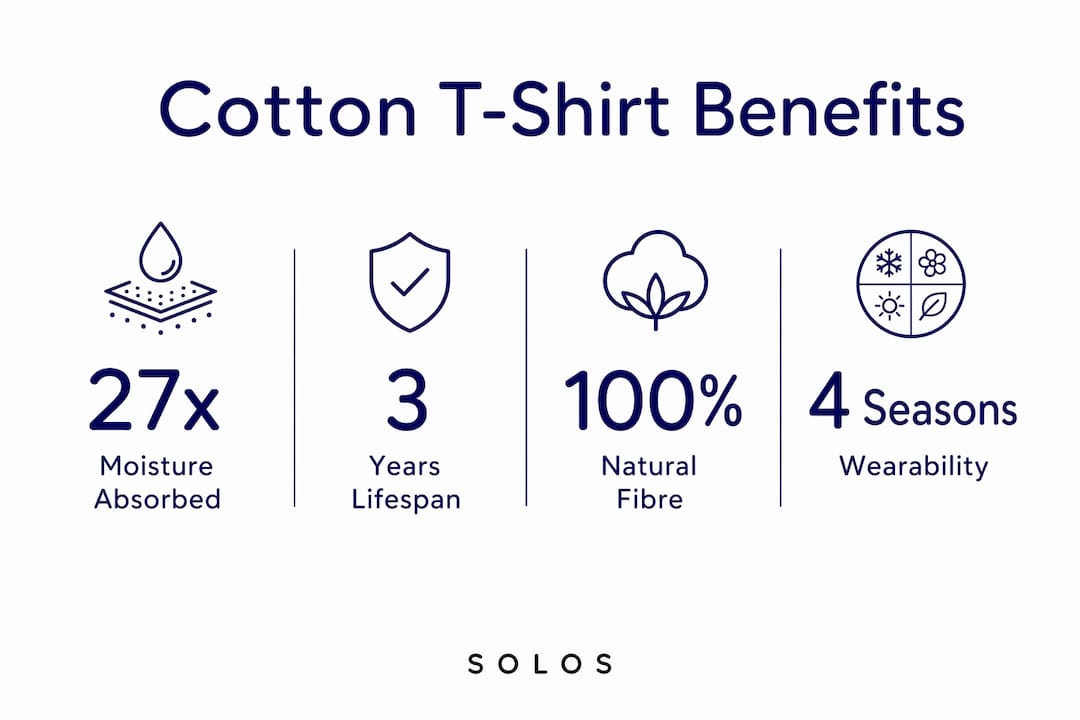
A cotton t-shirt is the single most versatile garment in any wardrobe, prized for its breathability, durability, and natural sustainability. 69% of consumers explicitly prefer cotton for everyday clothing, and that preference is grounded in real performance, not habit. Cotton absorbs 25–27 times its own weight in moisture, outperforming polyester and nylon by a significant margin. Understanding why a cotton t-shirt is an essential staple means looking at the science, the styling, and the sustainability case together.
Why cotton t-shirts are the essential wardrobe staple
The case for cotton starts with its fibre structure. Cotton is a natural, porous fibre that allows air to circulate freely against your skin. That breathability is what separates it from synthetics like polyester, which trap heat and moisture against the body. The result with cotton is a cooler, more comfortable wearing experience across all seasons.
Cotton also softens with wear, which means a quality cotton tee actually improves over time rather than degrading. Synthetics tend to pill, stiffen, or develop an unpleasant odour after repeated washing. Cotton’s fibre structure releases dirt and odour-causing molecules during washing more effectively, keeping garments fresher for longer.
From a styling standpoint, cotton tees function as the visual anchor of an outfit. They sit cleanly under a blazer, layer naturally beneath a denim jacket, and hold their own as a standalone piece. That adaptability is what makes them foundational wardrobe pieces across every style category.
What makes cotton t-shirts so comfortable and skin-friendly?
Cotton’s comfort advantage comes down to biology and physics working together. The fibre is naturally hypoallergenic, making it the preferred choice for people with sensitive skin, eczema, or contact dermatitis. Synthetic fabrics often contain chemical finishes that irritate skin over time. Cotton carries none of those risks in its pure form.
Here is what sets cotton apart from a comfort standpoint:
- Breathability: The open fibre structure allows heat to escape and air to circulate, reducing sweat build-up.
- Moisture absorption: Cotton pulls sweat away from the skin and holds it within the fabric until it evaporates.
- Softness: Long-staple cotton varieties like Supima become progressively softer with each wash.
- Odour resistance: Cotton releases odour-causing molecules during washing more effectively than polyester or nylon.
- Skin safety: Pure cotton contains no synthetic coatings or chemical finishes that trigger skin reactions.
Synthetics trap sweat against the skin, which accelerates bacterial growth and body odour. Cotton’s moisture management properties make it the clear winner for all-day wear, particularly in Australia’s warmer climate.
Pro Tip: Choose 100% combed cotton over standard cotton for noticeably smoother texture and fewer surface fibres. Combing removes short, rough fibres before spinning, which means the finished fabric sits more cleanly against your skin.
How do cotton t-shirts fit into a minimalist wardrobe?
A minimalist wardrobe built around cotton tees is not a compromise. It is a deliberate strategy. Style experts recommend a core trio of 100% combed cotton crewneck t-shirts in white, heather grey, and navy. Those three colours cover the full spectrum of casual to smart-casual dressing without overlap or redundancy.
Here is how to build that foundation:
- White crewneck: The most versatile piece you can own. It pairs with tailored trousers, shorts, or under an open-collar shirt. A slim-fit white crewneck in 100% cotton holds its shape wash after wash.
- Heather grey crewneck: Softer in contrast than white, grey reads as relaxed without looking sloppy. It works as a standalone piece or as a base layer under knitwear.
- Navy crewneck: The darkest of the three, navy functions as a neutral that pairs with almost any colour. A navy slim-fit tee reads more polished than black in most casual settings.
Cotton’s natural drape means it layers well across seasons, sitting flat under jackets without adding bulk. Fabric weight matters here. A 180–200 gsm cotton tee is the sweet spot for year-round wear: substantial enough to hold structure, light enough for warm weather.
| Fabric Weight | Best Use | Season |
|---|---|---|
| 140–160 gsm | Lightweight summer tee | Spring, Summer |
| 180–200 gsm | Year-round staple | All seasons |
| 220–240 gsm | Structured, premium feel | Autumn, Winter |
Heavier weights layer better and resist see-through, while lighter weights prioritise breathability. Knowing your gsm before buying is one of the most underrated purchasing decisions you can make.
Why are cotton t-shirts a more sustainable choice?
Cotton is natural, renewable, and biodegradable. That combination makes it categorically different from synthetic fabrics in terms of environmental impact. Polyester and nylon shed microplastics with every wash cycle. Those particles pass through water treatment systems and accumulate in oceans and waterways. Cotton does not carry that risk.
The sustainability advantages of choosing cotton include:
- Biodegradability: Cotton breaks down naturally at end of life, unlike polyester which persists in landfill for decades.
- Renewable sourcing: Cotton is a plant-based fibre that can be grown and harvested in continuous cycles.
- Reduced microplastic pollution: Cotton fibres do not shed synthetic microplastics during washing.
- Longevity: A well-maintained cotton tee lasts years, reducing the frequency of replacement and overall consumption.
Organic cotton, grown without synthetic pesticides, takes the sustainability case further. Brands that use sustainable cotton fabrics and non-toxic dyes reduce the chemical load on both the environment and the wearer. That matters to a growing number of consumers who treat purchasing decisions as a form of values expression.
The longevity argument is worth emphasising. A cotton tee that lasts three years with proper care represents far less environmental cost than three cheap synthetic tees replaced annually. Durability is sustainability in practice.
What care tips maximise the life of your cotton t-shirts?
Buying well is only half the equation. How you care for cotton tees determines how long they stay looking sharp. A few consistent habits make a significant difference.
- Wash in cold water: Hot water causes cotton fibres to contract and shrink. Cold washing preserves fit and colour.
- Turn inside out before washing: This protects the outer surface from friction and fading, keeping colours true for longer.
- Hang dry where possible: Tumble drying accelerates shrinkage and weakens fibre integrity over time. Air drying on a flat surface or hanger maintains shape.
- Avoid elastane blends above 5%: Fabrics with more than 5% elastane wrinkle badly and lose structural integrity after repeated washing. A small amount of stretch is fine; anything higher compromises the garment.
- Replace white tees on a schedule: White cotton tees worn weekly should be replaced every six months due to inevitable greying at the collar and underarms. That is not a care failure. It is simply how natural fibres age under regular use.
On fabric selection, skip the designer price premium. A cotton tee over $200 is almost always charging for the label, not the fibre. Focus on fabric weight and fibre length instead. Long-staple cotton like Supima delivers superior softness and shape retention at a fraction of the cost of designer alternatives.
Pro Tip: Check the care label for “combed” or “ring-spun” cotton. Both indicate a finer, more durable yarn that holds its shape and softness significantly longer than standard open-end spun cotton.
Key takeaways
Cotton t-shirts earn their place as wardrobe staples because no other fabric matches their combination of comfort, versatility, and environmental credentials.
| Point | Details |
|---|---|
| Comfort is science-backed | Cotton absorbs 25–27 times its weight in moisture, outperforming synthetics for breathability and skin comfort. |
| Three colours cover everything | White, heather grey, and navy crewnecks form a complete, versatile foundation for any wardrobe. |
| Sustainability is built in | Cotton biodegrades and produces no microplastics, making it the responsible choice over polyester. |
| Care habits extend garment life | Cold washing, air drying, and avoiding high elastane blends preserve fit and colour over years of wear. |
| Fabric quality beats brand name | Long-staple cotton like Supima outperforms expensive designer tees on softness and durability. |
The honest truth about cotton tees and why we keep coming back
I have watched fashion trends cycle through technical fabrics, performance blends, and recycled synthetics. Every few years, something new promises to replace the humble cotton tee. None of them have.
The reason is straightforward. Cotton does not need to be marketed. It performs. You put it on in the morning and forget about it, which is exactly what a good wardrobe staple should do. It does not cling uncomfortably after an hour in the sun. It does not develop that synthetic smell after a long day. It just works.
What I find most interesting is the sustainability angle, because it reframes the cotton tee from a basic item into a considered choice. Choosing a well-made cotton tee over a cheap polyester alternative is a small decision with a real cumulative impact. When you buy fewer, better garments, you spend less over time and generate less waste. That is not idealism. That is practical arithmetic.
My honest recommendation: invest in three quality cotton crewnecks in the core colours, learn your gsm preference, and replace them on a schedule. That approach will serve you better than any capsule wardrobe trend or fast-fashion haul ever will.
— Solos
Discover soloslife’s premium cotton essentials
If you are ready to build a wardrobe around pieces that genuinely perform, Soloslife’s range of premium cotton t-shirts is worth your attention. Every piece is crafted from high-quality sustainable cotton, cut in a slim fit that works across casual and smart-casual occasions.
Soloslife uses eco-friendly practices and non-toxic dyes throughout the manufacturing process, so what you wear reflects what you value. The collection covers the core colours you need, from crisp white to navy and beyond, all designed to hold their shape and colour through years of regular wear. Explore the full range and see Soloslife’s commitment to sustainability for yourself.
FAQ
What makes cotton better than polyester for everyday wear?
Cotton absorbs moisture, breathes freely, and does not shed microplastics during washing. Polyester traps heat and sweat against the skin, which causes discomfort and odour over the course of a day.
How many cotton t-shirts do i actually need?
A core rotation of three crewnecks in white, heather grey, and navy covers the full range of casual to smart-casual occasions. That trio forms a complete, non-redundant foundation.
What does gsm mean on a cotton t-shirt label?
GSM stands for grams per square metre and measures fabric weight. A 180–200 gsm cotton tee is the most versatile weight for year-round wear, offering structure without excessive warmth.
How often should i replace my white cotton t-shirts?
White cotton tees worn weekly should be replaced approximately every six months. Greying at the collar and underarms is a natural result of fibre ageing and cannot be fully reversed by washing.
Is organic cotton worth the extra cost?
Organic cotton is grown without synthetic pesticides, which reduces chemical exposure for both the wearer and the environment. For everyday staples you wear against your skin regularly, the upgrade is worth considering.


