

TL;DR:
- Cotton blends modify fabric performance through fiber ratio, partner, and construction, enhancing wearability and durability. Higher cotton content ensures breathability, while synthetic fibers improve shrinkage resistance, with the 80/20 blend being ideal for daily use. Quality construction, such as ring-spun yarn and proper finishing, significantly impacts longevity and comfort beyond the blend ratio.
Cotton blend fabric is defined as any textile that combines cotton fibres with one or more synthetic or natural fibres to modify its performance characteristics. How cotton blends affect wearability comes down to three variables: the fibre ratio, the blend partner, and the yarn construction method. A pure cotton shirt breathes beautifully but wrinkles, shrinks, and fades faster than most people expect. The right blend solves those problems without sacrificing the comfort that makes cotton the world’s most worn natural fibre. Understanding these trade-offs helps you buy smarter, care better, and choose clothing that genuinely lasts.
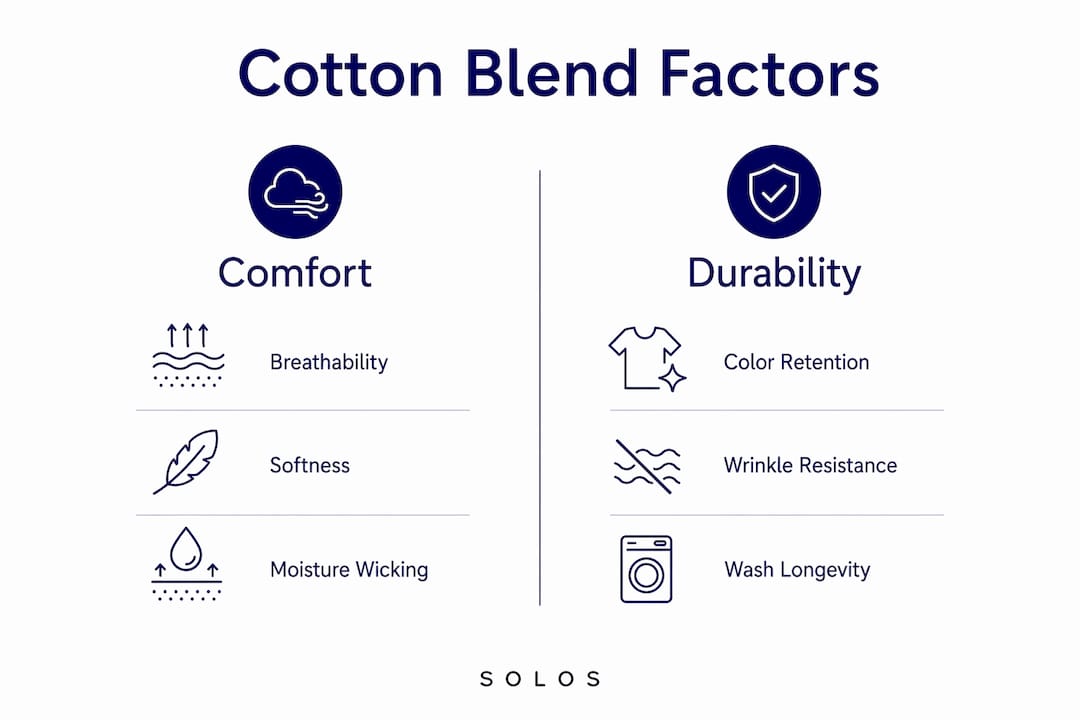
How do different cotton blend ratios affect comfort and durability?
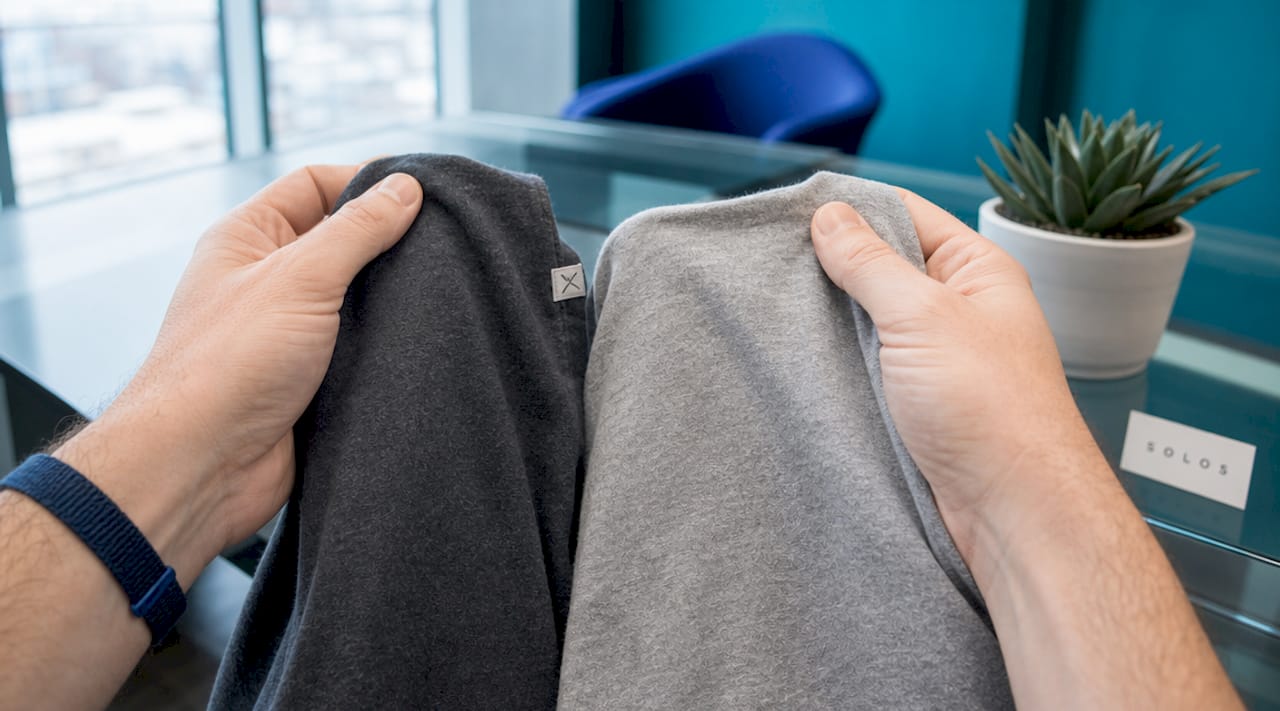
The ratio of cotton to synthetic fibre is the single most consequential number on a garment label. It determines breathability, shape retention, drying speed, and how the fabric feels against your skin after fifty washes.
| Blend ratio | Key performance characteristics |
|---|---|
| 100% cotton | Maximum breathability, soft hand feel, prone to shrinkage (3–10%) and fading after 50 washes |
| 80/20 cotton-polyester | Near-cotton comfort, modest wrinkle resistance, minimal shrinkage improvement |
| 65/35 cotton-polyester | 22,500 abrasion cycles, dries 45% faster than pure cotton, 75% less surface wear |
| 60/40 cotton-polyester | Noticeably smoother and wrinkle-resistant but loses breathability, can feel clammy |
| 50/50 cotton-polyester | Prioritises durability over comfort, best for heavy-use workwear and uniforms |
The 80/20 blend is the sweet spot for everyday clothing. It retains the soft, breathable feel of cotton while adding just enough polyester to reduce shrinkage and extend colour life. Move to 65/35 and you gain serious durability. A 65/35 polyester-cotton blend reaches approximately 99 kg warp strength, roughly 40% tougher than pure cotton. That matters for garments washed frequently or worn in physically demanding conditions.
The 60/40 ratio is where the trade-off becomes tangible. Garments at this ratio feel smoother and resist creasing well, but the reduced cotton content means less airflow. In warm Australian conditions, that clammy sensation is a real comfort issue, not a minor inconvenience.
Cotton blends also outperform pure cotton in wash durability. Synthetic blends maintain colour over 200 to 250 washes compared to fading after just 50 washes in pure cotton. For anyone who launders clothing weekly, that difference translates to years of additional garment life.
Pro Tip: If you run warm or live in a humid climate, keep your cotton-polyester ratio at 80/20 or higher. Below 70% cotton, breathability drops noticeably and the fabric starts to trap heat rather than release it.
How do different synthetic fibres influence wearability and sustainability?
Not all blend partners are equal. Polyester, silk, linen, and cashmere each bring a distinct set of properties to cotton, and the sustainability implications vary considerably between them.
-
Cotton-polyester blends are the most common and most studied. Moisture-wicking synthetics pull sweat away from skin four times faster than cotton alone and accelerate drying, making polycotton the practical choice for active wear and workwear. The sustainability concern is real: standard polyester is petroleum-derived and sheds microplastics with each wash. Recycled polyester (rPET) addresses the sourcing issue but does not eliminate microplastic shedding entirely.
-
Cotton-silk blends deliver properties that pure cotton cannot achieve on its own. Blending cotton with silk enhances tensile strength, drape, and thermal regulation simultaneously. Silk provides luster and lightweight strength while cotton adds structure and reduces the care complexity of pure silk. The result is a fabric with seasonal versatility, cool in summer and insulating enough for mild winters.
-
Cotton-linen blends are the underrated choice for warm-climate dressing. Linen’s hollow fibre structure amplifies cotton’s natural airflow, producing a fabric that feels crisp, breathes exceptionally well, and softens with wear. The trade-off is a more textured hand feel and a tendency to crease, though many wearers consider that part of the aesthetic.
-
Cotton-cashmere blends offer luxury softness and warmth without the fragility of pure cashmere. Cotton adds structural stability, making the garment more resistant to pilling and easier to launder. The blend is particularly effective in knitwear where cashmere’s insulating properties are most valued.
“Poly-cotton blends are engineered materials optimised for environments demanding moisture management and dimensional stability, not just cost savings.” — vnpolyfiber.com
One nuance worth knowing: adding small amounts of a superior fibre does not automatically improve quality. Adding 5 to 20% of superior fibres into cotton blends can actually disrupt yarn consistency and worsen overall quality due to spinning mismatches. A small percentage of cashmere or silk in a poorly engineered blend may perform worse than a well-constructed 100% cotton garment. The fibre ratio matters, but so does the manufacturing process behind it.
For sustainability-conscious shoppers, sustainable cotton fabric options like organic cotton blended with recycled polyester represent the most responsible choice currently available at scale.
What role does fabric construction play in wearability?
Fibre composition tells only part of the story. Yarn spinning method and knit structure determine how a blend actually performs on your body over time. Consumers consistently misjudge durability by fabric weight or hand feel alone, when yarn structure and spinning method have a greater impact on long-term performance.
Ring-spun versus open-end spun yarn
Ring-spun yarn is produced by continuously twisting and thinning cotton fibres into a tight, smooth strand. The result is a softer, stronger yarn with better abrasion resistance. Open-end (rotor) spun yarn is faster and cheaper to produce but creates a coarser, less durable fabric. For a T-shirt you plan to wear twice a week for three years, ring-spun construction is the better investment. Long-staple cotton varieties like Egyptian and Pima cotton produce the finest ring-spun yarns, creating fabrics that are noticeably softer and more durable than those made from standard short-staple upland cotton.
Knit structure and its effect on wear
Jersey knit is the standard for T-shirts: lightweight, stretchy, and comfortable. Interlock knit uses two layers of jersey knitted together, producing a heavier, more stable fabric with better shape retention and abrasion resistance. Twill weave, common in chinos and workwear, creates a diagonal rib pattern that distributes stress across the fabric surface, significantly extending wear life. The knit types and spinning techniques used in construction affect wear resistance and longevity beyond what the fibre blend alone can achieve.
Finishing treatments that change everything
Mercerisation permanently increases cotton fibre luster and softness by swelling the fibres and reducing their natural twists, improving dye uptake and overall fabric feel. Anti-wrinkle finishes and crosslinking resins are common treatments that enhance cotton’s low elastic recovery beyond what blending alone can achieve. These finishing processes explain why two garments with identical blend ratios can feel and perform completely differently. A mercerised 100% cotton shirt often outperforms an unfinished cotton-polyester blend in both softness and colour retention.
Pro Tip: Check garment labels for “ring-spun” or “combed cotton” rather than focusing solely on the blend ratio. These construction details signal a higher-quality manufacturing process that directly translates to better wearability and longer garment life.
How should you choose cotton blends for your lifestyle and climate?
Selecting the right cotton blend is a practical decision shaped by where you live, how you move, and how often you wash your clothes. Here is a straightforward framework:
-
Sensitive skin: Choose 100% organic cotton or an 80/20 cotton-modal blend. Modal is a semi-synthetic fibre derived from beech wood that is exceptionally soft and less likely to irritate. Avoid high polyester ratios, as synthetic fibres can trap heat and cause friction on reactive skin.
-
Warm or humid climates: An 80/20 cotton-linen blend or high-cotton-content jersey (90% cotton or above) gives you the best breathability. The cotton blend clothing benefits for moisture management are most pronounced when cotton remains the dominant fibre.
-
Active use and frequent washing: A 65/35 cotton-polyester blend is purpose-built for this. It handles repeated laundering without significant shrinkage (under 3% compared to 3 to 10% in pure cotton), resists pilling, and dries quickly after washing or sweating. The performance benefits of moisture-wicking blends are well documented in performance apparel contexts.
-
Sustainability goals: Look for GOTS-certified organic cotton blended with recycled polyester (rPET). This combination reduces pesticide use in cotton farming and diverts plastic waste from landfill. Washing these garments in a microplastic-catching laundry bag further reduces environmental impact.
-
Longevity and reduced waste: Invest in high-quality cotton construction with ring-spun yarn and mercerised finishes. A well-made garment worn 200 times has a fraction of the environmental footprint of a cheap blend replaced after 20 wears.
Reading fabric labels effectively means looking beyond the fibre percentage. Check for yarn type, fabric weight in grams per square metre (GSM), and any finishing treatments listed. A 180 GSM ring-spun cotton-polyester T-shirt at 80/20 tells you far more about expected performance than a label reading simply “cotton blend.”
Key takeaways
The wearability of cotton blends is determined by the ratio, the blend partner, and the yarn construction method working together, not by any single factor alone.
| Point | Details |
|---|---|
| Blend ratio is the starting point | An 80/20 cotton-polyester ratio balances comfort and durability for most everyday garments. |
| Fibre partner shapes performance | Silk adds drape and strength; linen adds breathability; polyester adds durability and fast drying. |
| Yarn construction matters most | Ring-spun and combed cotton yarns outperform open-end spun in softness and long-term wear resistance. |
| Finishing treatments change outcomes | Mercerisation and anti-wrinkle resins improve performance beyond what fibre blending alone achieves. |
| Sustainability requires the full picture | Organic cotton blended with rPET and washed responsibly offers the most eco-conscious performance blend. |
Why I think most people are reading their clothing labels wrong
Most shoppers glance at a label, see “60% cotton, 40% polyester,” and make a snap judgement about quality. After years of working closely with fabric sourcing and garment construction, I can tell you that number is only the beginning of the story.
The garments I return to again and again are not always the highest cotton percentage. They are the ones built with ring-spun yarn, finished with mercerisation, and cut from a well-engineered interlock or pique structure. A 65/35 blend made with long-staple Egyptian cotton and a tight interlock knit will outlast and outcomfort a poorly spun 95% cotton jersey every time.
What I find genuinely exciting right now is the direction sustainable blends are heading. Organic cotton paired with rPET is no longer a compromise product. The construction quality has caught up with the ethics, and you can find garments that perform as well as conventional blends while carrying a fraction of the environmental cost.
My honest advice: stop chasing 100% cotton as a proxy for quality. Start reading the full label, asking about yarn type, and choosing brands that are transparent about their manufacturing process. Longevity is the most sustainable choice you can make, and it starts with understanding what is actually in your clothes.
— Solos
Discover cotton blends built to last
At Soloslife, we have applied everything covered in this article to our range of premium men’s cotton T-shirts and polos. Every garment is made from carefully selected cotton blends, ring-spun for durability and finished with non-toxic dyes that hold colour wash after wash. Our sustainability commitments go beyond the label: responsible sourcing, eco-conscious manufacturing, and fair labour practices are built into every piece. If you want clothing that genuinely performs and genuinely lasts, explore the Soloslife collection and see how thoughtful fabric choices translate into all-day comfort and long-term value.
FAQ
What does a cotton blend mean on a clothing label?
A cotton blend is a fabric made from cotton combined with one or more other fibres, such as polyester, linen, silk, or cashmere. The percentage listed on the label indicates how much of each fibre is present, which directly affects comfort, durability, and care requirements.
Do cotton and polyester blends affect breathability?
Cotton-polyester blends reduce breathability as the polyester percentage increases. At 60/40 cotton-polyester, garments become noticeably less breathable and can feel clammy in warm conditions, while an 80/20 ratio maintains a feel close to pure cotton.
Are cotton blends more durable than 100% cotton?
Cotton blends are significantly more durable in most performance measures. A 65/35 cotton-polyester blend reaches 22,500 abrasion cycles and reduces shrinkage to under 3%, compared to 3 to 10% shrinkage in pure cotton after washing.
Which cotton blend is best for sensitive skin?
For sensitive skin, a high-cotton-content blend of 90% or above, or an organic cotton-modal blend, is the most comfortable choice. High polyester ratios can trap heat and cause friction, which aggravates reactive skin.
How does fabric construction affect wearability beyond the blend ratio?
Yarn spinning method and knit structure influence durability and softness more than fibre composition alone. Ring-spun yarn and interlock knit structures produce garments with better abrasion resistance, shape retention, and long-term softness than open-end spun equivalents at the same blend ratio.


