

TL;DR:
- Sustainable fabrics are more durable because they use stronger, long-staple fibres and eco-friendly processing. Proper construction and care practices further extend their lifespan, reducing waste and environmental impact. Durable garments made from these fabrics offer better value and support circular fashion.
Sustainable fabrics last longer because their fibres are structurally superior, and their production methods preserve that strength from the start. Hemp, linen, organic cotton, and recycled polyester each bring distinct durability advantages that conventional fast fashion fibres simply cannot match. Understanding why sustainable fabrics last longer is not just reassuring for your conscience. It directly shapes how you spend your money and how much clothing ends up in landfill. This guide breaks down the fibre science, compares the most durable sustainable fabric types, and gives you the care knowledge to get the most from every garment you own.
Why do sustainable fabrics last longer than conventional ones?
The answer starts at the fibre level. Long-staple fibres reduce the number of weak junctions in a yarn, producing a smoother, stronger fabric with less pilling and higher abrasion resistance. Fewer junctions mean fewer points where a fabric can fray or break down under repeated wear and washing. That structural advantage is baked in before a single stitch is sewn.
Sustainable production methods reinforce this advantage. Eco-conscious manufacturers avoid harsh chemical treatments that strip fibre integrity during processing. Non-toxic dyes, used by brands like Soloslife, do not degrade fibre bonds the way aggressive synthetic dyes can. The result is a garment that holds its colour, shape, and strength across far more wash cycles than a conventionally produced equivalent.
Construction also matters beyond the fibre itself. Yarn twist and weave density greatly influence how long a garment holds up, independent of fibre quality alone. A tightly woven hemp or linen fabric will outlast a loosely constructed organic cotton piece, even if the cotton fibre is excellent. Durability is the product of fibre quality, yarn construction, and responsible finishing working together.
What fibre properties make sustainable fabrics more durable?
Three properties determine how long a fabric survives: fibre length, tensile strength, and surface smoothness. Sustainable fabrics tend to score well on all three, which is why their longevity reputation is earned rather than marketed.
Fibre length is the most underrated factor. Longer fibres create fewer splice points in the yarn. Each splice point is a potential weak spot where the fabric can pill, thin, or tear. Long-staple cotton varieties like Egyptian or Pima cotton, and natural fibres like linen and hemp, all benefit from this structural advantage.
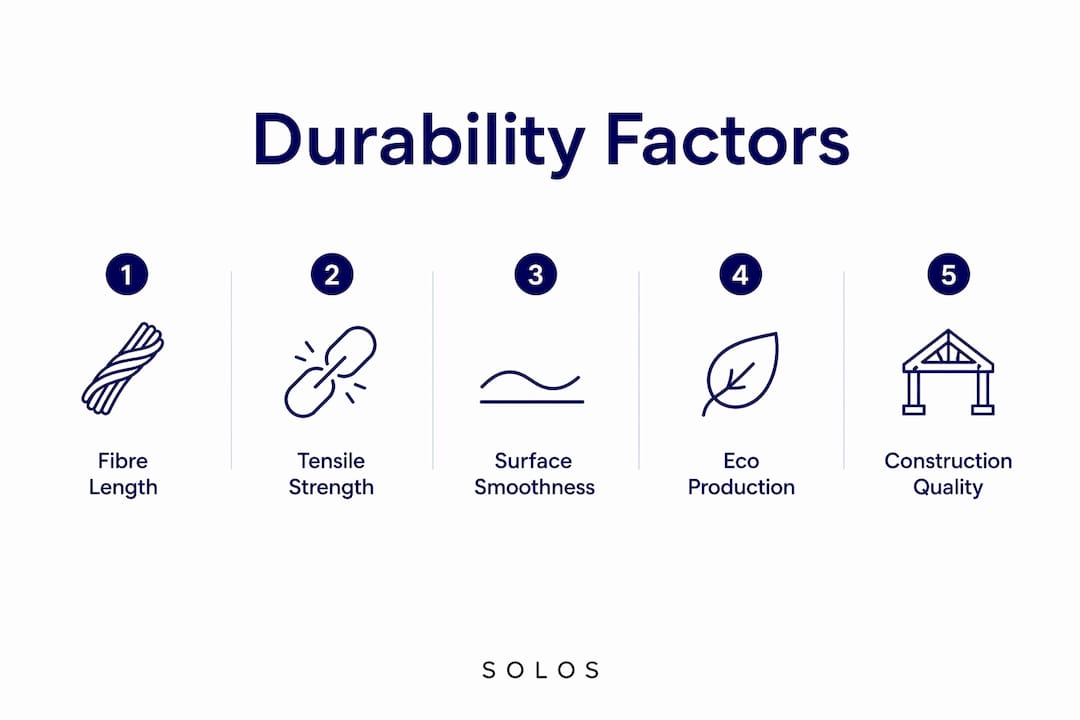
Tensile strength determines how much stress a fabric can absorb before it breaks. Hemp leads all natural fibres here. Hemp fibres possess the highest tensile strength among natural textile fibres, resisting UV degradation, abrasion, and stretching better than cotton or linen. That is why hemp was historically used for ropes, sails, and military textiles. The same properties that made it reliable for those applications make it exceptional for clothing.
Surface smoothness affects pilling and wear. Fibres with a smoother surface create less friction against other surfaces during wear and washing. Less friction means less pilling, which means the fabric looks newer for longer.
- Long-staple fibres produce smoother yarns with fewer weak junctions
- High tensile strength resists tearing, stretching, and abrasion
- Smooth fibre surfaces reduce pilling and surface wear
- Eco-friendly processing preserves fibre integrity from the start
- Tight weave construction amplifies the durability of quality fibres
Pro Tip: When shopping for sustainable basics, check the fabric weight listed on the product page. A heavier weight generally signals a tighter weave and better long-term durability, especially for cotton T-shirts and polos.
How do the most durable sustainable fabric types compare?
Each sustainable fibre brings a different durability profile. Knowing the differences helps you choose the right fabric for the right purpose.
Hemp is the strongest natural fibre available for clothing. It resists UV damage, abrasion, and moisture-related degradation. Hemp fabric softens with each wash without losing structural integrity, which means it actually improves with age. The trade-off is that it can feel stiff initially and wrinkles easily.
Linen is made from flax fibres that are two to three times stronger than cotton fibres. Flax cultivation requires minimal irrigation and agricultural inputs, making linen one of the most resource-efficient fabrics available. Linen is breathable, moisture-wicking, and holds its shape well over time. Like hemp, it wrinkles readily, but that is a styling consideration rather than a durability flaw.
Organic cotton offers better fibre quality and durability than conventional cotton because it avoids the chemical treatments that weaken fibre bonds during processing. It remains water-intensive compared to hemp and linen, but its softness and versatility make it the most practical sustainable fabric for everyday essentials. Soloslife builds its core range around premium sustainable cotton for exactly this reason.
Recycled polyester (rPET) is made from post-consumer plastic bottles. Production uses 30–50% less energy and 35% less water than virgin polyester. That is a meaningful environmental saving at scale. rPET is highly durable and resistant to stretching and shrinking, though it sheds microfibres during washing, which requires a microfibre filter bag to manage responsibly.
| Fabric | Tensile strength | Durability rating | Care complexity | Environmental input |
|---|---|---|---|---|
| Hemp | Highest natural fibre | Excellent | Low | Very low |
| Linen | 2–3x stronger than cotton | Very good | Moderate | Very low |
| Organic cotton | Better than conventional | Good | Low | Moderate (water) |
| Recycled polyester | High (synthetic) | Very good | Moderate | Low (energy/water) |
Pro Tip: For Australian summers, linen and organic cotton are the most practical choices. Both breathe well in heat and hold up to frequent washing, which is exactly what warm-weather wardrobes demand.
What care practices extend the lifespan of sustainable fabrics?
A sustainable garment can last several years to decades with proper care, providing roughly three times the mileage of fast fashion alternatives. That lifespan advantage only holds if you launder and store your clothes correctly. Poor care habits are the fastest way to undo the durability benefits that quality fibres provide.
-
Wash in cold water. Washing in hot water degrades fibres rapidly, shortening garment lifespan. Cold water cleans effectively while preserving fibre structure. Most sustainable fabrics, including linen, hemp, and organic cotton, respond well to a gentle cold cycle.
-
Air dry wherever possible. Tumble dryer heat is particularly destructive to elastane blends. Heat from dryers degrades elastane quickly, often within a single season, shortening the lifespan of otherwise durable base fibres. Hanging garments to dry in the shade also prevents UV fading.
-
Use a gentle, pH-neutral detergent. Harsh detergents accelerate fibre breakdown. Chemical damage from sweat and harsh detergents can weaken fibres faster than physical wear. Look for detergents labelled as suitable for delicates or natural fibres.
-
Wash at the right frequency. Leaving sweat and body oils on fabric too long causes chemical degradation. Prolonged exposure to sweat and oils weakens wool and other natural fibres, causing brittleness and premature wear. Wash after every two to three wears for most garments, or sooner in hot weather.
-
Store garments properly. Fold knits rather than hanging them to prevent stretching. Store linen and cotton in breathable bags away from direct sunlight to prevent UV degradation over time.
For a full routine tailored to Australian conditions, the sustainable clothing care guide from Soloslife covers laundering methods that protect fabric life in local climates.
Pro Tip: Turn garments inside out before washing. This simple step reduces surface friction during the wash cycle, which directly reduces pilling and colour fade on the outer face of the fabric.
What are the environmental and economic benefits of longer-lasting fabrics?
Durability is the most undervalued sustainability metric in fashion. A garment that lasts three times longer than a fast fashion equivalent produces a fraction of the per-wear environmental cost, even if its initial production footprint is higher. The maths strongly favour quality over volume.
The environmental benefits of choosing durable eco-friendly textiles include:
- Reduced textile waste. Longer garment life means fewer items sent to landfill each year. The fashion industry’s waste problem is driven largely by premature disposal of low-quality garments.
- Lower per-wear carbon footprint. A well-made organic cotton T-shirt worn 200 times has a far lower carbon cost per wear than a cheap synthetic worn 20 times before it falls apart.
- Better end-of-life outcomes. High-quality natural fibres like linen and hemp are biodegradable and easier to recycle than blended synthetic fabrics. Durability supports the circular economy by keeping garments in use longer and making them easier to process at end of life.
- Economic value. Spending more upfront on a durable sustainable garment saves money over time. A quality piece that lasts five years costs less per wear than three cheap replacements bought in the same period.
The benefits of high-quality cotton construction extend beyond comfort. Construction quality directly determines how long a garment stays wearable, which is the foundation of any genuinely sustainable wardrobe.
The durability myth I keep seeing in sustainable fashion
Sustainable fabrics are not automatically durable. That is the uncomfortable truth I have noticed after years of watching eco-conscious shoppers make purchases based on fibre origin alone, then feel let down when a garment pills or fades within a season.
The fibre matters, but so does the construction. A loosely woven organic cotton piece will pill and thin faster than a tightly constructed conventional cotton garment. The sustainability of a fabric does not guarantee its longevity. What guarantees longevity is the combination of quality fibre, tight construction, responsible finishing, and proper care.
The brands worth trusting are the ones that talk about yarn weight, weave density, and finishing processes, not just fibre certifications. Soloslife focuses on premium cotton construction precisely because fibre quality without construction quality is a half-measure. When you are choosing sustainable basics, ask about the fabric weight and construction, not just the fibre origin. That question separates genuinely durable garments from greenwashed ones.
— Solos
Soloslife’s approach to sustainable cotton essentials
Soloslife builds its range around premium sustainable cotton that is designed to last. Every piece is made with non-toxic dyes and eco-friendly production practices that preserve fibre integrity from the start.
The men’s cotton T-shirts and polos from Soloslife are cut for everyday wear and constructed to hold their shape, colour, and softness across hundreds of washes. For shoppers who want to understand the full picture behind the fabric, the sustainability commitments page outlines sourcing standards, certifications, and manufacturing practices in plain language. Building a wardrobe around fewer, better pieces is the most practical sustainability decision you can make. Soloslife makes that decision straightforward.
FAQ
Why do sustainable fabrics last longer than fast fashion?
Sustainable fabrics use longer, stronger fibres and avoid harsh chemical processing that weakens fibre bonds. This structural advantage, combined with tighter construction, produces garments that resist pilling, fading, and wear far longer than fast fashion equivalents.
What is the most durable sustainable fabric?
Hemp has the highest tensile strength of all natural textile fibres, making it the most durable sustainable option. Linen is a close second, with fibres two to three times stronger than cotton.
How long do sustainable garments actually last?
A well-made sustainable garment can last several years to decades with proper care, providing roughly three times the lifespan of a comparable fast fashion piece.
Does washing temperature really affect fabric lifespan?
Yes. Washing in hot water and tumble drying degrade fibres rapidly, particularly in garments with elastane blends. Cold water washing and air drying are the two most effective habits for extending fabric life.
Is recycled polyester as durable as natural sustainable fibres?
Recycled polyester is highly durable and resistant to stretching and shrinking. Its main care consideration is microfibre shedding during washing, which a microfibre filter bag can manage effectively.
Key takeaways
Sustainable fabrics last longer because superior fibre structure, responsible construction, and proper care work together to resist wear, reduce waste, and deliver genuine long-term value.
| Point | Details |
|---|---|
| Fibre length drives durability | Long-staple fibres create fewer weak junctions, producing stronger, smoother fabric that resists pilling. |
| Hemp leads in tensile strength | Hemp has the highest tensile strength of all natural fibres, outperforming cotton and linen in abrasion resistance. |
| Construction amplifies fibre quality | Yarn twist and weave density determine garment lifespan as much as fibre origin does. |
| Cold washing preserves fabric life | Hot water and tumble drying degrade fibres rapidly; cold water and air drying extend garment lifespan significantly. |
| Durability reduces environmental cost | A garment lasting three times longer produces a fraction of the per-wear carbon footprint of fast fashion alternatives. |


